





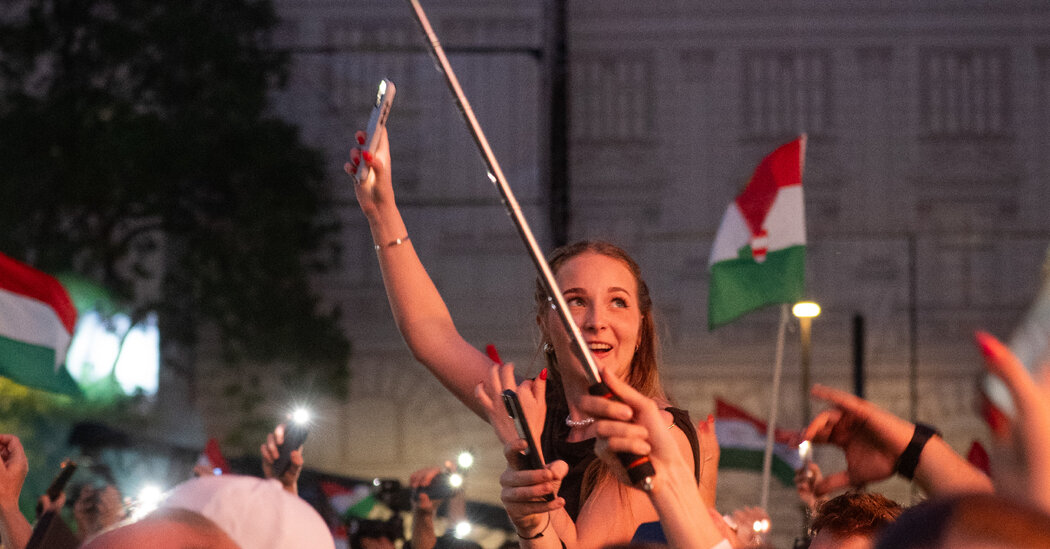
On a night defined by the biting chill of the Hungarian wind, Péter Magyar stepped out into the open air from the imposing state complex to face a sea of expectant, weary, yet hopeful faces, delivering a message that was as much a roadmap for political change as it was a profound testament to the resilience of the human spirit. Facing an authoritarian apparatus that had spent more than a decade consolidating its control over every tier of public life, Magyar did not offer the crowd another sterile bureaucratic organization or a mirror image of the state’s own crushing machinery. Instead, he spoke of a revolution built from the ground up, fueled not by dark money, state media monopolies, or institutional intimidation, but by the quiet power of ordinary citizens who were willing to step out of their comfort zones to reclaim their democracy. He painted a vivid, deeply human picture of the relentless, exhausting, grassroots labor that had made their impossible victory possible: neighbors visiting neighbors, activists walking endlessly from mailbox to mailbox, and volunteers enduring the bitter cold, the frost, and the driving rain to connect with their fellow citizens. It was a poignant reminder that genuine political transformation cannot be manufactured by highly priced consultants or delivered through television screens; rather, it is forged in the grueling, quiet moments of human connection where people risk personal discomfort for the sake of their country, their relatives, and their communities. By centering this political milestone on the physical and emotional perseverance of everyday people, Magyar sought to dismantle the myth of the state’s invincibility, proving that no political machine, no matter how wealthy or deeply entrenched, can withstand the collective will of a society that has decided to wake up, care for one another, and stand strong for their fundamental democratic rights. Indeed, his voice resonated through the cool night air as a call to shared responsibility and national healing, proving that every individual held the key to their eventual beautiful democratic rebirth.
The immediate task ahead, Magyar argued, was not merely the restructuring of government institutions or the drafting of new legislation, but the difficult, introspective work of social healing and rediscovering how to see one another as part of a singular community. He urged the jubilant crowd to resist the temptation of triumphant tribalism, asking them instead to extend empathy to their fellow citizens who were feeling disappointed, fearful, or alienated by the sudden shift in the political landscape. Rather than seeking to defeat, humiliate, or look down on those who supported the previous regime, he called for active listening and open dialogue, reminding his supporters that a truly democratic Hungary must have room for everyone, regardless of where they stood in the past. It was a message calculated to break the toxic cycle of polarization that had characterized Hungarian politics for decades, replacing the narrative of division with one of radical inclusivity where there is no left and no right, but only Hungarians working together to rebuild their homeland. This appeal to a broader national identity was more than just a clever campaign strategy; it was a necessary bridge over the deep societal chasms that had alienated families, severed friendships, and divided neighborhoods across the country. By affirming that every citizen, including the skeptical and the defeated, was essential to the country’s reconstruction, he sought to disarm the politics of fear and offer a shared space of dignity, respect, and mutual obligation. This vision of collective recovery insisted that national pride should not be a weapon to exclude others, but a soft, warm blanket large enough to cover the entire population, healing wounds that had festered under years of systemic division. He reminded them that a nation is only as strong as its weakest and most isolated members, and that true progress could only be achieved when everyone felt a profound sense of belonging. Through this lens, the political victory became a spiritual reclamation of shared humanity, offering hope to those who had long been cast aside.
This philosophy of national reclamation was deeply tied to a strategic insight shared by the seasoned intellectual Bálint Magyar, who observed that the key to Péter Magyar’s meteoric rise lay in his remarkable ability to reclaim the defining symbols of Hungarian identity from the far right populist monopoly. For too long, the national green, white, and red flag, the solemn national anthem, and the very concept of Hungarianness had been appropriated by Viktor Orbán’s ruling party as exclusive tools of state patriotism, leaving liberal, moderate, and progressive citizens feeling estranged from their own heritage. By orchestrating a grand, elaborate public ceremony complete with the methodical raising of the flag, goose stepping modern soldiers, and cavalrymen in glittering, historical uniforms, the movement successfully seized back these potent cultural touchstones, restoring them to the collective public consciousness. This was not a surrender to chauvinistic nationalism, but a calculated, beautiful effort to demystify it, transforming the ancient symbols of the state from exclusive badges of party loyalty into symbols of citizen empowerment that belonged to every person standing in the dusty square. As the crowd watched the immaculate, dignified pageantry unfold under the open sky, there was a palpable sense of emotional relief among the onlookers, as if a long suppressed aspect of their collective identity had finally been liberated and returned to its rightful owners. The sensory details of the ceremony, including the crisp snapping of the red white and green fabric in the wind, the rhythmic, heavy stamp of the horses’ hooves on the pavement, and the soaring melodies of the national anthem, served as a powerful physical manifestation of a nation that was finally reclaiming its rich historical legacy from the hands of the self serving political class who had weaponized those very symbols for decades. This reclamation of identity was a crucial psychological breakthrough for a society that had felt politically orphaned in its own land. By wrapping their movement in the traditional tricolor, they proudly asserted that solidarity outweighed blind submission.
Yet, even as the formal ceremonies concluded, the physical environment itself bore the scars of a government that had spent years intentionally engineering distance between the rulers and the ruled, separating the leadership from the public with vast, sterile open spaces. Magyar, standing on the far side of this artificial divide, began to motion urgently to the crowd, inviting them with frantic waves of his hands to step forward and bridge the physical and psychological gap that had been so meticulously designed to keep them at bay. The crowd, pressed tightly against the edge of a wide, modern reflecting pool that symbolized the cold, calculated isolation of state power, initially hesitated, but the overwhelming desire to be active participants in this historic moment soon shattered their reservations. In a spontaneous, infectious burst of collective energy, several men rolled up their trousers and leaped into the shallow water, splashing across the pool only to discover that the seemingly intimidating barrier was merely a few inches deep, posing a physical metaphor for the easily shattered illusions of authoritarian power. Within moments, hundreds of men, women, and children followed their lead, their laughter and splashing echoing across the concrete square as they flooded the previously restricted zone and surrounded their new leader. By physically crossing this wet threshold, the citizens of Budapest did not just cross a simple pool of water; they dismantled an artificial spatial barrier of political exclusion, turning a sanitized, hostile government plaza into a vibrant, chaotic town square of democratic recovery and celebration. Magyar’s spontaneous, joyful exclamation to the rushing crowd, “This is your house now!” captured the profound, historic shift in ownership, signaling to the wet, shivering citizens that the grand, imposing seat of government no longer belonged to a distant, arrogant oligarchy, but to the everyday people who had finally dared to reclaim it. As the cold water soaked their shoes, they laughed, feeling the immediate warmth of a long denied solidarity, proving that no architectural barrier could ever stop them.
This electric moment of physical liberation echoed a deeper, more systemic transformation taking place in the minds of the Hungarian electorate, where individuals from all walks of life were beginning to allow themselves to believe in the quiet reality of a new democratic era. For the academics and researchers who had spent years operating under the constant threat of state censorship, funding cuts, and ideological interference, this dramatic political shift promised a return to intellectual honesty and the cherished freedom to teach and explore complex ideas without fear of sudden government reprisal or dismissal. Simultaneously, the younger generation of Hungarians, who had long viewed emigration to Western Europe as their only logical path to a prosperous and free life, began to view staying in their beloved homeland as a viable, exciting option rather than a grim sentence to economic and social stagnation. This clean break from the pervasive cynicism of the past was perhaps the most crucial victory of Magyar’s movement, as it gave young minds a reason to invest their talents, their creativity, and their futures into the soil of their own country rather than seeking professional refuge in London, Berlin, or Brussels. The shift in public sentiment was incredibly tangible, marked by a psychological transition from a collective despair that had paralyzed the nation’s youth to an infectious, vibrant enthusiasm for reconstructing their country’s educational, cultural, and economic institutions from the ground up. For the first time in an entire generation, the prospect of remaining in historic cities like Budapest, Debrecen, or Pécs felt like a courageous, hopeful act of civic construction rather than a painful compromise of their professional potential and personal dreams, effectively rewriting the narrative of the Hungarian future. They began to imagine a society where merit, not political alignment, determined success, and where their voices would actually shape public debates. This massive return of optimism was more than just a transient political sentiment; it represented the slow, beautiful reclamation of an entire generation’s lost human aspirations.
For the tireless civil society activists who had spent the better part of a decade locked in a brutal, exhausting battle for their very survival against malicious state sponsored smear campaigns and highly restrictive regulatory laws, this political dawn offered a long awaited chance to transition from a defensive posture back to their true, noble purpose of helping the most vulnerable segments of society. Leaders like Marta Pardavi, the incredibly resilient co chair of the country’s premier human rights organization offering free legal aid to asylum seekers, expressed a cautious but deeply felt optimism that the new administration would eventually humanize Hungary’s asylum policies, even in the absolute absence of explicit, formal campaign promises on the issue. This hope, far from being naive, reflected a profound collective desire to restore basic human decency, international legal integrity, and genuine compassion to a state apparatus that had long used vulnerable refugees as political scapegoats to solidify its authoritarian grip on public fear. The collective aspiration running through Budapest was not just for a change in government personnel, but for a wholesale moral awakening where empathy is no longer criminalized and the protection of human dignity is championed as a shared national value. Ultimately, the story of this political movement is not merely about a singular charismatic leader or an unexpected electoral triumph, but about the reclaiming of a nation’s soul by a diverse people who refused to let their dreams of freedom, community, and human decency be drowned out by the cold machinery of power, building a path toward a brighter tomorrow. Their struggle was a testament to the belief that even in the darkest political landscapes, the persistent flame of human solidarity cannot be fully snuffed out. By rising above their fear, they had quietly paved the way for Hungary to remember its own capacity for empathy, showing that a society’s true strength is measured not by how high its walls are built, but by how wide it can open its welcoming doors to all.