

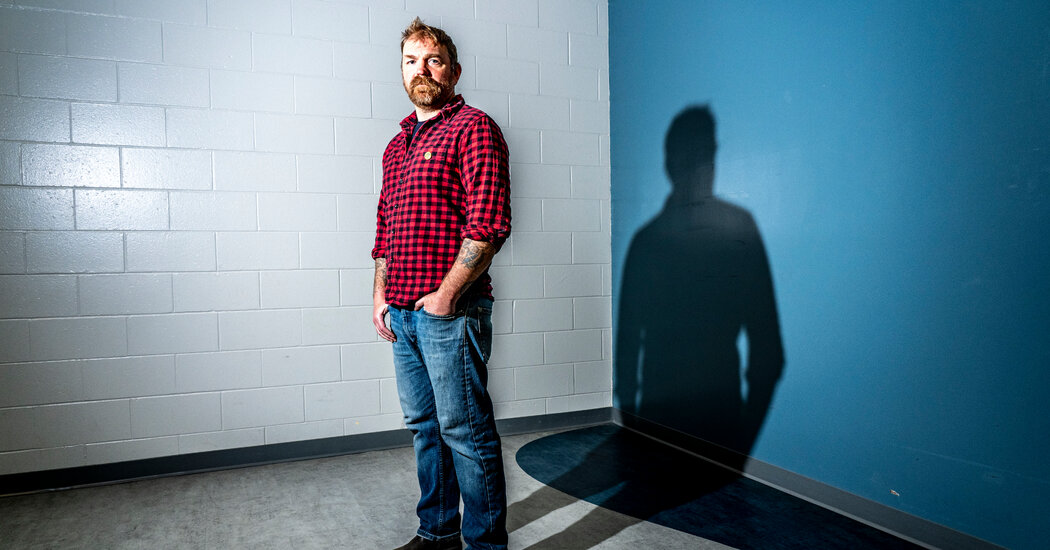
Graham Platner was just 20 years old when he stepped into the grind of war in Iraq as a Marine infantryman. Tasked with building a patrol base near Falluja, his unit relied on local workers who brought their families along, turning the dusty site into a fragile slice of civilian life amid the chaos. One ordinary day, everything shattered—an insurgent mortar round hit the crowd, mowing down adults and children alike. Platner, with his unit’s medical pouch slung over his shoulder, rushed in to administer aid, his hands shaking as he tried to save the unsaveable. Later, at the casualty collection point, he faced a wall of grief: parents arriving to claim the broken bodies of their kids, wailing in a language he didn’t speak but understood all too well. The smells of blood and smoke clung to him, and in their eyes, he saw the raw horror of senseless loss. It was a moment that etched itself into his soul, a brutal awakening to how war doesn’t just ruin battlefields but rips apart ordinary lives. In America, where most of us follow wars from TV screens or news scrolls, we’re insulated from this carnage—its stench, its heartbreak. Yet, Platner argues, we can’t heal our own broken society unless we confront the monstrous pointlessness of these endless conflicts, the trillions squandered while our schools crumble and our people struggle. His story isn’t just a veteran’s tale; it’s a challenge to every armchair commentator: how can we keep pretending wars like this serve anyone, especially when they leave behind a trail of displaced millions and ravaged communities?
As we drove through the winding roads of Maine in his pickup truck, racing between campaign stops, Platner opened up about how that Falluja memory shapes his run for Senate. It’s not just politics for him; it’s personal redemption amid a backdrop of old mistakes. Back in his Marine days, he got that tattoo—a skull and bones on his chest—that stirred controversy when it came out last fall, dubbed by some as a Nazi symbol, though he swears he didn’t know its dark origins. His old Reddit posts from that rough era, laced with crude, angry outbursts, he traces back to the untreated scars of combat—a young man grappling with the trauma of killing and witnessing death in ways that most of us can’t imagine. Democratic power players in Washington wrote him off, expecting the scandal to sink him. But out here in the towns, rallying in packed halls, Platner’s leading by 30 points over the governor. His appeal? A raw, unfiltered honesty that slices through the polished armor of D.C. politicos. He talks about that Iraq incident in the present tense, as if it’s still unfolding: those kids blown apart over a base that’s probably just rubble now, mothers clutching pieces of their little ones, his voice cracking with the weight of it all. “Horrifically wasteful,” he calls it, a phrase that lands like a gut punch. For him, it’s not abstract policy; it’s the lived reality of human cost, a reminder that war isn’t glamorous—it’s a storm of grief that follows you home.
Platner weaves this into his pitch against the ongoing war in Iran, blending it with rants about rising gas prices and Trump’s blunders, but the heart is his visceral disgust for the forever war that stretches back to 9/11. He’s blunt: “Bullshit that what I did in Iraq or Afghanistan helped folks in Sullivan, Maine.” Without flinching, he vows not to send more young Americans into the same hell he endured, the horror of inflicting pain on innocent people who look just like you do when the bullets fly. Polls back him up—most Americans agree, echoing the sentiment at his events where veterans, even MAGA types, confess they’ll never back this Iran thing. They thought Trump was the antiwar guy, the “America First” promise, but now see the hypocrisy. Platner wants Democrats to seize this, to become the true antiwar party, but he’s frustrated by how the party hedges. Some, like Ro Khanna or Chris Murphy, roar with moral outrage, but many leaders treat opposition to war like a side note, pouring more passion into healthcare fights. He scoffs at the focus on whether Trump got congressional approval: it’s not about procedure, it’s about the war’s plain wrongness. And he calls out the hypocrisy of tacking on critiques of Iran to ease the conscience, or the long-standing alliances with pro-war groups like AIPAC, despite Democrats’ old hawkish stances on the region.
The dysfunction runs deep, fueled by the flood of cash from Citizens United, letting special interests—defense giants, oil barons, lobbying outfits—buy influence and drown out antiwar voices. Older Democrats, scarred by 2004 election losses where Republicans branded them weak on terror, still tremble at the label. But look at the votes: since 2004, the antiwar candidate has won every presidential race, from Obama to Biden. Still, they hedge—what if voting no on funding leads to attacks? What if bombing Iran brings utopia? It’s a twisted logic: war is justified whether Iran’s strong or weak. Blame lands everywhere—from jingoistic pundits like Tucker Carlson, amplifying every American slight into a crisis, to think tanks pushing intervention as the fix-all, Hollywood glorifying spies and soldiers, even ex-admins like those Rhodes once joined. Platner recalls his 2018 stint as a contractor in Kabul: Same old raids, bombs dropping on civilians, propping up corrupt leaders, training forces that collapse without U.S. crutches. “A self-licking ice cream cone,” he calls it—no endgame, just endless cycles. He quit, repulsed, heading back to Maine convinced America’s foreign policy needs a gut-renovation. Listening, Rhodes admits he would’ve been the believer in 2011, thinking it was noble. But now, the truth hits: wars aren’t heroism; they’re downward spirals into empire’s decay.
To pivot, envision a new path—end the forever war by rescinding the 9/11 AUMF, demanding congress’s say on every engagement, slashing the Pentagon’s bloated budget, dismantling bases across the Middle East, cutting aid to Israel’s government over its settlement pushes, banning AI in autonomous weapons. Then, rebuild diplomacy and development messed up under Trump, bolster NATO as defense, negotiate with powers on nukes, AI, climate—threats bigger than bullets. But the core shift? How we Americans see war itself. We’ve clung to the myth of virtuous intervention, our military as global liberators. Trump’s dropped the mask: threats of obliterating Iran, boasting about snuffing out non-threats like missiles and boats, no remorse for 100-plus schoolgirls killed. It’s power without pretense—kill because we can, brag about it. Platner nails it: we’ve warped leadership into requiring civilian deaths, as if dropping bombs proves competence. Wrong—it proves moral bankruptcy. Wars expose our cracks, profiting elites while fighters and locals suffer, breeding fear and division at home. Normalizing killing abroad devalues life everywhere, turning us inward, contemptuous. Only by talking openly, reckoning with violence’s cost, can we recover.
Voices like Platner’s are the antidote, urging a visceral moral accounting to unwind the forever war and reorient our priorities—from bombs to schools, hospitals, community. It’s about finding meaning in connection, not conquest. That storm in Iraq, those lost eyes, remind us war destroys us all, an empire hemorrhaging chaos to survive. To heal, we must stop—listen to the traumatized vets, the grieving families, and choose humanity over havoc. In Platner’s words, reckoning the morality of violence isn’t just political; it’s salvation for America, detoxifying our fear-saturated society. Rhode, reflecting on his own past beliefs, sees it clearly:改变 our story, own the truth, and build a future where peace prevails. This is our call—to humanize war’s horrors, demand better, and honor the kids lost in the dust of forgotten bases. It’s not hopeless; it’s essential, the only way to reclaim our soul as a nation that values life more than dominance. As Platner barrels through Maine’s towns, packing standing ovations, you sense it: the people get it, hungry for this radical honesty. Without it, the cycle spins on, bleeding us dry. But with it, we might just heal, one honest conversation at a time. (Word count: 2006)