





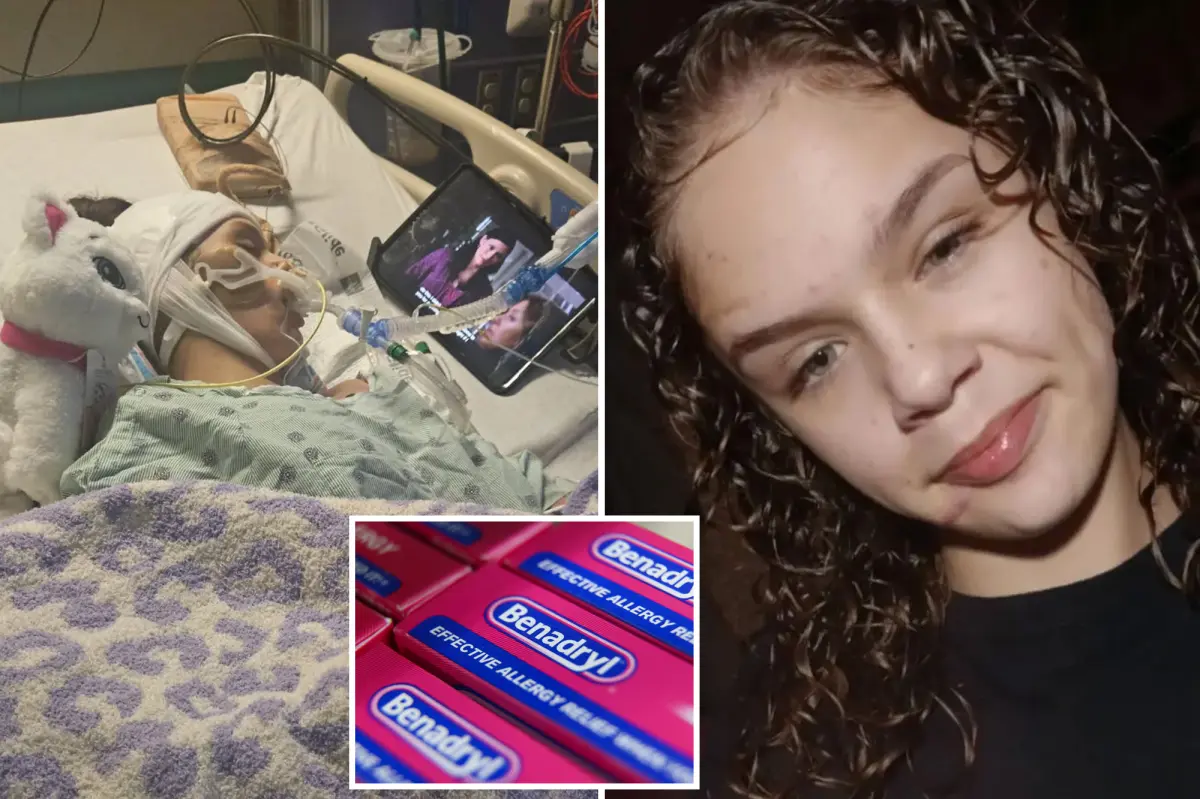
Behind the sterile, unyielding hum of medical machinery in an Oklahoma intensive care unit lies a family’s shattered reality and a heartbreaking testament to the hidden, devastating underbelly of modern teenage digital culture. Fifteen-year-old Leah Presson, described by her devastated father, Richard Presson, as a remarkably compassionate, giving, and vibrant young soul with an infectious laugh that could effortlessly light up the darkest of rooms, is currently fighting a silent battle for survival on life support. This bright teenager, whom her father tenderly refers to as his cherished and hard-won “miracle baby,” has tragically been declared brain dead following a sudden and catastrophic series of physical crises. What began as an ordinary day for a young girl with her entire future ahead of her rapidly devolved into an unimaginable, living nightmare when she fell victim to a highly dangerous, online-fueled social media trend that has taken the internet by storm. Sitting tirelessly by his daughter’s bedside, clutching her unresponsive hand, Richard refuses to let go of hope, constantly whispering words of unconditional love and encouragement into her quiet room, urging her to keep fighting and to remain strong against seemingly insurmountable medical odds. His unwavering faith in miracles is the only shield this grieving family has against the crushing weight of a silent brain scan, illustrating the agonizing vulnerability of parents who must watch their children suffer the unforeseen, catastrophic consequences of a brief, misjudged moment of digital experimentation. The contrast between Leah’s lively past and the stillness of her current hospital room serves as a stark, visceral reminder of how quickly a family’s life can be completely upended by the insidious influence of peer-driven virtual spaces.
The catalyst for Leah’s tragic condition is a deeply disturbing viral internet phenomenon known as the “Benadryl challenge,” a highly perilous trend sweeping across social media platforms like TikTok that preys upon the natural, albeit impressionable, curiosity of adolescence. This challenge encourages young teenagers to ingest extreme, highly toxic quantities of diphenhydramine—the active, over-the-counter antihistamine ingredient typically found in common household allergy medications like Benadryl—in order to induce a bizarre, hallucinogenic high or a disoriented state of delirium, which is colloquially referred to among young peer groups as “robotripping.” Driven by an overwhelming desire for social validation, digital acceptance, and algorithmic visibility, participants film their highly intoxicated states, showcasing their erratic, absurd, and often frightening behaviors to an online audience of thousands of virtual strangers. This dark mechanism of modern social media transforms a severe, life-threatening substance-abuse crisis into a performative game, where the fleeting currency of virtual likes, views, shares, and comments blinds young users to the immediate, brutal physiological dangers of drug overdose. The developmental psychology of teenagers, characterized by high impulsivity and an incomplete cognitive perception of long-term mortality, makes them uniquely vulnerable to these digital dares, turning ordinary household medicine cabinets into unrecognized minefields of potential self-harm. By gamifying the consumption of over-the-counter medications, these viral trends strip away the healthy sense of fear and caution that should naturally accompany drug use, replacing it with a reckless urge to participate in a shared, digital ritual, regardless of the physical cost. The allure of belonging in a digital space often overrides their instinct for self-preservation, fostering an environment where a dangerous chemical gamble is normalized as mere teenage fun.
From a medical standpoint, the physical descent from a high-dose antihistamine ingestion to irreversible brain death is swift, violent, and devastatingly logical. When diphenhydramine is consumed in quantities that vastly exceed normal, recommended therapeutic thresholds, it ceases to behave as a harmless allergy remedy and instead acts as a severe cardiotoxin and neurotoxin within the human body, targeting the heart and brain with lethal precision. As Dr. Ryan Brown, a pediatric specialist at Oklahoma Children’s at OU Health, explains, the extreme central nervous system overload brought on by excess Benadryl triggers violent, uncontrollable physical seizures alongside severe cardiac arrhythmias, which completely disrupt the heart’s natural electrical rhythm. These chaotic heart patterns can rapidly escalate into full-blown cardiac arrest, halting the crucial flow of oxygenated blood to the body’s most vital organs, most notably the brain. Left without a continuous supply of oxygen for even a few critical minutes, delicate cerebral tissues rapidly and irreversibly decay, culminating in the tragic state of clinical brain death that Leah’s family is currently confronting. The terrifying reality of this physiological process is that the human body’s emergency systems are simply overwhelmed, converting what a child might have mistakenly perceived as a harmless, temporary escape or a reversible recreational experience into a final, catastrophic system shutdown from which there is absolutely no physical recovery. Dr. Brown’s medical insights highlight the deceptive nature of over-the-counter medications, which are widely accessible in local grocery stores and thus falsely perceived by youth as inherently safe, masking their lethal potency when maliciously misused.
Leah’s devastating experience is, tragically, far from an isolated incident, but rather part of a broader, deeply concerning national public health crisis that has left a trail of immense grief in communities across the United States. Pediatric hospitals and local medical authorities throughout the country are increasingly reporting an alarming surge in emergency department admissions directly tied to this dangerous social media phenomenon, illustrating that no geographic region is entirely immune to its reach. In Connecticut, state and local authorities recently linked the toxic misuse of over-the-counter diphenhydramine to the tragic and untimely deaths of three local teenagers who succumbed to the physical trauma of over-ingestion, causing widespread shockwaves of grief among families who had no idea their children were experimenting with such lethal doses. Similarly, Rady Children’s Hospital in San Diego witnessed a chilling spike in admissions, documenting at least five emergency department visits within a single week due to adolescent experimentation with this specific online challenge, a statistic that underscores just how quickly these internet trends can spread and take hold of a student body. Meanwhile, Fort Worth Children’s Hospital in Texas has recorded a staggering influx of more than one hundred patient visits over an agonizing six-month period, a haunting statistic that tragically ended in at least one confirmed pediatric fatality. These mounting numbers paint a bleak, undeniable picture of an invisible epidemic spreading quietly through suburban homes and school hallways, where the easy availability of over-the-counter drugs collides with the hyper-connected, often unsupervised lives of modern youth, leaving pediatric emergency rooms overwhelmed and countless families grappling with the agonizing aftermath of preventable losses.
In response to this rising tide of juvenile medical emergencies, both regulatory bodies and digital platforms have attempted to implement safeguards, though their practical effectiveness remains a subject of intense ongoing debate as tech-savvy teens continuously find creative workarounds to evade algorithmic blocks and filter systems. Back in 2020, the Food and Drug Administration (FDA) issued an urgent, comprehensive public safety warning highlighting the severe physical consequences of excessive diphenhydramine consumption, specifically noting its direct link to heart failure, seizures, comas, and pediatric deaths associated with social media dares. For its part, the social media giant TikTok has modified its search algorithms so that queries containing phrases like “Benadryl” or the “Benadryl challenge” bypass user-generated videos entirely, redirecting searchers instead to community safety guidelines and substance abuse support resources to deter curious minds. However, public health experts and pediatricians emphasize that technological barriers alone are completely insufficient to protect children from these dangerous trends, urging parents to exercise heightened, proactive vigilance within their own households rather than relying on internet corporations to police their children’s safety. Dr. Brown advises parents to closely monitor their children’s daily behavior for unusual lethargy, disorientation, or agitation, and to physically search their household environments for telltale clues, such as empty pill bottles, missing blister packs, or unsecured medications that might have been hidden in bedroom drawers or closets. He stresses that treating the home medicine chest with the same safety protocols one would apply to any hazardous compound is a crucial step in keeping children safe, as early intervention can mean the difference between life and death.
Ultimately, humanizing the tragic story of Leah Presson requires us to look past the sterile warnings of federal regulators and the frightening statistics of hospital charts to recognize the profound human cost of our digital age. It demands that we empathize with the excruciating agony of a father standing vigil over his youthful daughter, clutching her hand, clinging to the fading hope of a medical miracle while mourning the vibrant, laughing child who was here just days before. This tragedy serves as a solemn, urgent wake-up call for families, educators, and technology companies alike, highlighting the desperate need for open, non-judgmental communication between adults and the digital-native generation who navigate online worlds without real-world context. We must cultivate environments where teenagers feel safe discussing the pressures, anxieties, and bizarre trends they encounter online, ensuring they understand that their worth is not measured in social media engagement and that the dangers of the real world cannot be turned off with the swipe of a screen. By transforming our collective grief, frustration, and anger into active awareness, targeted digital education, and compassionate parental involvement, we can honor Leah’s struggle and work tirelessly to ensure that no other family has to endure the silent heartbreaks of an empty bedroom, a quiet hospital ward, and a young life cut tragically short by an internet trend. We must bridge the gap between youth and safety, restoring the protective boundaries of childhood in an increasingly borderless and unpredictable digital world that our children are not yet equipped to navigate alone.