



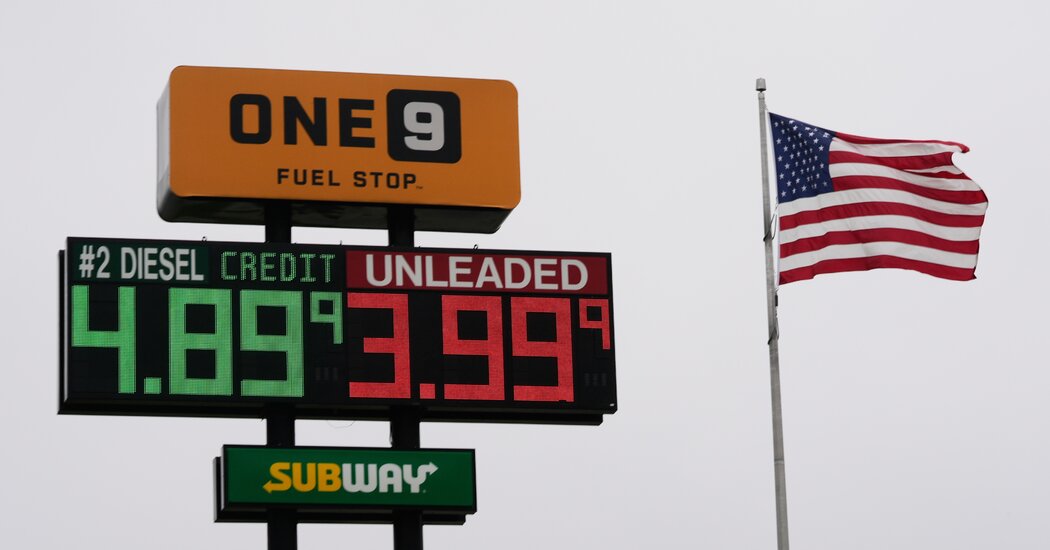
The global financial ecosystem experienced a sudden, dramatic sigh of relief on Monday morning as crude oil prices plummeted and stock markets across the globe surged upward, giving ordinary citizens, small business owners, and global investors a welcome reprieve from weeks of grueling economic anxiety. For months, the dark, suffocating specter of escalating military tensions in the Middle East had cast a heavy shadow over the international community, driving up energy costs and inflating the everyday expenses of households from the suburbs of Ohio to the bustling markets of Mumbai. High oil prices do not exist in a vacuum; they act as a hidden tax on everything we consume, driving up the cost of transporting food, manufacturing essential goods, and keeping homes warm during the colder months. The sudden shift in economic momentum was triggered by an unexpected, high-profile announcement from President Donald Trump, who revealed that the United States and the Islamic Republic of Iran had successfully hammered out a breakthrough diplomatic agreement designed to reopen the strategically vital Strait of Hormuz. For the average commuter who has watched the numbers on gas pumps climb steadily with a sense of quiet dread, this sudden drop in oil prices represents far more than a mere statistical fluctuation on a trading screen; it represents real, physical relief, a reduction in the daily cost of transportation, and a hopeful sign that the relentless, exhausting cycle of inflation might finally be losing its grip on the global populace. Behind the abstract, flashing charts of Wall Street and the London Stock Exchange are millions of real human beings whose livelihoods, heating bills, and grocery budgets are directly tethered to the volatility of global energy markets. By stabilizing these markets and injecting a fresh wave of confidence into international commerce, this diplomatic achievement has temporarily lifted a heavy psychological burden that had paralyzed consumer confidence and threatened to plunge the global economy into a deep, dark recession. The immediate, overwhelmingly positive reaction of the world’s stock markets serves as a powerful, undeniable testament to how a single, well-timed diplomatic breakthrough can instantly alleviate collective human anxiety, transforming a prevailing atmosphere of dread and economic pessimism into a shared moment of relief, security, and cautious optimism for a more affordable and stable future.
This monumental breakthrough was not achieved overnight, but was instead the culmination of weeks of incredibly tense, back-channel diplomacy that, at several points, appeared to be on the verge of total collapse as both Washington and Tehran dug in their heels and prepared for the worst. A central figure in breaking this historic deadlock was the Prime Minister of Pakistan, who stepped forward to act as a crucial mediator, quietly shuttling messages, building trust, and constructing a fragile bridge of communication between two nations that have historically viewed each other with deep-seated suspicion, hostility, and a refusal to engage in direct dialogue. The Pakistani leader’s tireless efforts highlighted the profound, human element of international diplomacy, reminding the world that even the most formidable geopolitical divides can be bridged when determined individuals are willing to facilitate dialogue and seek common ground out of the public eye. In a revealing statement that offered a rare glimpse into the comprehensive scope of these delicate peace talks, the Prime Minister noted that the newly reached agreement was not merely a narrow, isolated commercial transaction regarding shipping lanes, but a much broader stability framework that specifically encompassed the highly sensitive and volatile situation in Lebanon. This critical expansion of the deal underscored the reality of modern Middle Eastern geopolitics, where regional conflicts are deeply interconnected, and a tremor in one nation is inevitably felt across the entire territory, affecting innocent civilians far beyond the immediate zone of conflict. With the fundamental groundwork now painstakingly laid, the eyes of the international community have collectively turned toward Switzerland—a sovereign nation whose very name has long been synonymous with neutrality, peace, and cooperative global conflict resolution. A formal, historic signing ceremony is scheduled to take place there this coming Friday, promising to transition these fragile verbal agreements and digital announcements into a binding treaty that could redefine security dynamics in the Middle East for generations to come, giving hope to millions who long for a peaceful future.
While the initial announcement was met with widespread celebration, the specific operational details and technical intricacies of the agreement remained frustratingly opaque, shrouded in the typical secrecy that accompanies high-stakes international deal-making. Despite this lack of concrete detail, it was abundantly clear that restoring the safe and unimpeded passage of merchant vessels through the narrow, shallow waters of the Strait of Hormuz had been established as one of President Trump’s absolute highest geopolitical and economic priorities, recognized as essential for preventing a global energy crisis. The President took to social media to broadcast this triumph with his signature theatrical flair, writing, “I hereby fully authorize the toll-free opening of the Strait of Hormuz, and, simultaneously herewith, authorize the immediate removal of the United States Naval blockade. Ships of the World, start your engines. Let the oil flow!” This colorful and triumphant declaration, while designed for maximum public impact, carries profound and deeply personal significance for the thousands of young military personnel stationed aboard United States Navy vessels currently deployed to the region. For months, these sailors, engineers, and commanders had been operating on a footing of extreme vigilance, scanning the horizon for hostile drones, fast-attack boats, or naval mines under the constant, exhausting pressure of potential combat. The authorized removal of the naval blockade is not merely a tactical maneuver on a military map; it is a profound de-escalation that allows these service members to breathe a sigh of relief, knowing that the immediate threat of a localized clash turning into a catastrophic regional war has been averted. For the families of these service members back home, who have spent weeks glued to the news in constant fear for their loved ones’ safety, the President’s decree represents a deeply emotional homecoming of sorts, signaling a return to relative normalcy, relief, and peace.
On the other side of this diplomatic equation, the news was received with a profound sense of exhaustion and quiet hope within Iran, a nation that has struggled for years under the crushing, suffocating weight of severe international economic sanctions and near-total maritime isolation. The confirmation of the deal by Iran’s Deputy Foreign Minister marked a critical turning point, indicating that Tehran was indeed ready to match the American concessions with significant, concrete steps of its own to restore balance to the region. The physical dismantling of the U.S. naval blockade—which was originally implemented to halt the flow of Iranian crude oil to foreign buyers—is only one half of the complex equation required to safely restore international shipping through the narrow water passage off Iran’s southern coast. To fulfill its part of the bargain under the newly minted accord, the Iranian government must willingly relinquish its aggressive monitoring, boarding, and harassment of commercial vessels, a practice it had increasingly utilized as geopolitical leverage in its ongoing stand-off with Western powers. For the ordinary, everyday citizens of Iran, who have watched their currency lose its value and their local grocery shelves empty under the relentless pressure of economic warfare, the reopening of the strait offers a vital glimpse of economic survival and a potential return to the global marketplace. The commitments agreed upon by Iran under the accord are scheduled to officially commence on Friday, perfectly synchronized with the signing ceremony in Switzerland, initiating a delicate, highly coordinated dance of reciprocal compliance that will test the political will, honor, and courage of leaders in both Washington and Tehran as they attempt to execute a peaceful transition from hostility to mutual coexistence on the world stage.
To truly appreciate the vital importance and human scale of this development, one must look beyond the political rhetoric and focus on the civilian mariners—the thousands of merchant sailors, container ship captains, and cargo engineers—who operate the immense vessels that navigate the world’s most perilous maritime choke points. For months, these civilian crews, representing dozens of different nationalities, have sailed through the narrowest passages of the Persian Gulf with a constant sense of dread, knowing that a single geopolitical miscalculation, stray drone strike, or a hostile boarding could result in physical harm, ship seizure, or prolonged captivity in a foreign land. The reopening of this critical waterway, which serves as a passage for roughly twenty percent of the world’s daily petroleum consumption, is a monumental victory for global labor, maritime safety, and logistical predictability. It restores a vital lifeblood artery to the planetary economy, ensuring that factories in Asia can keep humming, agricultural machinery in South America can keep harvesting, and distribution centers in Europe can keep operating without the constant, looming threat of supply chain disruptions. The deeply personal stories of these mariners, who can now call their worried families back home to report that they are finally sailing through safe, peaceful waters, serve as an invaluable reminder that international relations are not simply abstract games played with barrels of oil, trading algorithms, and stock indexes; they have a direct, visceral impact on the safety, dignity, and sanity of the everyday workers who keep the physical machinery of global civilization running under the most challenging, high-stress conditions imaginable. By prioritizing the safety of these essential maritime corridors, this agreement directly honors the quiet, often overlooked contributions of the global merchant fleet, restoring peace of mind to the fathers, mothers, sons, and daughters who make their living on the high seas.
As the world eagerly awaits the historic Friday signing ceremony nestled in the quiet, scenic landscape of Switzerland, a healthy dose of caution and constructive skepticism remains among seasoned international analysts, who correctly point out that the path from a verbal agreement on social media to a durable, lasting peace on the water is filled with hidden obstacles. The details of the agreement remain opaque, and many difficult questions about monitoring compliance, resolving unexpected disputes, and ensuring long-term maritime safety still need to be addressed in the diplomatic chambers of Geneva. Yet, despite these unresolved complexities, the overwhelming global sentiment remains one of profound relief and collective hope. The immediate, positive reaction of international markets and the rapid drop in domestic energy prices have demonstrated beyond a shadow of a doubt that the global community is desperate for stability, cooperation, and diplomatic resolution over the devastating and unpredictable alternative of armed conflict. In a world increasingly fractured by political polarization and regional rivalries, this unexpected accord stands as a beacon of what is possible when pragmatic diplomacy is prioritized over ideological posturing. As the diplomatic delegations prepare to gather in Switzerland this Friday, there is a shared, global hope that this fragile agreement will hold, proving that even the most bitter, long-standing adversaries can choose to put aside their differences in favor of mutual survival, regional stability, and economic sanity. Ultimately, the true success of this historic diplomatic breakthrough will not be measured by the eloquence of the speeches delivered in Switzerland, but by the quiet, undisturbed wakes of massive cargo ships sailing safely through the warm, blue waters of the Strait of Hormuz, lighting a pathway toward a more peaceful, interconnected world where trade flows freely and the looming shadows of war recede.