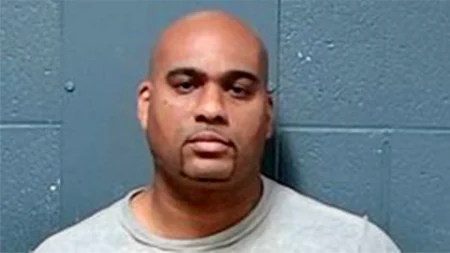




On what began as a deceptively quiet midsummer afternoon in Miami Township, Ohio, the mundane rhythms of daily suburban life were abruptly shattered by a sequence of events so bizarre they felt ripped from a high-octane Hollywood action film rather than the streets of a quiet Midwestern community. It all started with a call that local police officers receive every single day: a routine report of shoplifting at a local Kroger grocery store. The suspects, later identified by authorities as Kaamil O’Berry and David Sutter, had allegedly walked out of the supermarket with stolen merchandise—a petty offense that typically culminates in a routine traffic stop, a quiet arrest, and a sobering court date. However, when Miami Township police officers spotted the suspects’ vehicle and pulled them over on July 27, the atmosphere inside the car shifted instantly from tense compliance to pure, unadulterated panic. For reasons known only to him in that high-adrenaline moment, O’Berry decided that surrender was simply not an option. Without warning, he kicked open the passenger door, bypassed his companion Sutter, and bolted into the stifling summer heat. His sneakers pounded against the hot pavement as he ran blindly toward the nearby on-ramp of Interstate 75, desperate to put distance between himself and the flashing blue lights of the police cruiser. To the pursuing officers, it was a sudden, chaotic escalation of a minor crime, but for O’Berry, it was the beginning of a reckless, manic flight from reality. This sudden psychological transition from a shoplifting suspect to a panicked fugitive running toward a high-speed interstate underscores the unpredictable nature of human fear, setting the stage for a terrifying encounter that would soon capture the attention of motorists and highway cameras alike.
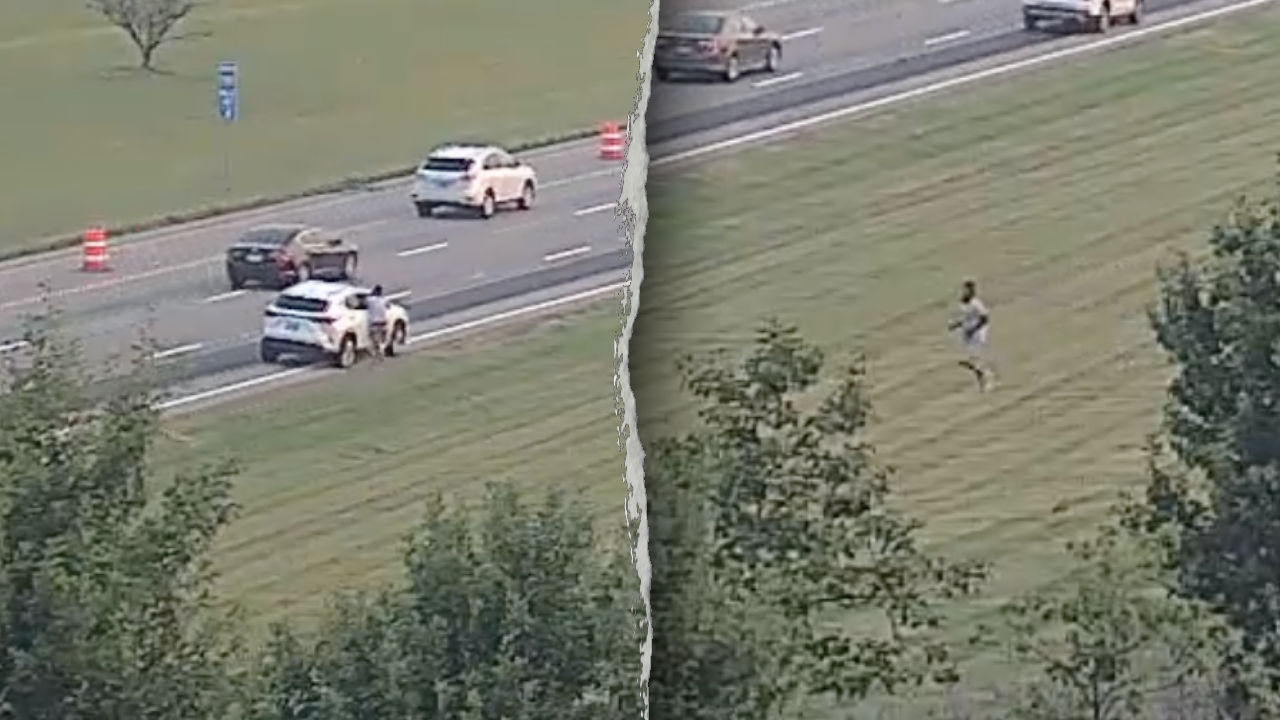
For the thousands of commuters traveling along Interstate 75 that afternoon, the highway was merely a familiar conduit to their destinations—a long stretch of multi-lane asphalt where drivers lost themselves in the comforting hum of tires, the drone of the radio, and the general monotony of the daily drive. Among them was an unsuspecting woman, driving her car down the busy interstate, completely unaware that her peaceful, ordinary day was about to collide violently with a stranger’s desperate bid for freedom. As she cruised along in her lane, O’Berry was sprinting down the highway on-ramp, his chest heaving and his eyes scanning the fast-moving traffic for any possible avenue of escape. In a split-second decision born of sheer desperation and failing logic, he stepped directly into the path of oncoming traffic, dodging heavy vehicles before lunging headlong toward her approaching car. To the driver, the sudden appearance of a human being running wildly onto a high-speed interstate must have seemed like a terrifying hallucination. Before she could even process the visual anomaly or slam on her brakes, O’Berry leaped into the air, landing squarely on the hood of her moving vehicle. The sheer terror of that moment is almost impossible to fully comprehend; in a fraction of a second, her view of the open road was replaced by the frantic, wild-eyed face of a desperate man clinging to her hood for dear life as the car continued to barrel down the highway at lethal speeds.
What followed was a harrowing struggle of physics, fear, and raw survival played out on the hood of a moving car in front of horrified onlookers. Clinging desperately to the edges of the hood and the windshield wipers, O’Berry was battered by the rushing, high-velocity wind as the vehicle continued down the interstate. Inside the cabin, the driver was trapped in a living nightmare, her view of the highway completely obstructed by the sprawling body of a stranger who was actively and frantically trying to take control of her vehicle from the outside. In his state of absolute panic, O’Berry began to violently strike the windshield, his fists and the heavy impact of his body finally causing the safety glass to spider-web and shatter inward with a deafening crack. The terrifying sound of breaking glass, combined with the howling wind and the screech of tires, created an overwhelming sensory assault inside the vehicle. For the female driver, every second of this ordeal must have felt like an eternity as she struggled to keep her vehicle traveling straight, terrified of what would happen if the desperate man managed to break completely through the glass or if she lost control and crashed into the concrete median. O’Berry, too, was locked in a terrifying paradox of his own creation: he was desperate to stop the car and evade the police, yet letting go of the hood meant falling onto the hard, unforgiving asphalt at a speed that would almost certainly result in catastrophic injury or death.
Ultimately, the cold laws of physics and human physical exhaustion brought the high-speed drama to a violent and painful conclusion. As the car continued its erratic path down the highway, eventually vanishing from the immediate view of the overhead traffic cameras, O’Berry’s grip on the shattered windshield finally failed. He slipped from the hood and tumbled onto the hard, abrasive surface of Interstate 75, his body rolling violently across the lanes. The brutal impact with the asphalt instantly neutralized the threat he posed, leaving him severely injured, dazed, and unable to flee any further on the shoulder of the road. Pursuing officers, who had been helplessly tracking the bizarre spectacle from a distance, quickly arrived at the scene and immediately transitioned from a high-speed pursuit to an emergency medical response. They secured the highway lanes to prevent O’Berry from being struck by other vehicles and immediately summoned paramedics to the scene. O’Berry was arrested and subsequently rushed to a nearby hospital to receive urgent treatment for the numerous injuries he sustained during his harrowing fall. Meanwhile, back at the site of the initial traffic stop, David Sutter remained in police custody, his afternoon ending not with a death-defying leap onto a highway, but with the quiet, somber reality of metal handcuffs and a charge of complicity to theft, illustrating the vast and tragic divergence of two paths chosen in a single moment of panic.
In the quiet aftermath of the chaotic pursuit, the full and heavy weight of the criminal justice system descended upon both men, particularly O’Berry, whose desperate actions had elevated his legal jeopardy from a minor misdemeanor to a series of severe felonies. Upon his release from the hospital, O’Berry was officially booked into jail on charges of obstructing official business, theft, and aggravated robbery—the latter charge reflecting his violent attempt to commandeer the innocent woman’s moving vehicle. For a few stolen items from a local Kroger, he now faced the very real prospect of spending years of his life behind bars, a sobering and tragic reminder of how quickly a single panic-induced decision can decimate a person’s future. Yet, the legal charges tell only a small part of the story, as the true human toll of this bizarre incident extends far beyond the suspects themselves. The innocent driver, who woke up that morning expecting nothing more than a routine trip, was left to pick up the psychological and financial pieces of an incredibly traumatic experience. Though she miraculously escaped physical injury, she was left with a destroyed vehicle, a shattered windshield, and the lingering, invisible scars of a terrifying assault on her peace of mind. The memory of a desperate man clinging to her hood and shattering her windshield is not something that easily washes away, highlighting the deep collateral damage that reckless criminal behavior inflicts on ordinary, innocent members of society.
Ultimately, this wild highway chase on Interstate 75 serves as a deeply poignant and unsettling commentary on the fragile, unpredictable nature of modern life. In an era where almost every public space is monitored by digital eyes, the entire terrifying episode was captured on high-definition traffic cameras, transformed instantly into viral footage for the world to watch, dissect, and debate in disbelief. It forces us to confront the incredibly thin, precarious line that separates a quiet, mundane afternoon from an extraordinary, life-threatening crisis. It also shines a harsh light on the deep-seated desperation that can drive a human being to leap onto a moving car hood in a futile, illogical attempt to escape the consequences of his actions. While the dramatic video footage may look like a sensationalized internet clip, the real-world consequences are painfully human: a driver traumatized, a community startled, and two lives permanently derailed by a series of foolish choices. As the dust finally settles in Miami Township, the story remains a stark, sobering warning about the compounding nature of panic and a profound testament to the resilience of ordinary citizens who, through no fault of their own, are suddenly forced to navigate the absolute extremes of human desperation on the open road.