




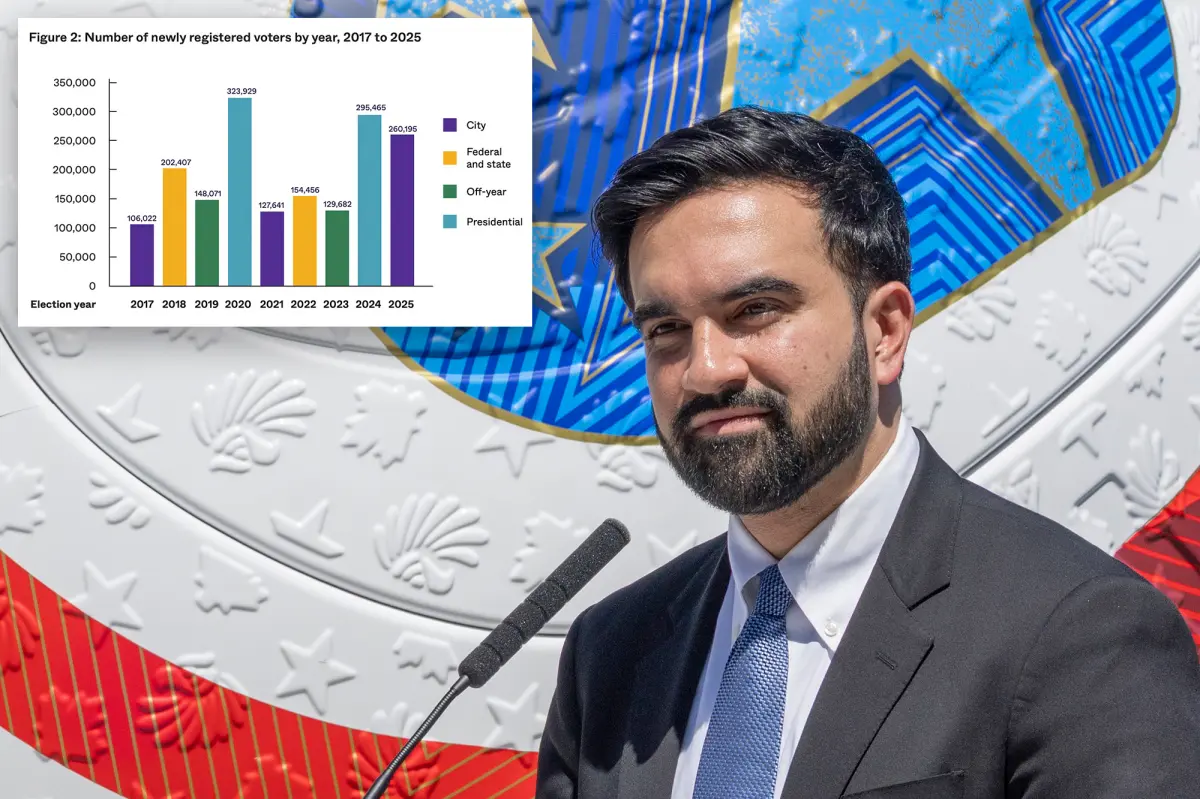
In the bustling streets of New York City, where the air hums with the energy of millions of dreamers and doers, a quiet revolution unfolded in the 2025 municipal elections. Picture this: young people, once dismissed as apathetic or too buried in their phones and TikTok feeds, suddenly poured out of coffee shops, university campuses, and subway stations, armed with a newfound passion for civic duty. It felt almost electric, like that first spark of spring when the city’s parks come alive with picnics and impromptu games. New voter registrations more than doubled compared to 2021, climbing to over 260,000 fresh faces joining the electoral rolls—a figure that rivaled the excitement of presidential years when the whole nation seems to hold its breath. Two-thirds of these newcomers were under 30, turning what could have been just another local election into a veritable youthquake. Turnout soared to levels unseen for over half a century, echoing the fervor of the 1969 mayoral race, when the city was grappling with its own upheavals. For many, this wasn’t just about voting; it was about believing in a system that seemed dusty and out of touch, suddenly made accessible by charismatic voices willing to meet young New Yorkers where they were—at online rallies and viral challenges. As the Campaign Finance Board’s analysis revealed, modest changes like expanded early voting and digital outreach likely tipped the scales, but underlying it all was a genuine hunger for change. You could sense it in the long lines at polling sites, where laughter mixed with earnest debates about rent control and climate justice. And yet, as the confetti settled, a nagging question lingered: Was this a fleeting storm, or the dawn of a new era where Gen-Z and millennials owned the ballot box? In the heart of Gotham, the usual cynicism battled hope, reminding everyone that elections are as much about humanity as they are about numbers.
Diving deeper into the demographics, the story of 2025’s youth surge becomes even more compelling, like profiling a cast of characters in a gritty urban novel. Roughly 42% of registered voters aged 18 to 29 showed up at the polls for the general election—a staggering leap from the measly 11.1% who bothered in 2021, when Eric Adams clinched the mayoralty amid far less fanfare. Imagine a college sophomore named Alex, juggling classes and part-time gigs, who skipped a Friday night out to stand in line for hours, inspired by memes and debates that made politics feel relatable. Or consider Mia, a recent grad navigating New York’s relentless hustle, who saw voting as her first real act of defiance against systemic inequities. This tidal wave didn’t just bloat the turnout; it shaved a full decade off the average voter’s age, dropping it from 55 to 50. Experts from the Campaign Finance Board, led by executive director Paul Ryan, framed it as a landmark event, with Ryan himself noting how voters embraced ranked choice voting like never before, treating it as an interactive game rather than a chore. “It was like the city woke up,” he might say in an interview over a black coffee at a diner, explaining that the ease of registration—through apps and pop-up booths in youth hotspots—mirrored the accessibility of streaming services. But beneath the excitement, data nerds like Jerry Skurnik, a senior consultant with Engage Voters US, cautioned that this wasn’t just a fluke. Drawing parallels to the Obama 2008 phenomenon, where millions of young people rallied for hope and change, Skurnik marveled at how New York’s version felt almost miraculous, with turnout skyrocketing without the national spotlight’s glare. He recounted stories of disillusioned teens turning into activists overnight, sharing clips where policy debates transformed into duets with trending songs. Yet, as Skurnik pondered aloud in a conversation filled with optimism tinged by realism, this energy could dissipate like steam from a subway grate if candidates failed to sustain the connection. The human element here wasn’t just in the stats—it was in the personal stories of first-time voters discovering their voices, proving that democracy thrives when it feels personal and participatory.
The surge wasn’t random; it was a pivotal force in Mayor Zohran Mamdani’s unexpected victory, painting a picture of a leader who mastered the art of digital alchemy to galvanize a generation. Think of Mamdani as that charismatic professor who turns lecture halls into arenas of applause, using social media to bridge gaps that older politicos couldn’t fathom. He connected with Gen-Z through viral clips—short, snappy videos debunking myths about voting being “boring or irrelevant,” interspersed with upbeat music and relatable anecdotes from his own life as an outsider challenging the status quo. “It’s about meeting people where they are,” Mamdani might explain in a fireside chat, recalling how a simple TikTok duet about affordable housing racked up millions of views, inspiring reply chains that turned viewers into volunteers. Polls leading into the Democratic primary underestimated this youth tsunami, projecting ex-Gov. Andrew Cuomo as the frontrunner, only for the actual votes to reveal a different reality. Skurnik, analyzing the numbers like a detective piecing together a puzzle, attributed much of Mamdani’s win to this energized demographic. “He excited the young people,” Skurnik said with a grin, as if recalling a kid scoring the game-winning goal. Stories abound of millennial coordinators organizing block parties that morphed into voter drives, blending hip-hop beats with registration forms. Yet, this human tide carried a caveat: It wasn’t solely about one man. The broader embrace of ranked choice voting allowed strategic voting, where preferences stretched beyond a single prospect, transforming the race into a festival of ideas. As night fell on election day, the roar of victory parties echoed Mamdani’s slogan, “Every Vote Counts,” but whispered doubts lingered about whether this wave could carry forward without his magnetic draw. In the end, 2025 felt like a love letter from the youth to the city, proving that when leaders humanize politics—making it a conversation over coffee rather than a lecture on a podium—magic happens.
But as with any high, the aftermath brought a sobering reality check, underscoring the fragility of this youth-driven momentum. While Mamdani’s win was a triumph, it wasn’t a guarantee that his followers would mobilize en masse for every cause or candidate. Picture a special election for a vacant state Senate seat in Manhattan just weeks later, where the drama on the ballot was far less glamorous—a stark contrast to the mayoral spectacle. Mamdani threw his endorsement behind Lindsey Boylan, a progressive voice promising transparency and reform, hoping his legion of young supporters would rally. But reality bit back: Boylan was soundly defeated by establishment candidate Carl Wilson, who appealed to more traditional voters with promises of stability. It was a stark reminder that the mayor couldn’t simply “snap his fingers,” as Skurnik delicately phrased it, to command his base. Behind the scenes, stories circulated of young activists feeling burnt out or divided, their enthusiasm waning without the unifying star power. “It’s like a flash mob—amazing in the moment, but hard to sustain,” one volunteer lamented over email chains rife with frustration. Gotham Polling & Analytics, analyzing trends with the precision of urban planners, predicted that upcoming races might falter similarly. For the June 23 congressional Democratic primary in Manhattan District 12, replacing retiring Rep. Jerry Nadler, the firm pointed to historical data showing older voters aged 50 and up dominating turnout at 72-74% in past primaries. Unlike the mayoral open field that ignited passions, this confined contest focused on insiders and factions, potentially sidelining the youth. The analysis emphasized that the Mamdani phenomenon—remarkable as it was with record highs and unprecedented engagement—was tied to a unique electoral dynamic, one unlikely to repeat in a less charismatic race. As experts like Ryan warned, more needed to be done to ease participation, from mobile apps to community hubs, to prevent this spark from flickering out. In these human stories, the lesson emerged: Voter surges are built on trust and connection, not just one charismatic figure, and sustaining them requires ongoing effort, like tending a garden in a concrete jungle.
Looking ahead, the narrative of New York’s youth voting revolution hinges on whether this 2025 wave can evolve into a lasting tide, reshaping the city’s political landscape for generations. If sustained, it could mean a fundamental shift, where policies on housing, education, and climate reflect younger priorities, turning “the kids are alright” into a governing reality. But the road ahead is bumpy, with structural baselines favoring experienced voters in tighter races, as Gotham’s report cautioned. Imagine a future where tech-savvy campaigns become the norm, blending AI-driven outreach with grassroots storytelling to keep engagement alive. Yet, without leaders willing to adapt—like Mamdani did—enthusiasm might wane, reverting to low turnout eras. Experts envision scenarios where expanded digital tools democratize access, but human elements like mentorship programs could bridge generations. Picture a mentorship where seasoned activists guide Gen-Z newcomers, sharing war stories over bagels in Washington Square Park, fostering a sense of continuity. The 2025 surge, while extraordinary, serves as a blueprint: Voters under 30 proved they’re not just participants but catalysts, capable of flipping norms when motivated. As New York braces for more elections, the challenge is to humanize democracy further—making it feel like a neighborhood conversation, not a distant decree. Will the youth heed the call again, or drift back to indifference? Only time, and consistent engagement, will tell, turning the city’s political saga into one of enduring hope.
Ultimately, the 2025 elections in New York City stand as a testament to the power of youth agency, a reminder that democracy flourishes when it includes everyone’s voices, young and old alike. The surge in registrations—over 260,000 new voters, predominantly under 30—coupled with historic turnout, didn’t just elect a mayor; it rekindled faith in civic participation. Mamdani’s social media savvy bridged divides, but the true legacy lies in empowering future generations to see voting as an extension of their daily lives, from environmental rallies to economic debates. Yet, cautions from analysts like Skurnik highlight the risks: Without ongoing innovation and inclusivity, this momentum could fade, leaving the city vulnerable to the same apathy that plagued past cycles. Stories of first-time voters swapping cynicism for action underscore the human core—real people, real stakes. As New York evolves, the goal must be to institutionalize this vibrancy, ensuring every election feels accessible and exhilarating. From subway ads to virtual town halls, the tools exist; what’s needed is the commitment to use them, humanizing politics one connection at a time. In the end, 2025’s youthquake wasn’t just a blip—it was a call to action, urging the city to prioritize voices that drive change, proving that when democracy is personal, it’s unstoppable. And so, as the sun rises on another day in the Big Apple, the hope endures that this wave will inspire a generation to keep shaping their city’s future, word by word, vote by vote.