







A Sovereign’s Breath: Inside Crown Princess Mette-Marit’s Critical Surgery and the Storm Surrounding the Norwegian Monarchy
The Hushed Corridors of Rikshospitalet: A Royal Health Crisis Culminates in Surgery
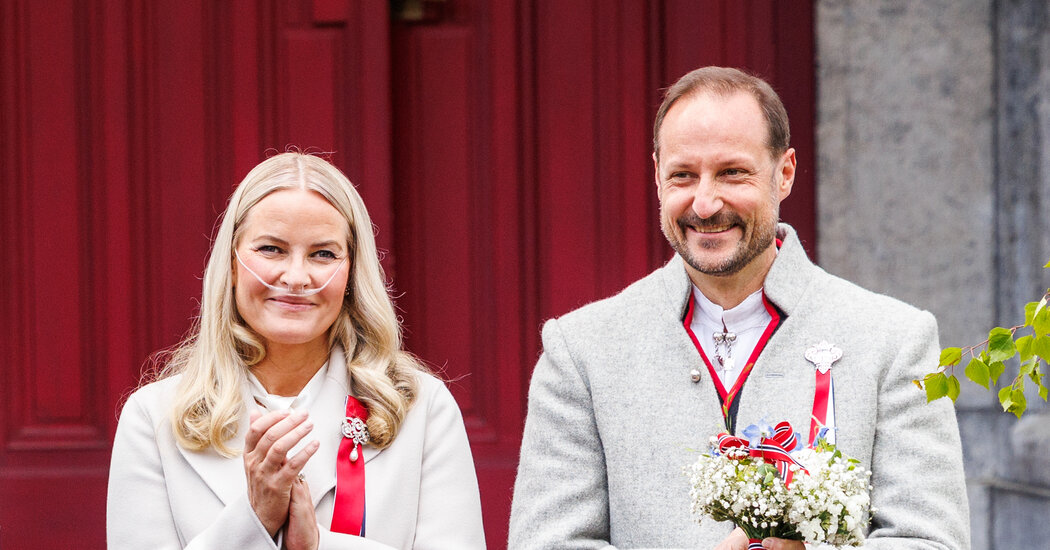
On a quiet, overcast autumn morning in Oslo, the royal house of Norway delivered an announcement that sent waves of relief—and lingering anxiety—across the Scandinavian nation: Crown Princess Mette-Marit had successfully undergone a highly complex double lung transplant. The 52-year-old royal, who has captured the public’s heart since her fairytale marriage to Crown Prince Haakon more than two decades ago, underwent the delicate surgical procedure at the Oslo University Hospital Rikshospitalet, a premier institution renowned for its pioneering work in cardiothoracic medicine. According to official communications released by the palace, the princess had been placed on the organ donor waiting list just two weeks prior, following a rapid and alarming deterioration in her pulmonary capacity that left her increasingly dependent on supplementary oxygen. Dr. Arnt Fiane, the esteemed head of the hospital’s cardiothoracic surgery department, confirmed that the immediate postoperative outcomes were highly encouraging, though he cautioned that the road to recovery would be long, arduous, and fraught with medical challenges. To mitigate the ever-present risks of organ rejection and opportunistic infections, the princess is scheduled to remain under high-surveillance clinical care within the sterile confines of the hospital for several weeks—a standard precaution for transplant recipients whose immune systems must be aggressively suppressed to accept the foreign tissue. For years, the public had watched with growing concern as the princess valiantly attempted to fulfill her rigorous state obligations, occasionally photographed wearing subtle nasal cannulas and portable oxygen concentrators during official engagements. This successful surgical intervention marks the end of a terrifying chapter of physical decline, but it simultaneously ushers in a highly volatile period of physical rehabilitation for a woman destined to one day sit beside her husband on the Norwegian throne.
The Ethics of the List: Demystifying the Speed of a Royal Transplant
In a welfare state like Norway, where egalitarianism is woven into the very fabric of national identity, the rapid timeline of Crown Princess Mette-Marit’s transplant inevitably sparked quiet whispers of skepticism and questions regarding potential systemic favoritism. However, medical experts and advocacy groups quickly stepped forward to demystify the transplant allocation process, explaining that organ matching is governed strictly by clinical algorithm rather than social status or royal pedigree. Marthe Gundersen, a prominent medical adviser at the National Association for Heart, Lung and Stroke, emphasized that the waiting period for suitable donor organs is highly unpredictable and relies entirely on biological compatibility, blood type, body cavity size, and the tragic, sudden availability of a matching donor. Coincidentally, the princess’s high-profile struggle has had an extraordinary, positive impact on civic behavior, triggering what social commentators are calling the “Mette-Marit Effect” across the country. Aleksander Sekowski, the official spokesperson for Norway’s Organ Donation Foundation, remarked that the crown princess’s raw vulnerability and the public disclosure of her deteriorating condition served as an unprecedented catalyst for public health engagement. Within days of the palace announcing that the future queen had been placed on the critical transplant waiting list, more than 11,700 Norwegians rushed to register online as organ donors—a monumental surge that medical professionals predict will save countless ordinary lives in the years to come. Thus, while some international observers questioned the swiftness of her procedure, the reality on the ground in Oslo was one of deep administrative transparency, scientific integrity, and a sudden, profound wave of national altruism that united the citizenry in a shared contract of life-saving solidarity.
The Invisible Suffocation: Confronting the Reality of Pulmonary Fibrosis
To fully understand the gravity of the crown princess’s surgery, one must understand the relentless, unforgiving pathology of the disease that has haunted her daily life for over half a decade. Diagnosed in 2018 with a chronic, progressive form of pulmonary fibrosis, Mette-Marit faced a diagnosis that essentially meant her own immune system was systematically attacking her respiratory system, replacing delicate, elastic lung tissue with stiff, non-functional scar tissue. This progressive scarring, known medically as fibrotic scarring, slowly prevents the air sacs from transferring vital oxygen into the bloodstream, leaving patients with a perpetual, exhausting sensation of suffocation even during minimal physical exertion. Over the past six years, the princess’s journey has been an agonizing public exercise in stamina and grace; she frequently had to cancel high-profile diplomatic trips, cut appearances short, and retreat from public life for weeks at a time as her medical team tried desperately to slow the disease’s march with experimental anti-fibrotic medications. As the scarring reached a critical, terminal threshold this year, the physiological demand on her heart and remaining healthy lung tissue became unsustainable, forcing the hand of her medical team to pursue the high-risk, high-reward option of a double lung transplant. Yet, as Marthe Gundersen astutely pointed out, while the successful completion of the transplant surgery represents a monumental triumph of modern medicine, it is merely the opening bracket of a lifelong struggle. The princess must now navigate a grueling, lifelong regimen of heavy immunosuppressive therapies, intensive physical therapy to rebuild her atrophied chest muscles, and the constant psychological burden of knowing that her new breath was made possible by an anonymous donor’s final tragedy.
Shadows Over the Palace: The Trial and Conviction of Marius Borg Høiby
The biological battle for the crown princess’s life has unfolded against a highly dramatic, distressing backdrop of legal turmoil and familial disgrace that has shaken the Norwegian monarchy to its core. Just days before Mette-Marit entered the operating room, an Oslo court handed down a devastating guilty verdict to her eldest son, 29-year-old Marius Borg Høiby, sentencing him to four years in federal prison for rape and an array of physical and psychological abuses against former romantic partners. Høiby, who was born to Mette-Marit prior to her marriage into the royal family and has lived a life largely outside the formal constraints of royal protocol, has occupied the center of a media firestorm that has severely damaged the institution’s public standing. In a move that drew swift condemnation from legal ethicists and the Norwegian public, Høiby’s defense team attempted to leverage his mother’s critical health condition during the trial, petitioning the court for his release pending appeal by citing the emotional distress of his mother’s impending lung transplant. The court, however, remained unmoved by these appeals to maternal dependency, emphasizing the severe nature of his criminal actions and the necessity of justice for his victims. Throughout the harrowing legal proceedings, the royal family maintained a disciplined, painful distance from the court, refusing to attend hearings or offer public defenses for Høiby’s behavior in a calculated effort to preserve the dignity and impartiality of the crown. This internal polarization—a mother fighting for her life in a sterile hospital ward while her firstborn son faces the cold reality of a prison cell—has painted a deeply human, tragic portrait of a family simultaneously dealing with existential mortality and profound public humiliation.
A Dynasty Under Siege: The Ghost of Jeffrey Epstein and the Crisis of Trust
For historians of the Scandinavian monarchies, the current compounding crises facing the House of Glücksburg represent a dark, unprecedented chapter of vulnerability that threatens the very future of the institution. Long celebrated for their approachability, modesty, and deep alignment with modern democratic values, the Norwegian royals have seen their historically high approval ratings slip under the weight of successive public relations catastrophes. Earlier this year, investigative journalists published highly compromising files revealing that Crown Princess Mette-Marit had maintained a friendly, recurring social relationship with the convicted American sex offender Jeffrey Epstein, meeting with him on multiple occasions between 2011 and 2013—years after his initial conviction for procuring underage girls for prostitution. Although the princess eventually issued a deeply contrite public apology expressing her profound regret and admitting to a catastrophic error in moral judgment, the revelation left a lasting stain on her reputation, alienating progressive segments of the Norwegian electorate. Historians specializing in the royal family argue that the toxic combination of the Epstein association, coupled with the domestic violence and sexual assault conviction of Marius Borg Høiby, constitutes the most severe reputational crisis the dynasty has faced since its modern establishment in 1905, when Norway dissolved its union with Sweden. As the palace navigates this minefield of public disapproval, the crown princess’s physical vulnerability from her lung transplant has paradoxically re-humanized the royal house, forcing a complex national reconciliation where citizens must separate their frustration with the family’s personal failings from their innate empathy for a suffering human being.
A United Front: Healing, Duty, and the Unwavering Support of the Crown
In the face of these tempestuous winds, the inner circle of the royal household has retreated into a posture of quiet solidarity, scaling back their public schedules to prioritize healing, family unity, and the demanding care of the recovering princess. Crown Prince Haakon, praised widely for his steady, empathetic leadership during this period of intense national scrutiny, has rearranged his official state agenda, canceling non-essential international travel to remain by his wife’s bedside and coordinate her long-term rehabilitation plan. Simultaneously, the couple’s eldest daughter, 22-year-old Princess Ingrid Alexandra—who is second in the line of succession to the throne—made the decision to interrupt her academic pursuits at the University of Sydney in Australia to return home immediately upon learning of her mother’s placement on the transplant waiting list. The young princess will spend her upcoming academic semester closer to home, enrolling as an exchange student at the University of Oslo to provide emotional and practical support to her father and ailing mother during the critical recovery window. Meanwhile, on the digital channels of Norway’s public broadcaster, NRK, a digital guestbook set up for the crown princess has been flooded with thousands of emotional, heartfelt get-well wishes from ordinary citizens, demonstrating that despite the political scandals, a deep-seated affection for Mette-Marit remains intact. As the winter snows begin to dust the streets of Oslo, the nation watches and waits, hoping that the fresh air inhaled by their future queen through her new lungs will signal not only her personal physical resurrection but also a quiet, reflective rebirth for the ancient monarchy she is destined to represent.