

-
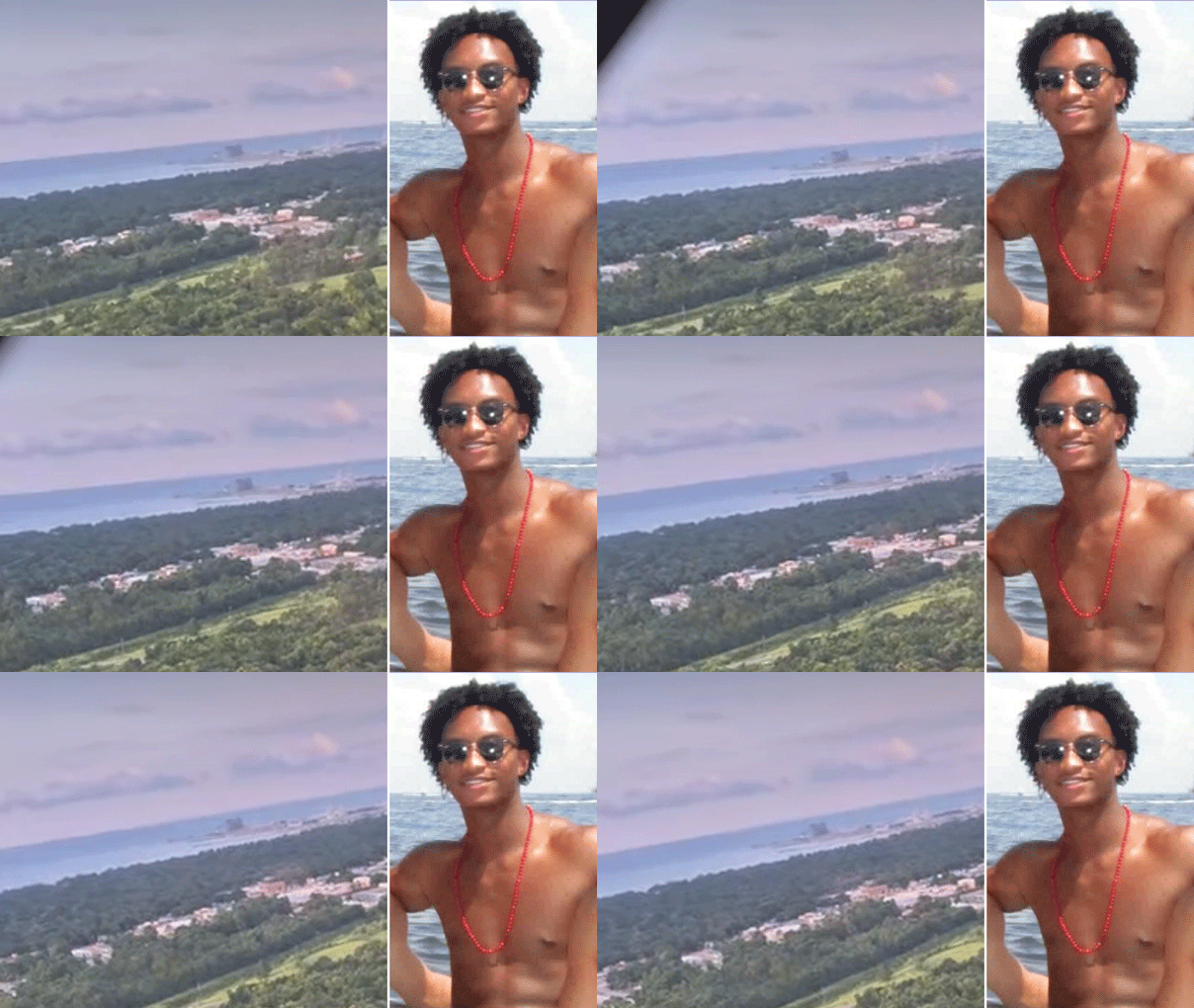
The July sun was blazing across the Mississippi Gulf Coast, and for a group of young friends setting out on a boat trip to Horn Island, the day must have felt like a perfect summer escape. Nolan Wells, 19, was among them, with nothing but white sand, warm water, and the promise of an easy holiday ahead. But that dreamlike afternoon became a family’s worst nightmare when Wells vanished. His disappearance triggered an intense two-day search across the barrier island and surrounding waters, with rescue crews scouring every inlet and shoreline. Then came the discovery that broke hearts: a National Park Service ranger found his remains on July 6 at the island’s northwestern tip. What should have been a joyful memory turned into a mourning story that would capture national attention and, tragically, spiral into a frenzy of accusation, suspicion, and division. Months later, a Jackson County grand jury reached a conclusion that felt both mercifully clear and painfully incomplete: Nolan Wells’ death was “consistent with drowning,” with no evidence of a crime and no racial motive. A “no true bill” was returned, meaning no charges would ever be filed. For the family, the grand jury’s answer may not close the book on their grief; for the friends who had been savaged online, it was a vindication that came far too late. The whole case had become more than a tragedy—it had become a battlefield where rumors and rage drowned out the search for truth.
-
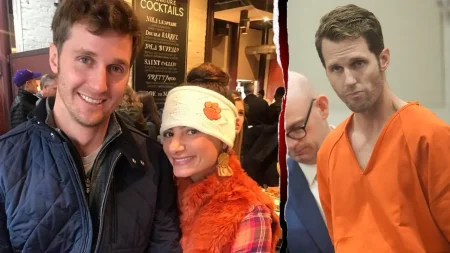
In the aftermath of the grand jury’s decision, attorneys for the young men who had been wrongly dragged through the mud began to speak out. Russell Latino, representing Bart Edmiston and his family, captured the emotional weight of the situation in a single phrase: “This story involves two tragedies.” One tragedy was the death of Nolan Wells, a young man gone too soon. The other, Latino argued, was the destruction of reputations by “unscrupulous charlatans and grifters” who spread “false and malicious lies” across social media and beyond. His words were sharp, but they were born of lived experience—Edmiston and Wells’ other friends had spent months under a cloud of suspicion, accused by strangers of having some sinister role in their friend’s death. They were not just grieving; they were being hunted by internet mobs that demanded answers nobody had. Latino made it clear that the Edmiston family now intends to hold the accusers accountable. He praised the grand jury, made up of Mississippians of every race and background, for doing its “solemn duty,” while emphasizing that anyone who knew the actual facts was never in doubt. That sentiment was echoed by Edward Andrew Paltzik, attorney for three of Wells’ friends—Warren Hudson, Jax Pitalo, and Morgan Seymour—who directed a pointed, public demand at civil rights attorney Ben Crump: apologize to these completely innocent young men. “NO TRUE BILL,” Paltzik wrote. “You should apologize immediately.” He said he had sent legal notices to social media influencers and media figures, signaling that the damage done to these young lives would not be quietly forgotten. The pain of losing a friend is unbearable. Having your name dragged through the mud while you mourn is a second wound that never should have been inflicted.
-
Jackson County District Attorney Angel Myers McIlrath did not mince words when she addressed the public after the grand jury’s decision. In a video statement, she said the narrative that three White boys and a Black boy went to an island and only the three White friends returned had spread “like wildfire”—but it was false. “There is absolutely no evidence to support the allegations that Nolan’s disappearance and death were racially motivated,” she stated firmly. She went further, offering a tender but clear portrait of the relationship between Wells and his friends: “Nolan’s friends loved Nolan and Nolan loved them. Nolan chose to stay on the island that day, and there is not a scintilla of evidence to contradict that.” That last sentence is important. It reframes the entire tragedy: not a story of betrayal or violence, but a story of a young man who made a choice, perhaps to stay behind a little longer, and whose life ended in a way that was likely accidental and heartbreaking. McIlrath also took direct aim at Ben Crump’s legal team, accusing them of knowing early on that the death was not racially motivated, yet continuing to promote a narrative that sowed division. “The family, the Crump team, and anyone close to Nolan knew that his disappearance and death were not the result of racial hate or violence,” she said. “What I am suggesting is that the Crump team knew better but did not do better.” She revealed that in August—over a year before the grand jury decision—Crump’s team had advised her office that after an independent autopsy and hundreds of tips, they had found no evidence of a crime. The district attorney’s tone was one of exasperation, almost sorrow, as if watching a community be led down a dangerous path by people who should have known better.
-
But the family’s legal team rejected the grand jury’s conclusion, and Ben Crump fired back with his own powerful statement. “Today, the State of Mississippi is attempting to close the chapter on Nolan Wells’ death without getting to the truth,” Crump said. He pointed to bruising found on the back of Wells’ head and an independent autopsy that documented blunt force injuries to his head and back. According to Crump, neither the family nor the state had determined exactly how Wells died, and he urged the Justice Department to open an investigation if Mississippi declined to do so. “This grand jury result leaves us with more questions than answers,” he said. “Nolan’s family will not rest until we know what happened to him, and neither will we.” The family’s pathologist, Dr. Roger Mitchell, performed a second autopsy, and while both he and the Mississippi Chief Medical Examiner agreed that the cause of death was officially “undetermined,” they also agreed on a troubling nuance: drowning was a “diagnosis of exclusion,” meaning it was reached because no other cause could be found, not because there was direct proof of drowning. For a grieving family, that is a frustratingly hollow answer. They want to know what happened to their boy on that island. They want to understand how the last minutes of his life played out. And they are not alone in wondering whether the wounds on his body meant something more. The tension between the district attorney’s certainty and the family’s doubt is perhaps the most human part of this entire story: even with grand juries, autopsies, and official reports, the truth can still feel just out of reach, and a family left behind will always cling to the hope that someone, somewhere, can tell them why.
-
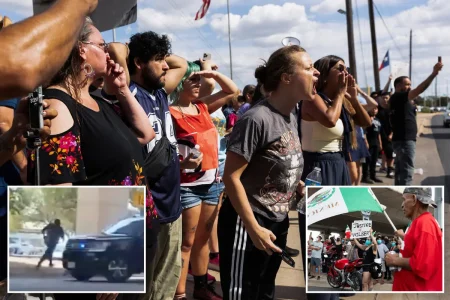
The grand jury’s report was thorough in addressing the swirling theories that had polluted the public conversation. It found “no credible evidence” that anyone who rode to or from Horn Island on July 4 on the boats the Triton, the Palm Beach, or the Tideline engaged in any criminal conduct related to Wells’ death. The allegations against those boat occupants, the report said, “are not based in truth, and are solely the result of public clamor and private malice.” That phrase—public clamor and private malice—is a haunting description of the internet age, where anonymous voices can spin tragedy into conspiracy without a single ounce of evidence. The grand jury also looked at one of the key questions that haunted the case: the injury to the back of Wells’ head. A witness testified under oath that he saw Wells slip awkwardly off the side of a boat around 3:30 p.m. on July 4, but could not say whether Wells struck his head during the fall. The witness said Wells continued to socialize after the fall and did not appear injured. Still, the bruise remained a focal point for those who refused to accept the drowning conclusion. The 23 grand jurors who heard the case were themselves a portrait of diversity—12 White members, five African Americans, two Hispanics, two Native Americans, one Asian, and one person who identified as other. This was not a group of like-minded locals prejudging a story; it was a cross-section of Mississippi, carefully listening for days and finding no path to indictment. Meanwhile, the community itself had been torn apart by outside forces. The governor blamed activists for “stoking division,” officials said the FBI was probing threats connected to the case, and at least one California man was arrested for allegedly sending a bomb threat to a judge presiding over the matter. What began as a missing person’s case had become a lightning rod for extremists, opportunists, and anyone with a platform and a grudge.
-
At the center of it all is a young man whose life ended far too soon, and a family that will never be the same. It is easy to get lost in the legal battles, the Twitter wars, and the dueling press releases, but the deepest truth of this story is the quiet grief that remains. Nolan Wells was somebody’s son, somebody’s friend, somebody who chose to spend a July day on an island and never came home. The grand jury has ruled; the district attorney has spoken; the attorneys are preparing their next moves. But for the families involved, there is no winner. The friends who were falsely accused may have been cleared, but they will carry the memory of those months of suspicion forever. The Edmiston family says they look forward to bringing accountability to those who exploited this tragedy to divide and injure—and they also say they continue to pray for healing, for the family of Nolan, and for their community. Those words matter. In a case so full of heat and anger, the simple act of praying for one another feels radical. Perhaps the real lesson of Nolan Wells’ death is not about race, not about boats, not about a grand jury’s decision. Perhaps it is about how quickly we abandon care and nuance in favor of certainty and cruelty. We live in an age where every tragedy is instantly dissected online, where strangers appoint themselves detectives and judges, and where the truth is often the first casualty. But in the end, the facts matter. A grand jury made up of everyday people listened, weighed evidence, and found no crime. For some, that will never be enough. For others, it is the beginning of healing. What remains is a family mourning a boy, a community scarred by division, and a country reminded that justice is a slow, imperfect, deeply human process—one that deserves far more patience and humility than the internet can offer.