




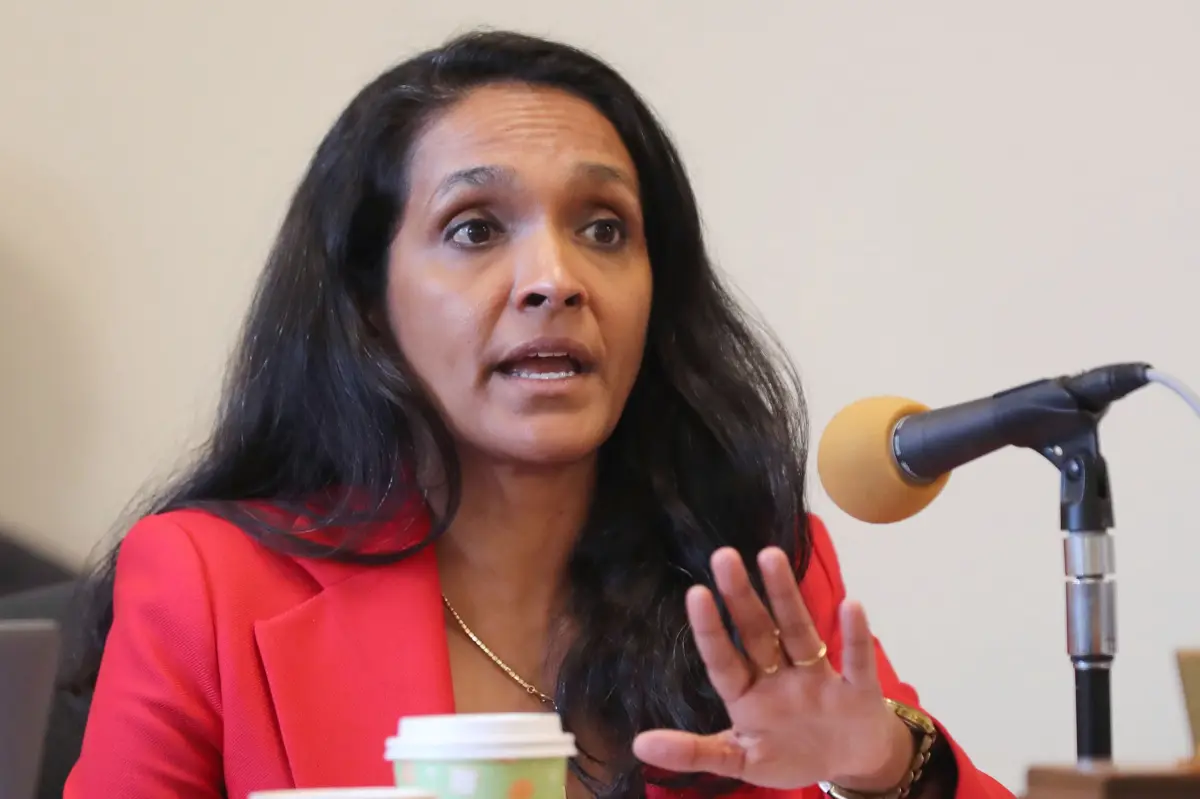
In the exceptionally high-stakes, pressure-cooker environment of municipal political campaigns, candidates are expected to be polished, indefatigable, and, above all, ready to speak at a moment’s notice to prove their fitness for office. Yet, with less than an agonizing week remaining before Los Angeles voters head to the polls, a highly unusual and bizarre medical development threw the mayoral race into a tailspin, proving that even the most meticulously planned political campaigns are at the mercy of chaotic human vulnerability. Nithya Raman, the progressive Democratic Socialist city councilmember who has been mounting a fierce, grassroots challenge for the city’s top leadership position, made the sudden decision to pull out of a scheduled live interview on the prominent local television station KTLA. Her campaign team delivered the shocking cancellation news at the absolute eleventh hour, leaving the newsroom in a scramble and citing an unexpected and painful physical setback: a “tongue injury.” The announcement left both veteran television producers and the voting public utterly stunned, as candidates rarely drop out of prime-time, city-wide media appearances so close to Election Day unless they are completely sidelined by a major, unavoidable crisis. During the live evening broadcast, KTLA anchor Micah Ohlman stood before the flashing studio lights and transparently explained the bizarre situation to viewers, noting with a dry sense of journalistic duty that Raman was supposed to join them in the studio that very evening but her team had backed out late in the afternoon because she had apparently bitten her tongue. While political communications operations are famous for crafting elaborate, strategic excuses to shield their candidates from tough questioning, this particular justification struck many as uniquely personal, human, and slightly comical in its sheer simplicity. To bite one’s tongue is a common physical mishap that most ordinary people experience in quiet moments over a casual meal, but as a political metaphor and a literal medical excuse for a mayoral contender on the verge of a critical election, it instantly captured the imagination of the electorate. It humanized the candidate in an unexpected way, reminding voters that under the armor of public service, policy briefings, and debate prep, these high-profile figures are vulnerable to the same clumsy, painful accidents of daily life that affect everyone else, even if the timing of the injury sparked an immediate wave of skepticism across the digital landscape of the city.
While Raman’s sudden, quiet physical affliction quickly became the talk of local political circles, she is not the only high-profile candidate who has chosen to remain conspicuously absent from the local television airwaves during this critical final stretch. KTLA anchor Micah Ohlman took the opportunity during the same broadcast to shed light on a broader, and perhaps more troubling, pattern of media avoidance in this bitterly contested race, revealing that the station had extended numerous formal invitations to the incumbent Mayor, Karen Bass, only to collect flat denials. This revealing disclosure highlights a calculated approach to media relations that has become all too common in modern political warfare, where keeping a low profile is often viewed as safer than engaging directly with the community. For an incumbent like Bass, who already possesses massive name recognition, the backing of the political establishment, and a formidable campaign apparatus, appearing on live, unscripted television carries a high degree of volatility with potentially very little strategic reward. Every live news interview is a potential minefield where a single misspoken word, a brief moment of hesitation, or a hostile question from an experienced anchor can be instantly weaponized by opponents or turned into a devastating viral clip on social media. By refusing to engage directly with local broadcast journalists, Bass’s campaign aims to starve her energetic challengers of the professional oxygen they need to create viral breakthrough moments, choosing instead to rely on highly controlled public appearances, targeted ad buys, and structured press conferences. This wall of silence, however, leaves a distinct void in the local democratic process, forcing local news outlets to report on empty chairs and unanswered invitations rather than facilitating robust, open debates over the future of the metropolis. This dynamic ultimately places everyday voters in a difficult position as they try to look past the carefully manicured press releases to find the authentic human beings underneath, only to find one major candidate literally silenced by a physical mishap and another choosing strategic silence as a protective armor of incumbency.
The stakes of these media appearances—and the consequences of avoiding them—could not be higher as the primary election approaches and the race enters its most volatile, unpredictable phase yet. Far from a straightforward, predictable coronation for the incumbent mayor, the race has transformed into a neck-and-neck three-way battle that perfectly reflects the diverse, chaotic nature of Los Angeles itself, a city constantly searching for its own identity. Sitting at the top of the heap is the incumbent, Karen Bass, who leads the pack with a fragile and highly vulnerable 26% of the vote, closely pursued by the progressive powerhouse Raman at 25%, while reality television icon Spencer Pratt hovers dangerously close in third place at 22%. This razor-thin margin, revealed in a freshly minted poll conducted by UC Berkeley and the Los Angeles Times, paints a vivid picture of a deeply divided electorate searching for meaning and direction amidst a sea of mounting city-wide crises. The mere fact that only one percentage point separates the top two candidates, and only four points separate the leader from the third-place challenger, illustrates a high-profile struggle where any minor event, gaffe, or sudden scheduling cancellation could tip the scales of municipal power. Each of these three figures represents a wildly different philosophy of governance, lifestyle, and public life, bringing their unique personal brands into a public arena that feels increasingly unpredictable and volatile. This statistics-heavy snapshot is not just a collection of numbers for political pundits to analyze; rather, it is a direct reflection of the residents’ own anxieties, hopes, and differing visions for how their neighborhoods should be policed, housed, and governed, turning the final days of the campaign into an intensely personal dramatic saga played out across the city’s sprawling neighborhoods, from the wealthy hills of West LA to the working-class streets of South Los Angeles.
Perhaps the most shocking revelation from the recent UC Berkeley-Los Angeles Times polling dataset is the sheer velocity of the momentum shift that has occurred over the last few months, completely redefining the political landscape of Southern California. Since March, both Nithya Raman and Spencer Pratt have experienced an extraordinary surge in popularity, with each candidate jumping an impressive eight percentage points in the polls, while Karen Bass’s support has remained stubbornly flat and uninspiring. This sudden upward trajectory for the challengers suggests that the initial narrative of the race has been thoroughly disrupted by a restless, fatigued electorate that is hungry for alternative voices, aggressive action, and a departure from the status quo. For Raman, this rise represents the steady crystallization of a grassroots coalition of renters, progressives, and young activists who feel the current administration has not moved fast enough or boldly enough on systemic issues like housing and climate. On the other hand, Spencer Pratt’s remarkable rise from a pop-culture curiosity to a genuine political force highlights a fascinating and uniquely Angeleno phenomenon, where celebrity status, camera confidence, and a direct line to the public can be swiftly leveraged into a powerful populist platform. California has a long history of transforming entertainers into political leaders, and Pratt seems to be tapping into that exact cultural vein, capturing the attention of voters who are deeply cynical about career politicians. This surge speaks volumes about the human psychology of modern voters, many of whom are deeply fatigued by traditional political platitudes and are instead drawn to charismatic outsiders who promise to shatter the existing bureaucratic mold. As Bass’s campaign watches her once-comfortable lead evaporate into a statistical tie, the psychological weight of this momentum shift is undoubtedly felt by all three campaigns, forcing them to push their minds to the limit in the final hours to capture the imaginations of the undecided voters who will ultimately decide the outcome.
At the heart of this intense electoral struggle are deeply personal, systemic issues that affect the daily lives of millions of Angelenos, and the candidates have chosen completely different battlegrounds to make their final cases to the public. Raman has kept her focus trained on the city’s ongoing humanitarian crisis, launching relentless attacks on Mayor Bass’s signature “Inside Safe” homelessness initiative, which she argues is an expensive bureaucratic program that fails to address the root, structural causes of housing insecurity. By criticizing the mayor’s marquee policy, Raman seeks to appeal to voters who are frustrated by the lack of visible, humane progress on the streets despite massive tax expenditures, positioning herself as a technocratic reformer with a compassionate heart for the marginalized. Meanwhile, Spencer Pratt has carved out his own powerful narrative by fiercely targeting the administration’s sluggish response to environmental disasters, specifically focusing on the lingering devastation of the Palisades Fire. Pratt has constantly hammered the mayor’s office for leaving displaced residents stranded in a sea of red tape, pledging to cut through municipal bureaucracy to expedite the rebuilding process for the hard-working families who lost everything they owned. These policy clashes are not academic debates about municipal budgets or urban planning; they represent real human tragedies, from individuals sleeping on cold concrete sidewalks to families waiting in temporary housing for permission to rebuild their lives, making the policy arguments feel deeply personal to the voters who are listening closely. The human cost of these issues forms the emotional core of the campaign, driving volunteers to knock on doors in the heat and prompting citizens to demand real accountability from their leaders.
In response to this multi-pronged onslaught from her left and right, Mayor Karen Bass has begun to sharpen her own rhetorical knives, mounting a defense that centers on administrative competence, political pragmatism, and the grueling realities of governing a massive city. Bass has publicly sought to paint Raman as an ideological purist who is fundamentally incapable of working across the aisle or building the broad coalitions necessary to push meaningful legislation through a fractured City Hall. Simultaneously, the mayor has targeted the credibility of Spencer Pratt, openly questioning whether a career spent in the superficial world of reality television is adequate preparation for managing a city of four million people with a multi-billion-dollar budget. These sharp retorts reflect the ultimate tension of the election: a battle between proven, pragmatic governance and the seductive promise of radical change or outsider charisma. As the clock ticks down to the primary, the ultimate decision rests in the hands of the voters, who must weigh the human flaws, the grand promises, and the quiet absences of the candidates. The physical exhaustion of the campaigns is palpable, with volunteers handing out flyers at subway stations, candidates speaking until their voices crack, and the city itself humming with anticipation. Whether Angelenos choose to stick with the steady hand of Bass, take a progressive leap with Raman, or embrace the unpredictable energy of Pratt, this election has proven that behind the polished campaigns and sudden media cancellations lie very human anxieties, ambitions, and a shared search for a leader who can truly heal a city.