



There’s an old saying that a person’s true values show up in how they spend their money. If that applies to institutions, then the latest state audit of Newark Public Schools offers a deeply unflattering portrait of a district that has lost its way. Newark is the largest school system in New Jersey, serving more than 41,000 students in 65 schools, and by every available measure, those students are struggling. Fewer than half of them read at grade level, and math proficiency is even more sobering. The consequences are not abstract. They show up in young people leaving school without basic skills, in families watching their hopes slip away, and in a community that has heard promises of reform for decades but hasn’t seen meaningful change in the classrooms where it matters most. While those problems were festering, State Auditor David Kaschak found that district leadership spent over half a million dollars on an “administrative gym” in the basement of its leased headquarters. The gym averaged just seven visitors per day, all of them administrators. That alone would have been bad enough, but the audit went further. It referred “certain matters” to the state Attorney General’s office for possible criminal investigation. That one sentence changed everything. What might once have been dismissed as bureaucratic waste is now a matter of potential legal consequences. It also confirmed what many parents and advocates have been saying for years: too often, the district’s priorities seem to be about power, comfort, and image, not about the children in its classrooms. This is not just a story about a gym. It is a story about how an institution can slowly convince itself that the rules don’t apply to it, while the people it is supposed to serve are left behind.
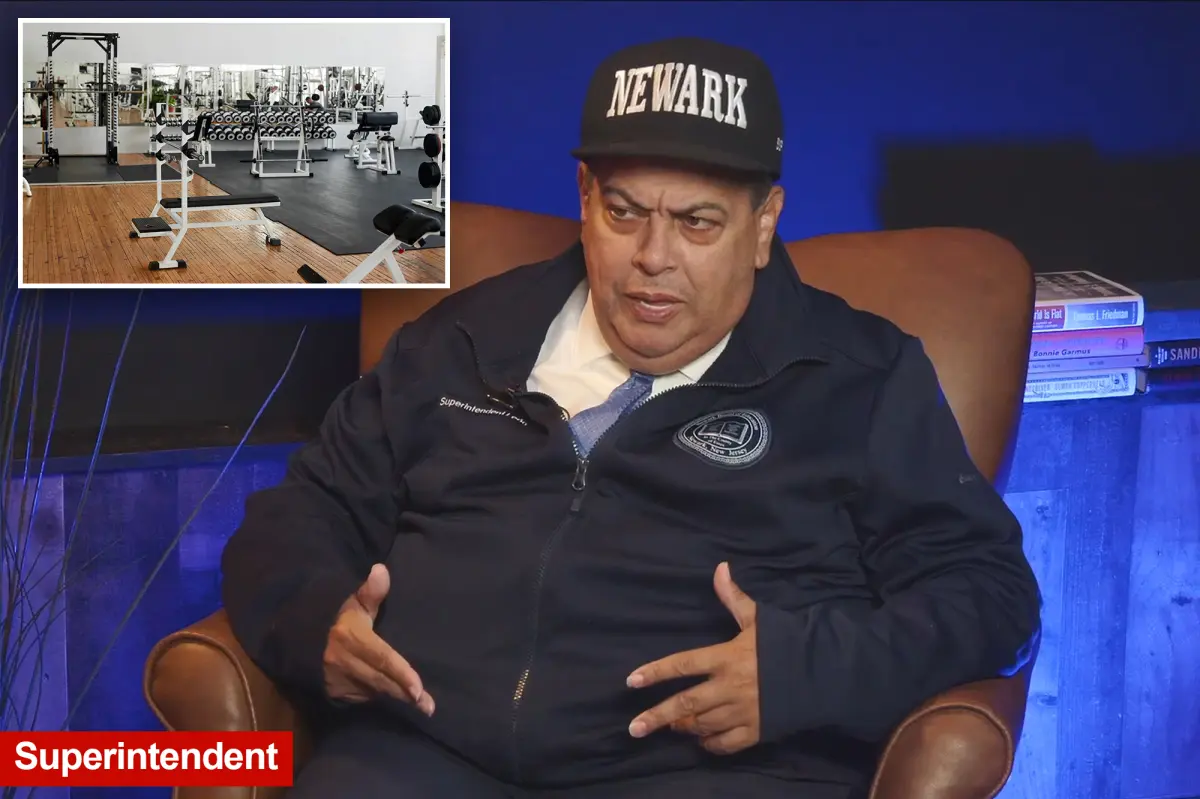
The gym itself is the kind of detail that makes taxpayers’ blood boil, and the audit lays it out in painful clarity. According to the 36-page report, the district spent $300,000 on the construction of the exercise facility without getting board approval or seeking competitive bids. That is not a small procedural mistake; it is a deliberate bypass of the checks and balances that are supposed to protect public money. Then, instead of simply installing some equipment and letting employees use it, administrators hired a full-time personal trainer. That trainer was paid $82,800 in the 2024-2025 academic year and $86,940 in the previous school year. The gym opened in November 2024 in the basement of the district’s leased headquarters, which raises an obvious question: why spend that kind of money on a private facility for administrators when so many Newark school buildings are aging, overcrowded, or under-resourced? The sign-in sheets make the answer even more unsettling. Over several months, only an average of seven names appeared each day, and all seven belonged to district administrators. The facility was barely used, but it was fully staffed. District officials tried to defend the gym by insisting that all employees had access to it and that taxpayers didn’t foot the bill—employees did, through “wellness benefit funds” in the staff health program. But the audit counted it as a questionable expense regardless, and the sheer scale of it is hard to explain away. More than half a million dollars for a room with fewer daily visitors than a small-town coffee shop is not a wellness program. It is a symbol of institutional entitlement, a visible reminder of what happens when a district gets comfortable spending other people’s money without being held responsible for the results.
But the gym is far from the only questionable item in the audit. The report also found that the district poured $2.5 million into an unfinished school district museum, a project that has no clear educational purpose and no apparent completion date. It spent more than $700,000 on three separate “Senior Day” class trips that had no documented educational purpose. Those are not small amounts of money. For a district where many schools lack adequate supplies, where teacher salaries struggle to compete with nearby districts, and where students desperately need tutoring, counselors, and mental health supports, every wasted dollar feels like a betrayal. The audit also exposed serious problems with the district’s accounting of its own students. Newark officials overstated enrollment by 128 students in 2023 and again by 128 students in 2024. At first glance, 128 students in a district of more than 41,000 might seem like a small margin of error. But the impact on state funding was enormous: because of those inflated numbers, the district received almost $6.7 million in excess state aid. That is real taxpayer money, and it went to a district that apparently did not need it for the students it claimed to serve. Perhaps most disturbing of all, the audit found that ten active Newark employees had never completed criminal background checks, including one person who had been working in the district for 27 years. That is not just an administrative oversight. It is a potential safety issue for children and families who have no choice but to trust the district with their well-being. When background checks are ignored, when enrollment numbers are inflated, and when millions are spent on vanity projects, it becomes clear that the problems at Newark Public Schools are not random or accidental. They are systemic.
None of this is happening in a district with a clean history or in an environment of plenty. Newark Public Schools has struggled for decades, and its relationship with the state has been long and difficult. For 25 years, New Jersey ran Newark’s schools after decades of mismanagement and poor academic performance. Local control was only restored to the board of education in 2020. That history makes the current audit particularly painful. The district was given a second chance, a chance to prove that it could govern itself responsibly and put students first. Instead, the old patterns have reappeared, and the audit suggests that little has actually changed beneath the surface. Newark has more than 7,000 employees and depends on the state for roughly 81% of its general funding, making it one of the most state-dependent districts in New Jersey. This is not a wealthy independent district that can afford to waste money on luxuries; it is a district that relies on public support and has a moral obligation to use that support wisely. Superintendent Roger León, who earns $330,000 a year, has defended the district’s spending. District officials insisted that all employees had access to the gym and contended that the report did not identify any intentional wrongdoing or violation. After the audit’s release, they attacked the criminal referral as “gratuitous and irresponsible.” But the defensiveness rings hollow to critics. The purpose of an audit is not simply to find villains; it is to reveal patterns, correct course, and restore public trust. Instead, the district’s first instinct was to shoot the messenger and minimize the findings. That is exactly what one would expect from an institution that has spent years avoiding hard questions.
The political reaction has been sharp, and no one captured the mood better than Assemblywoman Dawn Fantasia, a Republican from Franklin, who had been raising alarms about the district’s spending and alleged misconduct for more than a year. After the audit was released, she said the report alone does not solve the problems, and she did not hide her frustration. “This ‘I told you so’ doesn’t feel so good because kids, families, and taxpayers got hammered while apparently the board was dozing, elected officials deflected or buried their heads in the sand, and the superintendent ran the district like a drunk college kid on spring break with his parents’ credit card,” she said. The quote is harsh, vivid, and hard to argue with given the evidence. It also highlights a painful truth: this audit is not a victory. It is a confirmation of failure, and the people who pay the price are the students in Newark’s classrooms. The academic data makes that point devastatingly clear. In the spring of 2025, only one in three Newark students in grades 3 through 9 passed the English Language Arts standardized state test. Math proficiency was even worse, with just 17.7% of students passing the math assessment. These are not numbers that can be explained away by poverty, the pandemic, or changing demographics. They are the result of years of choices, and the audit shows where some of those choices led. Instead of directing every possible resource toward instruction, intervention, and support, millions were spent on a gym, a museum, and senior trips. Instead of rigorous oversight, there was a dozing board. Instead of transparency, there was deflection. The result is a district that has failed its children in ways that will be measured not just in test scores, but in future earnings, health, and opportunity.
So where does Newark go from here? The referral to the state Attorney General’s office is a crucial first step, but it is only a first step. If criminal wrongdoing is found, there should be consequences for anyone who broke the law. But an investigation alone will not fix the culture of impunity and carelessness that the audit lays bare. Real reform will require a board of education willing to ask hard questions, a superintendent and administrative team committed to transparency, and a state legislature that follows through on oversight instead of looking away when uncomfortable facts come to light. It will also require a genuine recommitment to the actual mission of public schools: teaching children. That means investing in evidence-based early literacy programs, math recovery efforts, counselors, social workers, and safe, welcoming classrooms. It means ensuring that every employee has passed a background check, that every contract goes through competitive bidding, and that every expenditure can be justified to the public. It means treating public money with the same respect that a family feels when they hand over their hard-earned wages in taxes. For the parents and children of Newark, this audit could be the beginning of a reckoning, but only if the outrage it generates is sustained and directed toward meaningful change. The story is not just about a basement gym or an unfinished museum. It is about a district that has lost sight of its responsibilities and a community that deserves better. The lights may be on in that administrative gym, but what Newark really needs is for its leaders to turn their attention back to the classrooms, where the futures of an entire generation are waiting. The audit gives the public the evidence, the anger, and the opportunity. Whether anything changes depends on whether the people in power—and the people who elect them—are willing to demand accountability not just this week, but long after the headlines fade.