





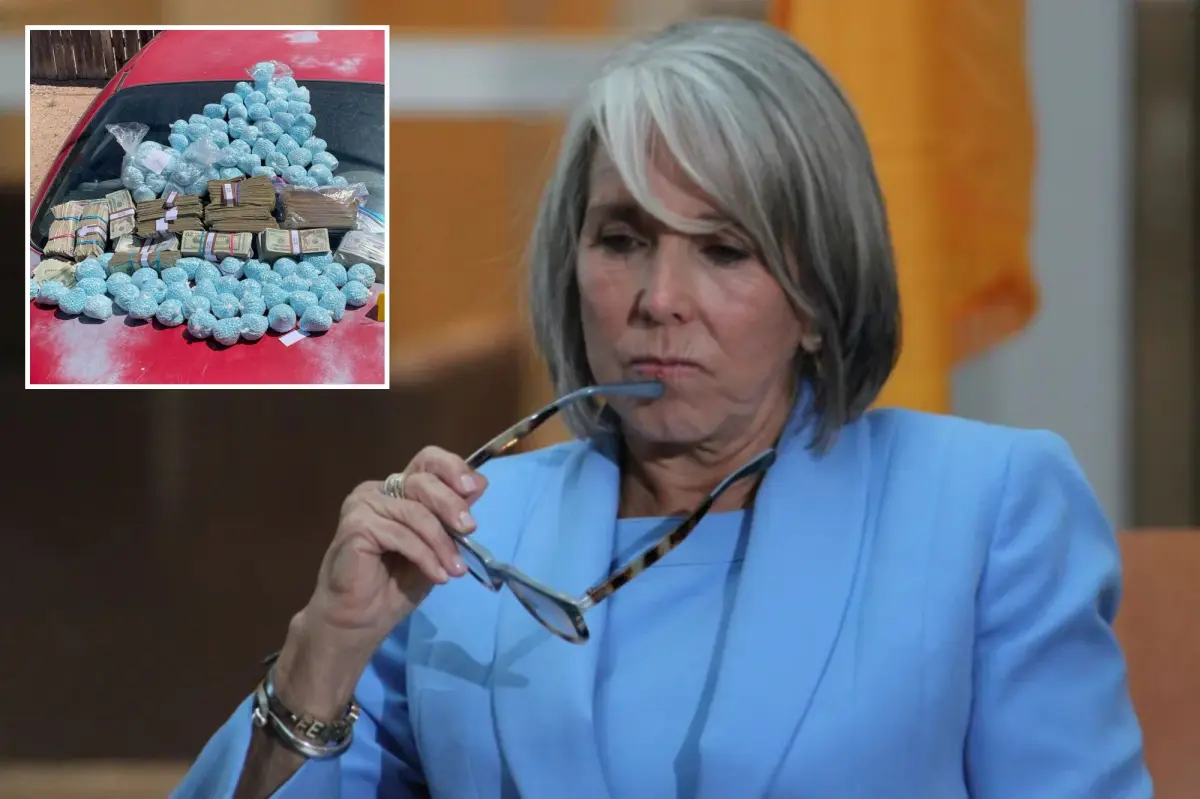
The fentanyl epidemic is not a sterile statistical phenomenon; it is a visceral, everyday tragedy that tears at the very fabric of families and communities across New Mexico. Behind every record-high overdose statistic lie grieving parents, abandoned children, and neighborhoods hollowed out by the relentless onslaught of synthetic opioids. It is against this backdrop of profound human suffering that New Mexico Governor Michelle Lujan Grisham recently channeled the collective grief and righteous fury of her constituents, demanding that the federal government pay reparations for what she has characterized as an unforgivable betrayal of public trust. The governor’s outrage stems from explosive allegations that the Drug Enforcement Administration (DEA) knowingly allowed millions of highly lethal fentanyl pills to flood into New Mexican communities during an undercover operation, all without notifying state, county, or local law enforcement agencies. Calling the federal agency’s actions “the most derelict, despicable act” in her decades-long public service career, Lujan Grisham laid bare the deep psychological and physical wounds inflicted upon her state. For families who have spent years fighting to save their loved ones from the brink of addiction, the revelation that a federal agency tasked with keeping these poisons off the streets was instead standing by and monitoring their distribution—without making arrests, seizing the contraband, or warning local authorities—feels like an institutional stab in the back. By demanding federal restitution, Lujan Grisham is refusing to let the human collateral damage of bureaucratic hubris be swept under the rug, insisting that the United States government take full financial and moral responsibility for a crisis that continues to cost precious human lives every single day.
At the heart of this controversy lies a highly controversial law enforcement strategy known as “controlled delivery,” wherein federal agents monitor the transport of illegal shipments rather than seizing them immediately, hoping to trace the chain of custody back to high-ranking cartel leaders. However, while this strategy may hold theoretical merit in traditional narcotics investigations, applying it to a substance as volatile and lethal as fentanyl represents a catastrophic miscalculation. Reports indicate that between 2023 and 2025, DEA agents repeatedly tracked large shipments of fentanyl traversing New Mexico, actively choosing to let the pills enter the illicit market under the guise of building a broader, multi-jurisdictional criminal case. But fentanyl is not heroin or cocaine; a microscopic dose can be instantly fatal, meaning that every single unseized pill allowed to slip into local neighborhoods was a potential death sentence waiting to be delivered. The ethical boundary crossed by the DEA has sparked outrage from legal officials and community advocates alike, who argue that the agency treated New Mexican citizens as expendable laboratory targets in a theoretical game of drug-war strategy. New Mexico Attorney General Raúl Torrez has launched a comprehensive criminal investigation into the matter, emphasizing that the federal government’s decision to watch poison flood local communities was not a mere administrative oversight or bureaucratic misstep, but a direct and profound betrayal of the very people they are sworn to protect. For those trying to understand how such a deeply flawed operation could be authorized, the silence of the DEA serves as a chilling reminder of how easily the human cost of drug addiction can be eclipsed by institutional metrics and distant, top-down enforcement strategies.
The physical and emotional devastation wrought by this unchecked flow of narcotics is mirrored by a crushing financial burden that has stretched New Mexico’s public resources to their absolute breaking point. Over the past several years, the state has been forced to divert more than $1.5 billion of taxpayers’ money into emergency measures, including bolstered law enforcement deployments, expanded behavioral health networks, local addiction treatment clinics, and widespread overdose prevention campaigns. In a state that already faces chronic socioeconomic challenges, including systemic poverty, underfunded rural school systems, and limited healthcare access, the forced reallocation of such massive funds represents a devastating opportunity cost. New Mexico is essentially paying the price for a catastrophe that local officials argue was actively enabled, if not outright manufactured, by federal negligence. Lujan Grisham highlighted the deep hypocrisy of this dynamic, noting that her administration has repeatedly implored both the Trump and Biden administrations for increased federal resources, more DEA agents, and coordinated border security operations, only to be met with dead silence and indifference. To make matters worse, while the state was drowning in the fallout of the epidemic, the federal government simultaneously stripped away approximately $25 million in critical federal funding earmarked for local behavioral health and public safety initiatives. This compounding financial strain highlights a bitter irony: while New Mexican communities were begging the federal government for lifelines to help them survive the fentanyl storm, federal agencies were quietly allowing the rain to fall, leaving local taxpayers to foot the bill for the umbrella.
For many New Mexicans, this latest federal betrayal is not an isolated incident, but rather the continuation of a long and painful historical pattern in which their state has been treated as an afterthought or a testing ground by Washington. Governor Lujan Grisham explicitly connected the DEA’s actions to previous federal failures that have devastated the state’s landscape and communities. She pointed to the catastrophic 2022 Hermits Peak and Calf Canyon wildfire—the largest and most destructive fire in New Mexico’s history—which was ignited by negligent prescribed burns conducted by the U.S. Forest Service during high-wind warnings. That disaster, which destroyed hundreds of homes and altered the ecology of northern New Mexico for generations, ultimately forced the federal government to accept liability and establish a multibillion-dollar compensation fund. Similarly, the governor cited the inadequate and disjointed federal response to the COVID-19 pandemic, which left vulnerable Indigenous and rural populations in New Mexico desperately scrambling for basic medical resources. By framing the DEA’s clandestine fentanyl operation as a comparable federal failure, Lujan Grisham is establishing a powerful precedent: when federal agencies act with such reckless disregard for local safety that they cause systemic harm, they must be held legally and financially liable. The demand for reparations is not merely about balancing the state budget; it is a fight to assert the dignity of New Mexicans and to demand that the federal government recognize that the lives of citizens in the Southwest are worth just as much as those in wealthier, more politically influential regions of the country.
The quest for accountability has now transitioned from political rhetoric to aggressive legal action, driven by a deep desire to provide closure to the families who have lost loved ones to the fentanyl scourge. Attorney General Raúl Torrez’s criminal and civil investigation aims to pull back the veil of secrecy shrouding the DEA’s operations, examining whether federal agents and their supervisors can be held personally liable for their roles in allowing dangerous narcotics to enter local communities. This legal battle carries immense emotional weight, as it directly addresses the unresolved grief of countless families who must now grapple with the agonizing possibility that their children, siblings, or parents might still be alive if federal agents had simply intervened when they first intercepted the shipments. The psychological toll of realizing that the very entities designed to protect the public may have permitted the distribution of the very chemical that ended a loved one’s life is difficult to overstate. It transforms a tragedy that was previously viewed as an unfortunate consequence of addiction into a systemic injustice perpetrated by the state. Torrez’s office has promised to explore every legal avenue, including criminal prosecution and structural reforms, to ensure that federal agencies can no longer hide behind the shield of bureaucratic immunity when their tactics actively endanger civilian lives. By elevating the voices of the bereaved and centering the legal battle on the human lives cut short, New Mexico is attempting to redefine the boundaries of law enforcement accountability, demanding that the fight against drug traffickers never again come at the expense of innocent human survivors.
Looking toward the future, New Mexico’s leadership is pushing for sweeping legislative reforms to ensure that no other state is ever subjected to such hazardous federal experimentation. Governor Lujan Grisham has called on Congress to enact strict statutory bans on unsupervised “controlled delivery” operations involving ultra-potent synthetic opioids like fentanyl, while demanding that federal agencies be legally required to notify state and local authorities before conducting any operations that could impact local public safety. Additionally, the governor is calling for the immediate restoration of the millions of dollars in federal public safety funding that were cut, alongside a firm federal mandate to fully fund the ongoing mental health, addiction recovery, and civic rehabilitation programs needed to heal the communities left in the wake of the DEA’s operation. Crucially, she is demanding that the specific federal officials and agents who authorized this devastating campaign be held personally and professionally accountable, arguing that true reform is impossible if the individuals responsible are allowed to remain comfortably entrenched within the DEA hierarchy. While financial reparations and legislative overhauls can help repair depleted state coffers and prevent future tragedies, they can never truly replace the lives lost or erase the trauma experienced by families throughout New Mexico. As the state embarks on this challenging path toward recovery and legal reckoning, the struggle remains a powerful testament to the resilience of its people, who refuse to stay silent in the face of federal neglect, standing united in their demand for justice, respect, and the fundamental right to safety in their own communities.