





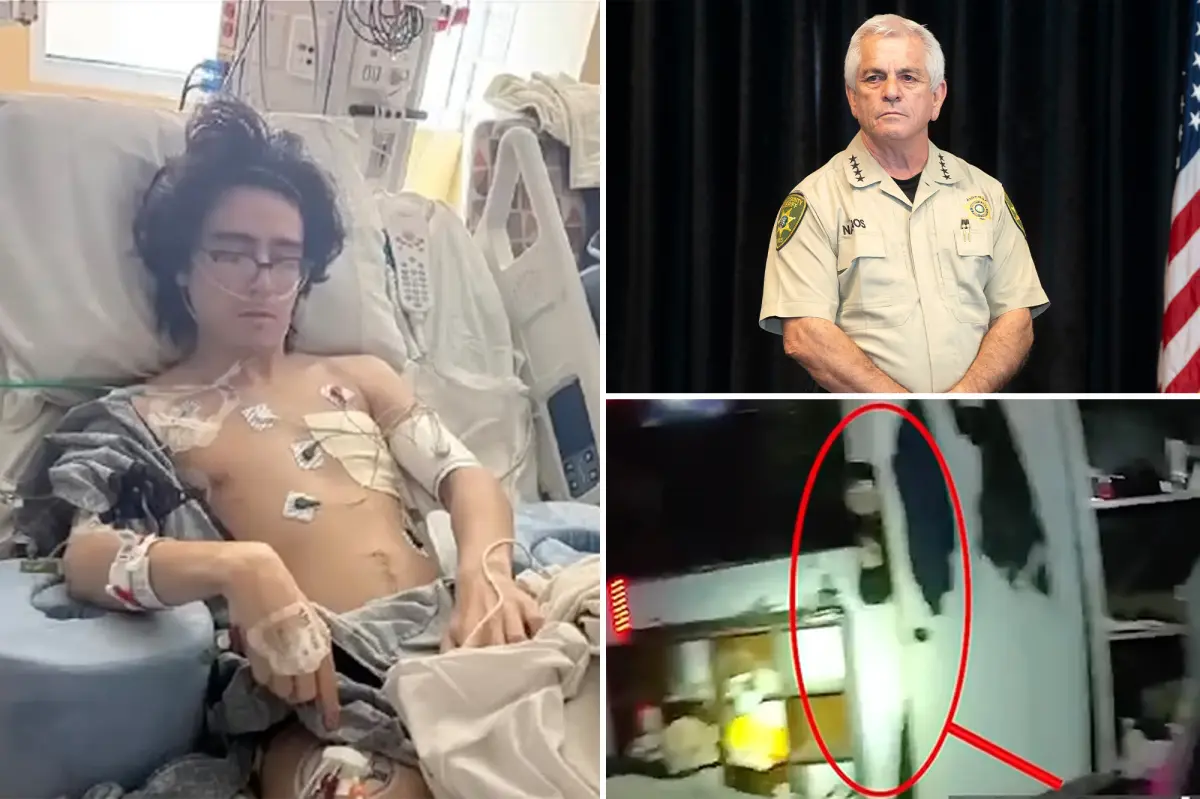
Behind the sterile, bureaucratic facade of municipal budgets and legal notices of claim, a profound human tragedy is unfolding in Pima County, Arizona, where the actions of a heavily armed sheriff’s department have shattered the lives of innocent citizens. Sheriff Chris Nanos, an embattled lawman already weathering intense public scrutiny, now finds himself at the center of a compounding institutional crisis as his department faces two massive lawsuits totaling nearly $180 million. At the heart of this legal and moral storm is Axeel Melendez, a 24-year-old young man whose promising future was violently stolen in a matter of seconds during a catastrophically botched response to a “swatting” prank—an insidious form of digital harassment where anonymous hackers weaponize emergency services against unsuspecting victims. The staggering $176 million lawsuit filed by Melendez is not merely an attempt to secure financial damages; it is a damning indictment of a systemic failure in communication, empathy, and tactical restraint by law enforcement officers who are sworn to protect the public. For Melendez, the currency of this tragedy is measured not in dollars, but in the lifelong loss of his physical autonomy, as he now faces the agonizing reality of being paralyzed from the neck down. His story highlights a terrifying disconnect in modern policing: a department so primed for immediate, militarized violence that it failed to heed explicit, proactive warnings from a terrified citizen, ultimately transforming a family’s sanctuary into a horrific shooting gallery.
The path to this avoidable disaster was paved with ignored pleas for help and a shocking level of complacency from emergency dispatchers who failed to comprehend the deadly gravity of digital harassment. Days before the shooting, Melendez found himself trapped in a psychological nightmare, targeted by a malicious online hacker who threatened to orchestrate a bogus bomb threat at his home. Recognizing the immediate danger, Melendez acted with exemplary responsibility: he called 911 to report the harassment, seeking a lifeline from the very people trained to handle crisis situations. Instead of receiving a professional, protective response, he was met with patronizing dismissal; the operator allegedly told him not to worry, assuring him that “they can’t just call SWAT on you” and promising him that nothing would happen. Even after the department subsequently received a suspicious, fabricated call to Melendez’s address—which they verified to be a hoax—the deputies merely offered empty platitudes, telling him he “should be alright” and promising to warn him if any more suspicious calls targeted his home. This false sense of security proved to be a cruel illusion, revealing a dangerous lack of digital literacy and preparation within the department regarding the well-known phenomenon of swatting, leaving a vulnerable young man entirely exposed to the whims of an anonymous predator.
Less than forty-eight hours after those hollow reassurances, the hacker struck again with lethal efficacy, placing a deceptive 6:00 a.m. call to the sheriff’s department by impersonating Melendez and fabricating a horrific domestic violence scenario involving a shooting. Rather than cross-referencing this call with the active file on Melendez’s ongoing harassment or attempting to contact him as promised, the sheriff’s deputies launched a high-intensity tactical raid on the home. The tranquility of dawn was shattered as deputies, operating with aggressive military-style tactics, bypassed standard knock-and-announce procedures and violently smashed Melendez’s bedroom window with a shovel before climbing inside with their weapons drawn. Inside the dark house, a terrified Melendez woke to the chaotic sounds of breaking glass and heavy footsteps, assuming his family was falling victim to a violent home invasion. Driven by a primal instinct to protect his mother, he urged her to hide and cowered behind a door, holding his legally registered firearm solely for self-defense against the unidentified intruders. Without establishing verbal contact, verifying their targets, or exercising any semblance of tactical patience, the deputies unleashed a lethal barrage of gunfire, firing seven shots blindly through the door and striking Melendez in the leg and the spine.
The physical and emotional aftermath of those seven gunshots has left Axeel Melendez trapped in a prison of his own body, his life permanently divided into “before” and “after.” Once an active, independent 24-year-old with his entire adult life ahead of him, he is now a quadriplegic, paralyzed from the neck down and entirely dependent on others for his most basic daily survival. The psychological trauma of surviving such a violent assault in the supposed safety of his own bedroom is compounded by the staggering financial reality of his condition, which includes a lifetime of specialized medical care, physical therapy, and astronomical hospital bills. As his attorney, Dev Sethi, poignantly observed, Melendez is not merely facing a mountain of debt; his very existence has been shattered, and his family must now navigate the profound grief of mourning the life he should have had. No amount of financial compensation can restore the simple dignity of walking, the warmth of a physical embrace, or the peace of mind that was stolen by the deputies’ reckless actions. His plight stands as a devastating reminder of the human collateral of hyper-reactive, “shoot-first” policing, where the rush to neutralize a perceived threat overrides the fundamental duty to preserve human life.
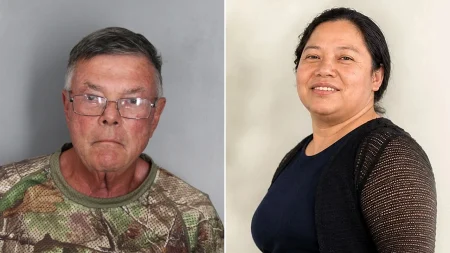
Compounding Sheriff Nanos’s troubles is a parallel controversy that exposes a pattern of reckless, heavy-handed tactics within his department, exemplified by the botched investigation into the disappearance of 84-year-old Nancy Guthrie, the mother of “Today” show host Savannah Guthrie. Following her disappearance in February, deputies executed an aggressive, poorly coordinated investigation that swept up innocent citizens, including Carlos Palazuelos and his family members, Daniel and Josefina Maddox. In their haste to produce results in a high-profile case, deputies held Palazuelos at gunpoint, arrested him, and detained him for nearly eight hours in a town an hour south of Tucson before releasing him entirely without charges. Furthermore, the deputies executed a destructive search warrant at the Maddox home, causing extensive property damage and subjecting the family to intense, traumatizing interrogation. To make matters worse, Sheriff Nanos publicly labeled Palazuelos a “person of interest” to local media, casting a shadow of suspicion over an innocent man’s reputation and subsequently refusing to clear his name once his innocence was established. This has resulted in a separate $3 million lawsuit against the department, highlighting an institutional culture under Nanos that prioritizes optics and aggressive, fast-paced actions over thorough, ethical police work and the presumption of innocence.
As these twin legal battles move forward, the Pima County Sheriff’s Department has retreated into a defensive wall of silence, declining to comment on either situation under the guise of pending litigation. This lack of transparency and accountability only deepens the wounds of the victims and erodes whatever remaining trust the community has in its law enforcement institutions. The concurrent crises facing Sheriff Nanos demonstrate a systemic failure to adapt to modern challenges, whether those challenges involve the malicious digital manipulation of emergency systems or the high-pressure demands of media-saturated investigations. These events serve as a sobering call for comprehensive systemic reform, emphasizing the urgent need for specialized training in de-escalation, digital threat assessment, and the psychological impact of police trauma on innocent families. Until leadership is held accountable for these catastrophic failures, the citizens of Pima County are left to wonder if the department meant to protect them poses a greater danger to their lives than the criminals they are sworn to pursue. Ultimately, the names of Axeel Melendez and Carlos Palazuelos will remain permanent symbols of a system that broke its promises, leaving ordinary human beings to bear the devastating weight of institutional negligence.