


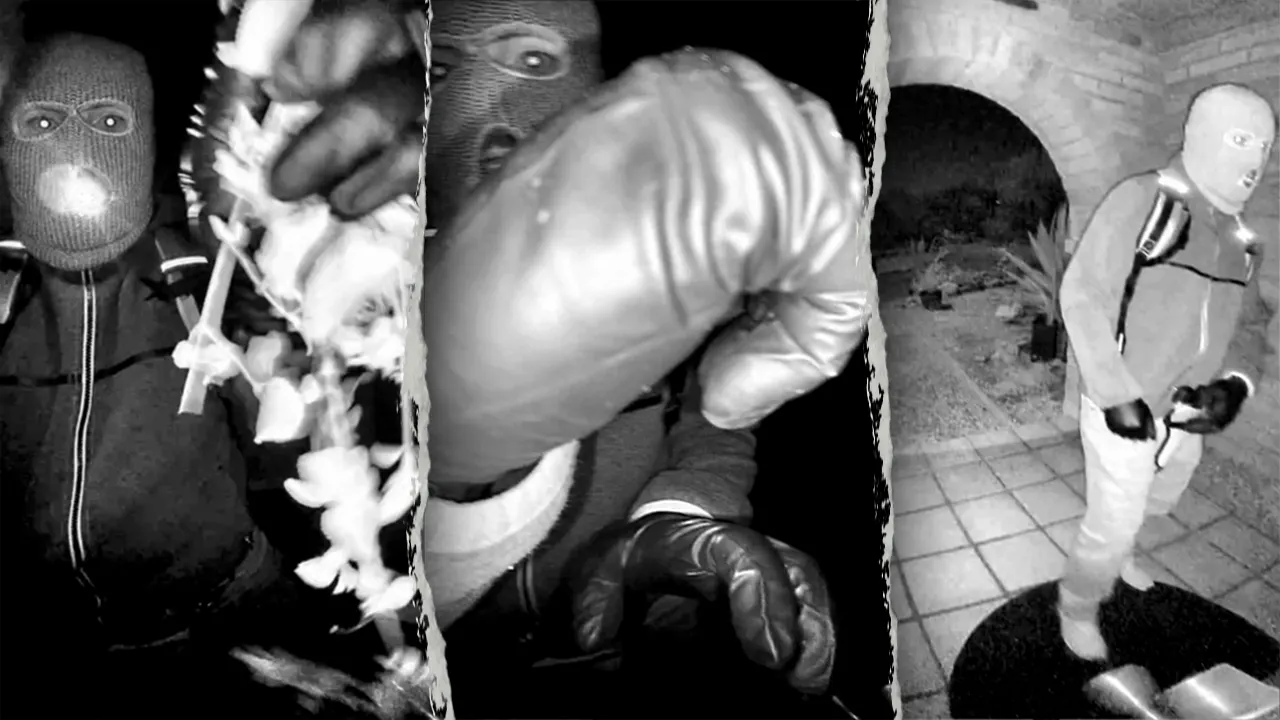
Behind every headline in the modern news cycle lies a deeply personal tragedy, and for the family of Nancy Guthrie, the past twenty-one weeks have been an agonizing lesson in endurance, hope, and the painful silence of the unknown. It has been more than one hundred and fifty days since Nancy vanished, a stretch of time that has transformed their daily lives into a relentless orbit around a single, agonizing question: where is she? For her daughter, the prominent “Today” co-host Savannah Guthrie, the nightmare is played out both in the quiet recesses of private grief and under the harsh, unyielding glare of public scrutiny. The case initially exploded with a flurry of high-stakes investigative activity, drawing in the formidable resources of both the FBI and Google, who executed a technologically groundbreaking recovery of deleted Nest doorbell camera footage that investigators hoped would crack the case wide open. Armed with these digital clues, law enforcement quickly detained two men for questioning, sparking a brief, desperate wave of hope that the mystery was on the verge of being solved. However, that hope was cruelly extinguished when both individuals were ultimately released without charges, leaving investigators right back where they started and sending the Guthrie family back into the exhausting abyss of waiting. When the active updates from authorities began to dry up, the vacuum was filled by a deafening silence, leaving those who love Nancy to grapple with the terrifying reality that despite thousands of tips and relentless media coverage, her whereabouts remain completely unknown. This painful stasis is the human reality of a missing person case; it is not merely a file folder on a detective’s desk or a trending topic on a true crime forum, but a living, breathing trauma that leaves an empty space at the family dinner table and a persistent, aching dread that grows heavier with every passing sunset.
In an era where our lives are constantly charted, logged, and tracked by an invisible web of data, there is a profound, unsettling sense of irony when tech fails to provide immediate answers in a high-profile disappearance. Herman Weisberg, a former NYPD detective who currently operates as a high-profile private investigator and managing director at the New York-based firm SAGE Intelligence, expressed his deep surprise that digital forensics have not yet resolved Nancy Guthrie’s case. In modern criminal justice, we have grown accustomed to the rapid-fire resolution of mysteries through digital footprints, much like the infamous Bryan Kohberger case in Idaho, where a meticulous trail of cell phone pings, highway surveillance cameras, and DNA databases allowed law enforcement to construct an airtight web around their suspect. Yet, as Weisberg notes, technology is only as effective as the human behavior it records, and when a crime diverges from expected patterns, the digital trail can grow cold remarkably fast. If this suspected abduction was carried out by a solo perpetrator, the traditional advantage of co-conspirator betrayal is entirely lost, perfectly illustrating the grim old adage that “three can keep a secret if two of them are dead.” Without an accomplice to break under pressure, brag to an associate, or leave a secondary digital signature, a lone offender can operate in a terrifying vacuum that defies even the most sophisticated algorithms. This technological failure highlights the limits of our modern surveillance state, reminding us that despite our smart doorbells, geofence warrants, and cloud-stored videos, the human element of crime—its capacity for sheer chaos, unpredictability, and quiet malice—can still evade the most advanced digital dragnet ever assembled.
When technology reaches its limits, the focus of the investigation must pivot back to the oldest and most reliable resource in human history: the eyes, ears, and collective conscience of the community. Weisberg strongly believes that the immense public interest surrounding Nancy’s disappearance, rather than being a distraction, could ultimately prove to be the case’s greatest asset. This phenomenon, often referred to as crowdsourcing or “armchair sleuthing,” has transitioned from a niche hobby for true crime enthusiasts into a highly organized, formidable auxiliary force for global law enforcement agencies. History is replete with high-profile cases that seemed utterly stalled until an ordinary citizen, prompted by media coverage, noticed a detail that professional investigators had no way of seeing. Weisberg points to the tragic case of Gabby Petito, where a family of casual travel vloggers reviewing their own vacation footage spotted her parked van in a remote Wyoming campground, providing the precise coordinates that allowed search teams to locate her remains. Similarly, the capture of the Boston Marathon bombing suspects was accelerated by a deluge of public photos and videos, and the miraculous rescue of Elizabeth Smart occurred only after alert citizens recognized her abductors walking down a Utah street from news broadcasts. By humanizing the search and empowering the public, investigators transform millions of passive observers into active participants who might look out their kitchen window and realize that a strangely parked car with out-of-state license plates is actually a vital piece of a kidnapping puzzle. True crime fans and local neighbors alike are reminded that they do not need badges or forensic science degrees to make a difference; sometimes, all it takes is a single, mindful glance at their surroundings to break a case wide open.
To understand the true grit required to solve a case like Nancy Guthrie’s, one must look closely at the tedious, unglamorous, and often exhausting daily routine of the detectives and investigators working behind the scenes. Weisberg paints a vivid picture of this relentless grind, noting that solving complex mysteries requires an extraordinary amount of patience, emotional stamina, and physical endurance. Investigators must wake up every single day ready to sift through thousands of dead ends, prank calls, and well-meaning but ultimately useless tips, knowing that their efforts will overwhelmingly result in disappointment. “You’ve got to have a lot of patience when you’re dealing with that because you might just be on your 7,000th call and your 15th cup of coffee that day,” Weisberg shared, capturing the lived reality of a detective whose eyes are burning from staring at phone logs and whose mind is numb from repetitive interviews. Yet, the fuel that keeps these men and women going through the haze of caffeine and exhaustion is the burning knowledge that the “7,001st call” could be the one that carries the vital, missing piece of information needed to find Nancy. This tireless dedication humanizes the investigator’s role, showing that justice is rarely achieved through sudden, cinematic epiphanies, but is instead built brick-by-brick through grueling, repetitive labor. Every tip must be treated with the same meticulous care as the first, because dismissing even a single minor detail out of sheer fatigue could mean missing the one breakthrough that could return a mother to her grieving daughter’s arms.
Amidst the frustrating lack of progress, Weisberg offers a compelling psychological theory that might explain why this investigation has proved so difficult to crack, suggesting that Nancy’s disappearance may have been “a crime that went very wrong from the beginning.” In highly organized kidnappings, perpetrators often follow a strict, predictable blueprint, which ironically makes them easier for behavioral analysts to profile and track through their digital and physical planning stages. However, when an offense is impulsive, chaotic, or deviates wildly from the perpetrator’s original plan due to unexpected resistance, panic, or sheer bad luck, the resulting crime scene becomes a confusing morass of contradictory clues. This lack of structure deprives investigators of standard investigative touchpoints, forcing them to piece together an erratic trail left by a desperate individual acting on pure adrenaline and survival instinct. Under these volatile circumstances, the perpetrator is highly likely to make critical errors, but those errors might not immediately align with routine police search parameters. Despite the outward appearance of a stalled case, Weisberg cautions that law enforcement may actually be much closer to a resolution than they are willing to publicly admit, holding their cards close to their chest to prevent a volatile suspect from panicking further or destroying crucial evidence. In high-stakes operations, the silence of the police is rarely a sign of inaction; more often, it is a calculated tactical quiet, a period of intense behind-the-scenes preparation where detectives are quietly compiling a mountain of evidence, waiting for the perfect moment to strike and secure an arrest that will finally stand up in a court of law.
Ultimately, the quest to bring Nancy Guthrie home is a race against time that relies on a powerful mixture of financial incentive, public outreach, and the unbreakable bond of family love. To catalyze the flow of information, there is currently a staggering combined reward of more than $1.2 million outstanding for any information that leads to her recovery, a massive sum that includes a deeply personal $1 million contribution put up directly by her desperate family. This extraordinary financial commitment highlights the depth of their love and their absolute refusal to let Nancy be forgotten, serving as a powerful beacon for anyone holding a secret who might finally decide that the truth is worth sharing. Savannah Guthrie has utilized her prominent public platform not for self-interest, but as a megaphone for her mother’s survival, pleading directly with the public that “somebody knows something” and begging anyone with even the slightest inkling of information to call 1-800-CALL-FBI or reach out anonymously to Tucson’s Crime Stoppers affiliate, 88-Crime, at 1-520-882-7463. This collaborative effort between heartbroken family members, tireless private investigators, state-of-the-art federal law enforcement, and a vigilant public represents the very best of human community in the face of unspeakable tragedy. As the search pushes past the five-month mark, the hope remains undiminished that whether through a breakthrough in digital forensics, a sudden confession, or that fateful 7,001st phone call from an observant citizen, the agonizing silence will finally be broken, bringing Nancy home and restoring peace to a family that has spent far too long living in the shadow of the unknown.