







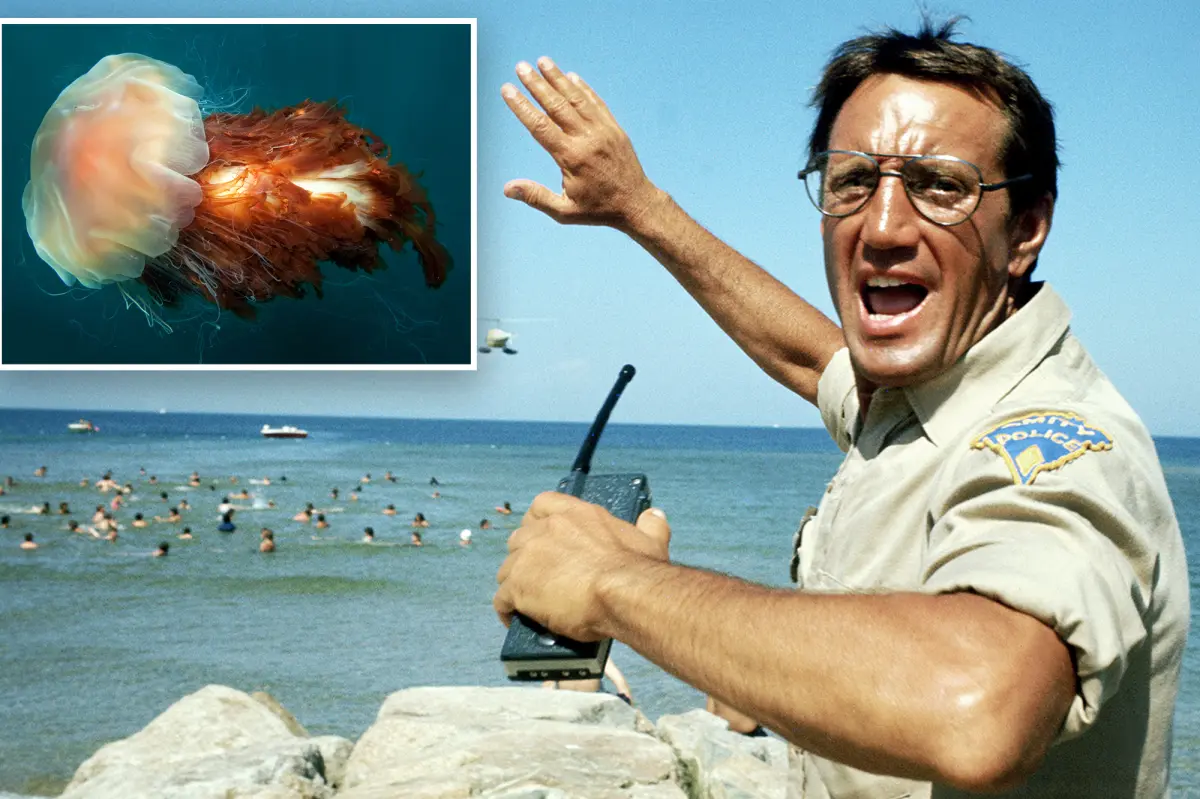
It feels like a scene pulled straight from a classic creature feature: massive, otherworldly monsters invovling New England’s historic beaches, sending sunbathers and swimmers scrambling for the safety of dry land. Massachusetts coastal communities have issued urgent public safety warnings as swarms of giant lion’s mane jellyfish infiltrate the region’s shores. Growing up to six feet wide with a dense mop of hair-like appendages, these giants represent a dramatic, albeit natural, invasion that has put local authorities and beachgoers on high alert. The scale of this year’s influx of jellies is the most significant the region has seen since 2020, turning peaceful summer afternoons into a tense game of watching the waves.
The sheer size of these creatures makes them formidable. The lion’s mane jellyfish is recognized as one of the largest jellyfish species on the planet, with historical ties to the region; the largest specimen ever recorded was found right off the coast of Massachusetts, boasting tentacles that stretched an astonishing 120 feet—longer than a blue whale. Beyond their daunting size, their biological resilience presents a unique hazard for beachgoers. Their venomous tentacles can still deliver a highly painful sting for up to 25 days after the jellyfish has died and washed ashore. This lingering danger prompted officials in the beach town of Beverly to issue a stern advisory warning families to keep children and curious pets far away from stranded jellyfish, emphasizing that even dried-up, seemingly lifeless fragments on the sand can still pack a nasty punch.
From the scenic Nahant peninsula to the historic waters of Salem and the sandy stretches of Cape Cod, locals and visitors are taking to social media to document the sheer scale of the invasion. Tourism operators, like Great Marsh Kayak Tours, have shared photos of thousands of these crimson-and-gold giants being swept into local marshes by the rising tides, while the Boston Center for Youth and Families warned swimmers at South Boston’s Curley Community Center that entering the water is currently a “swim at your own risk” endeavor after multiple people reported being stung. The density of the jellyfish has transformed routine paddles and swims into navigating a minefield of gelatinous, stinging obstacles.
Predicting these massive swarms remains an incredibly complex puzzle for marine biologists. According to experts from the New England Aquarium, there is no simple formula to forecast when or where the jellyfish will strike next. Their sudden arrival on popular beaches is dictated by a chaotic mix of environmental factors, including rising water temperatures, shifting ocean currents, and prevailing winds that push the deep-water drifters into shallow coastal zones. While their arrival might feel sudden and malicious to disappointed tourists, it is simply the result of the ocean’s natural conveyor belt aligning perfectly to steer the nomadic giants directly into the paths of summer vacationers.
For those unfortunate enough to cross paths with one of these oceanic giants, knowing how to handle a sting is crucial. Despite decades of pop-culture myths and folklore suggesting otherwise, medical experts emphasize that you should never use urine to treat a jellyfish sting. Instead, the Mayo Clinic recommends a much more clinical approach to neutralize the pain: use a pair of tweezers to carefully pluck any remaining tentacle fragments from the skin, soak the irritated area in hot water to help break down the venom, and apply hydrocortisone ointment twice a day to reduce swelling and itching.
Ultimately, the sudden arrival of these ancient, drifting giants serves as a vivid reminder of the wild and unpredictable nature of the ocean. While the invasion has certainly disrupted plans for swimming and surfing, it also offers a rare, up-close look at one of the sea’s most magnificent and imposing residents. Until the winds shift and the currents carry the swarms back out to the deep ocean, beachgoers in New England are being urged to trade their swimsuits for walking shoes, enjoy the coastal views from a safe distance, and respect the formidable sting of the lion’s mane.