





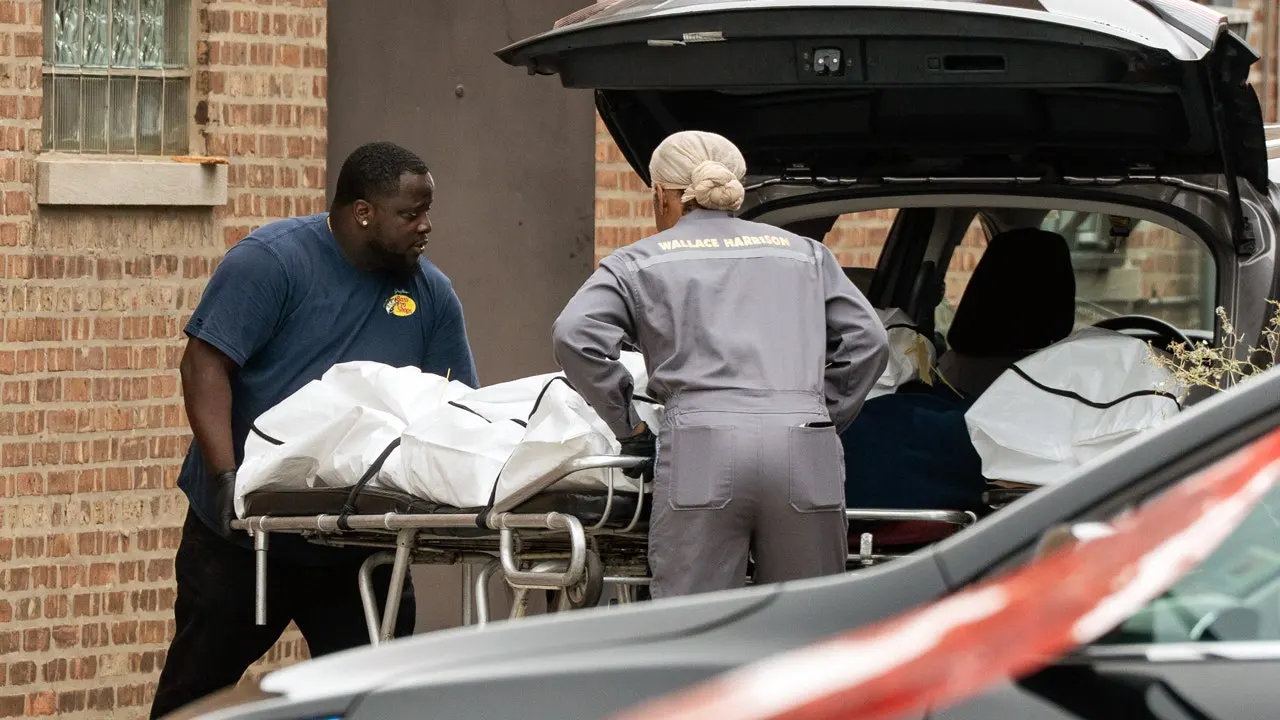
For months, a quiet but deeply unsettling mystery hung over a tight-knit neighborhood on Chicago’s South Side. Residents going about their daily routines began to notice a persistent, sickly sweet odor drifting through the air—a heavy, suffocating stench that grew increasingly unbearable as the seasons shifted. The source of the smell was eventually traced back to the South Chicago Chapel, a local funeral home that was supposed to serve as a quiet sanctuary of peace, dignity, and final solace for grieving families. Instead, on a warm Thursday afternoon, the illusion of sanctity was shattered when state and local authorities descended upon the property. What they uncovered inside was a scene of unimaginable neglect: more than 50 human bodies improperly stored, neglected, and left to decay in various advanced states of decomposition. The discovery instantly transformed a place designed for solemn remembrance into an active, chaotic crime scene, leaving a community horrified and desperate for answers.
At the agonizing center of this unfolding tragedy is Latasha Johnson, a 55-year-old local resident whose grief was weaponized by the shocking negligence of the chapel’s operators. On that very Thursday, Johnson stood inside the South Chicago Chapel to bid her final, heartbreaking farewell to her beloved mother, believing she was giving her the honorable send-off she deserved. Just hours after the service concluded, however, her world was thrown into total disarray when investigators informed her that her mother’s body had been seized as part of a massive criminal and regulatory investigation. Instead of being allowed to mourn in peace, Johnson was told that her mother’s remains would have to undergo a forensic autopsy and that she would have to visually identify the body once again in the coming days. “I’m discombobulated,” a devastated Johnson shared through her tears, voicing the profound betrayal felt by her entire family. “My heart is broken.” Her experience highlights the deep psychological trauma inflicted upon families when the sacred covenant between the living, the dead, and those entrusted with their care is so callously broken.
The physical reality discovered inside the South Chicago Chapel by the Cook County Medical Examiner’s Office and forensic pathologists was nothing short of a nightmare. According to reports from the Illinois Department of Financial and Professional Regulation, multiple bodies were kept in unrefrigerated areas under what state officials described as “deplorable conditions.” Investigators documented severe rodent and maggot infestations, which, coupled with the complete lack of proper climate control, had drastically accelerated the natural decomposition process of the deceased. Forensic teams now face the monumental, deeply sensitive task of sorting through the chaos to identify each individual, locate missing documentation, and match bodies with their corresponding death certificates. State officials described the scene as an immediate threat to public safety, prompting the emergency suspension of the funeral director’s license to halt further operations. For the pathologists working on-site, the mission is not merely a bureaucratic process; it is a desperate effort to restore a shred of dignity to the fifty-plus individuals whose earthly remains were treated with such profound disrespect.
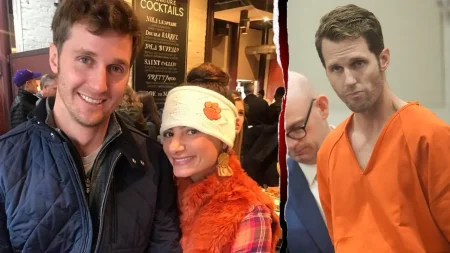
The paper trail behind the South Chicago Chapel reveals a pattern of systemic failure and administrative defiance by its operators, Johanna and Clark Morgan. State business records show that Johanna Morgan incorporated the chapel in 2022, but her career came to a grinding halt when state regulators temporarily suspended her funeral director’s license, citing her continued practice as “a danger to the public safety, interest and welfare.” Her husband, Clark Morgan, served as the president of the chapel despite having his own funeral director’s license revoked by the state for practicing with an expired license and committing acts of “unprofessional conduct.” Shockingly, this was not the couple’s first brush with the law regarding the mistreatment of the dead; authorities revealed they had previously operated a crematory that was shut down by the state for similar, egregious mishandling of human remains. The fact that individuals with a documented history of desecrating the deceased were allowed to open and run another funeral home raises painful questions about the efficacy of regulatory oversight and the loopholes that allow predatory businesses to exploit vulnerable, grieving communities.
This horrific discovery has sent shockwaves through the South Side of Chicago, exposing a deep wound in a community that has historically faced systemic neglect. In any society, a funeral home is not merely a commercial business; it is an institution built entirely on a foundation of absolute trust, where grieving individuals hand over their most precious, vulnerable loved ones at their moments of maximum emotional vulnerability. To realize that this trust was exploited for profit, and that the physical bodies of their mothers, fathers, siblings, and children were left to rot in infested rooms, has left the community grappling with collective grief and outrage. Neighbors who had spent months complaining about the foul odor are now left with the haunting realization of what that smell actually represented—the forgotten remains of their fellow community members. The incident has sparked a broader conversation about environmental justice and regulatory equity, as many wonder whether such a horrific facility would have been allowed to operate for so long in a more affluent, politically connected neighborhood.
As the investigation by the Chicago Police Department and state regulatory agencies continues to unfold, no formal arrests have been made and no criminal charges have been filed, leaving the affected families in a painful state of limbo. Forensic experts warn that the process of properly identifying all the remains and ensuring their proper disposition could take several days, if not weeks, as they work methodically to prevent any further errors. For families like Latasha Johnson’s, the road to healing will be long and fraught, requiring them to reopen fresh emotional wounds just as they were beginning the process of saying goodbye. This tragedy serves as a grim, cautionary reminder of the vital importance of professional ethics, rigorous state oversight, and the basic human right to dignity in death. While the legal system works to hold the operators of the South Chicago Chapel accountable, the community remains united in its grief, demanding justice for the departed and a systemic overhaul to ensure that no other family has to endure such a heartbreaking betrayal.