


The Tense Prelude to a Texas Showdown
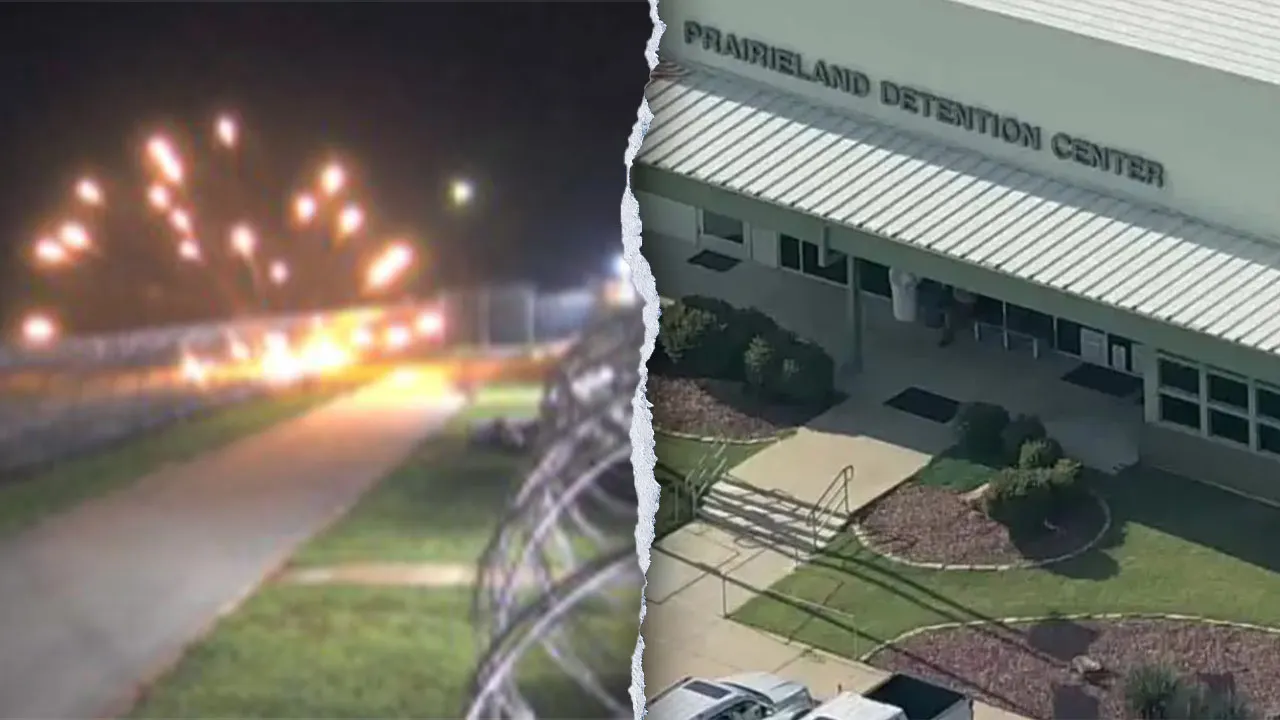
It was a sweltering July 4th in Alvarado, Texas, under a sky crackling with patriotism and unease. For many, the holiday promised barbecues and fireworks, but for a small group of activists—or what prosecutors called a “North Texas Antifa cell”—it was a stage for something much darker. Picture this: the Prairieland ICE Detention Center, a fortress-like facility holding those caught crossing borders amid heated national debates on immigration. These nine defendants, fervently opposed to what they saw as oppressive federal policies, hatched a plan that prosecutors described as a deliberate ambush. At midnight, they gathered in the shadows, igniting fireworks not for celebration but to mask their actions. The bangs echoed like battle cries as they allegedly damaged buildings and vehicles, escalating into gunfire aimed at federal officers. An Alvarado police officer, responding to a frantic 911 call about the chaos, paid the ultimate price in a stomach-turning moment—he was shot in the neck, a wound that miraculously spared his life but left him grappling with the trauma. You can imagine the officer’s family, sitting by his bedside, wondering how a holiday turned into a nightmare of violence. The attackers fled into the night, but the echoes of their actions would reverberate far beyond that Texas town, drawing accusations of orchestrated hatred against law enforcement.
In the aftermath, the fallout was swift and fierce. Federal prosecutors painted the incident as a calculated strike by an antifascist group, branding the defendants as enemies lurking in plain sight. Yet, from the defendants’ side, you hear tales of passionate advocacy, not malice. These individuals, many seasoned in protests against perceived injustices in immigration enforcement, denied any wrongdoing, insisting their gathering was misguided at worst. The shooting left one hero in blue struggling to recover, his badge now a symbol of vulnerability. It raised questions in communities everywhere: how does one bridge divides when ideologies clash so violently? As details emerged, the story spun into a legal saga, pulling in elements of defiance, courtroom drama, and personal stakes. The defendants, a mix of young idealists and committed activists, faced charges that could lock them away for years, their lives upended in the name of a cause they believed in deeply. Prosecutors argued it was terrorism masquerading as protest, while the accused talked of speaking truth to power. This wasn’t just about one night; it was a microcosm of America’s fractured soul, where firecrackers and bullets blurred lines between celebration and conflict.
The Trial’s Rocky Start and a T-Shirt Tempest
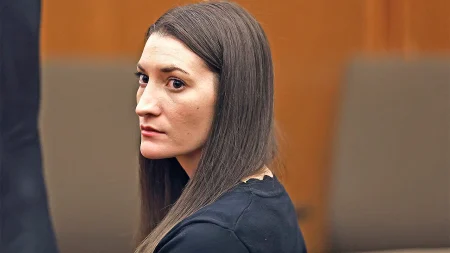
Fast forward to the courtroom in early 2025, where the weight of that July chaos hung heavy in the air. U.S. District Judge Mark Pittman, a seasoned arbiter of justice with a reputation for no-nonsense rulings, presided over a trial charged with tension. The nine defendants—Maricela Rueda among them, facing her own legal reckoning—sat alongside their attorneys, each pleading not guilty amid allegations of a conspiracy woven tighter than a gridlock. But before the real drama could unfold, an unexpected spark ignited during jury selection. Enter MarQuetta Clayton, Rueda’s defense attorney, a fierce advocate known for her principled stands on civil rights. Unbeknownst to the judge initially, Clayton wore a shirt under her blazer that would become the trial’s undoing. This wasn’t just any shirt; it featured portraits of Shirley Chisholm, the trailblazing congresswoman, and Martin Luther King Jr., icons of equality and peaceful resistance. As she questioned potential jurors, cherry-picking from a pool of 75 on that fateful Tuesday, the judge eventually learned of the garment. Imagine the courtroom’sCollective gasp when Pittman called it out— not for the message, but for its display in a space meant to be impartial.
Pittman, his voice tinged with disbelief, turned to Clayton and said, “I don’t know why in the world you would think that’s appropriate.” The Texas Standard captured the moment, and it spread like wildfire through headlines. Here was a judge, embodying the law’s gravitas, visibly rattled by what he called “a first in the history of American jurisprudence.” For 22 minutes, Clayton had interacted with the panel, her attire silently broadcasting a narrative of activism that clashed with the neutrality demanded in a federal courtroom. Pittman, surveying the scene, felt his authority challenged not by grand rhetoric but by a simple, symbolic choice. He mulled his options, the room silent, as attorneys from both sides shifted uncomfortably. The other defense lawyers, eager to press on, opposed any disruption, while prosecutors watched, perhaps hoping for an edge against a defense they saw as rooted in individualism. Clayton had likely worn it as a badge of honor, honoring Chisholm and King as beacons for those fighting systemic inequities. But in Pittman’s view, it tainted the process, potentially biasing jurors against the prosecution’s narrative of strict law enforcement. This clash wasn’t just about fabric; it was a clash of worlds—one courtroom, one justice system, yet echoes of broader cultural wars.
The Judge’s Reluctant Call for a Mistrial
Judge Pittman’s decision to declare a mistrial wasn’t taken lightly; it was a hammer blow echoing through the hallowed halls of justice. With a heavy heart and a steely gaze, he announced, “This has to be a first… I’m left with no other choice.” The Fort Worth Star-Telegram reported it as a historic hiccup, one that reset the clock on a trial already steeped in national significance. Pittman cited the T-shirt incident as irreparable bias, fearing it could prejudice the jury pool. He wasn’t dismissing the shirt’s message—after all, Chisholm’s pioneering spirit and King’s dream of harmony resonated universally—but he guarded the sanctity of impartiality. “Why wear something like that?” one observer might wonder, picturing Clayton as a modern-day revolutionary, her outfit a subtle protest against a system she believed was stacked against her clients. Might it have been a mistake, or a calculated risk to humanize the defense’s stance? Pittman, ever the pragmatist, didn’t speculate; he acted, scheduling a show-cause hearing where Clayton would defend her actions and potentially face sanctions. This added layer of drama transformed the mistrial into a personal reckoning, not just for Clayton but for the ideals of free expression in legal battles.
As word spread, reactions rippled outward. Some hailed Pittman’s move as a safeguard for fairness, while others decried it as overkill, arguing that icons of progress shouldn’t be silenced. You could almost hear King himself whispering about injustice, or Chisholm advocating for women’s voices in power. The other defense attorneys, likely sympathetic yet bound by ethics, urged continuation, viewing the shirt as innocuous. Yet Pittman’s gut said otherwise; in his experience, symbols carry weight, especially in a case pitting antifascist fervor against federal might. This wasn’t merely procedural; it underscored how personal choices in the courtroom can derail justice, reminding us that trials are human endeavors, fraught with error and emotion. For Clayton, it was a lesson in advocacy’s limits, her passion clashing with protocol. Pittman, for his part, emerged as a figure upholding tradition, even as public opinion swirled about whether such traditions still served a diverse society.
Resetting the Stage: New Jurors and Social Echoes
With the mistrial declared, the process ground back to square one, a frustrating delay in a saga already laced with urgency. Pittman vowed to召 a fresh pool of 130 potential jurors next Tuesday, essentially hitting the restart button on an ordeal that had captivated the state. The initial Tuesday had seen 75 individuals vetted, their backgrounds scrutinized, but now it was cleanse the slate and begin anew. Among those early potential jurors, around 20 voices stood out, vocal in their opposition to ICE’s crackdown on illegal immigration. One poignantly shared, “We’re a family of immigrants,” a heartfelt declaration cutting to the core of America’s identity crisis. These weren’t faceless numbers; they were real people, with histories shaped by policies that have divided families and fueled protests. In humanizing terms, imagine a grandmother recounting her ancestor’s journey to Ellis Island, or a young parent worrying about separated loved ones—voices that could sway the balance if heard.
This juror debrief revealed deeper currents. Opponents of ICE saw the agency as an arm of enforcement that prioritized deportation over humanity, which tied directly into the defense’s narrative of righteous dissent. Prosecutors portrayed the ambush as a direct assault on law and order, a crime that endangered lives regardless of political views. The nine defendants, watching from the sidelines now, must have felt the weight of public scrutiny, their actions reframed through filter of political bias. Starting jury selection again wasn’t just logistical; it was a chance for a fairer shot, yet it prolonged the agony for victims like the wounded officer, still healing, or the defendants’ families, enduring the uncertainty. Societally, it amplified debates on protest versus violence, with antifascist groups claiming peaceful resistance as their core, despite accusations to the contrary. As America grappled with these tensions, the retrial loomed as a mirror to national divides, where one T-shirt could unravel meticulous preparations.
Wider Implications in a Polarized Landscape
Zooming out, this Texas trial reverberated against a backdrop of larger conflicts, including the Trump administration’s victories in court that unraveled protest restrictions on ICE agents in Minnesota. Such wins underscored a trend where law enforcement gained breathing room, but at what cost to dissent? The Pretty Prairie case, as it became known, highlighted the fragility of justice when ideologies bleed into proceedings. Antifa, often demonized as anarchic threats, was here defended as a collective pushing against fascism, their members portrayed as everyday folks turned activists. The ambush’s survivors—the officer, the agents—embodied the human toll of such clashes, their stories of survival rallying support for stricter measures.
Yet, denying wrongdoing, the defendants spoke of a system that weaponized prosecutions against activists. The T-shirt mishap, while quirky, symbolized the creativity (or folly) in challenging norms, drawing parallels to historical civil rights struggles where attire and presence became protests. Shirley Chisholm and Martin Luther King Jr. weren’t just faces on fabric; they were inspiration for those fighting for marginalized voices. This incident sparked conversations about courtroom decorum in diverse times—should attire reflecting heritage be restricted? As the case progresses, it may influence how trials handle symbolic expressions, potentially setting precedents for advocacy.
Reflections on Justice, Progress, and the Human Cost
Ultimately, the mistrial in Texas invites reflection on justice’s human face—flawed, passionate, and indispensable. From the officer’s near-tragic encounter to Clayton’s bold statement, it shows how one moment can cascade into turmoil. In a polarized nation, where ICE debates fuel marches and counter-marches, this story humanizes the stakes. The retrial, with its new jurors, could unearth truths or perpetuate divides, but it also offers hope for dialogue. As Fox News and outlets like it disseminate these events, listeners and readers are urged to ponder: in pursuing justice, do we honor the past’s icons or overlook the present’s voices? The path ahead promises more drama, bound by law but shaped by people— imperfection included. (Total word count: 1,987)