


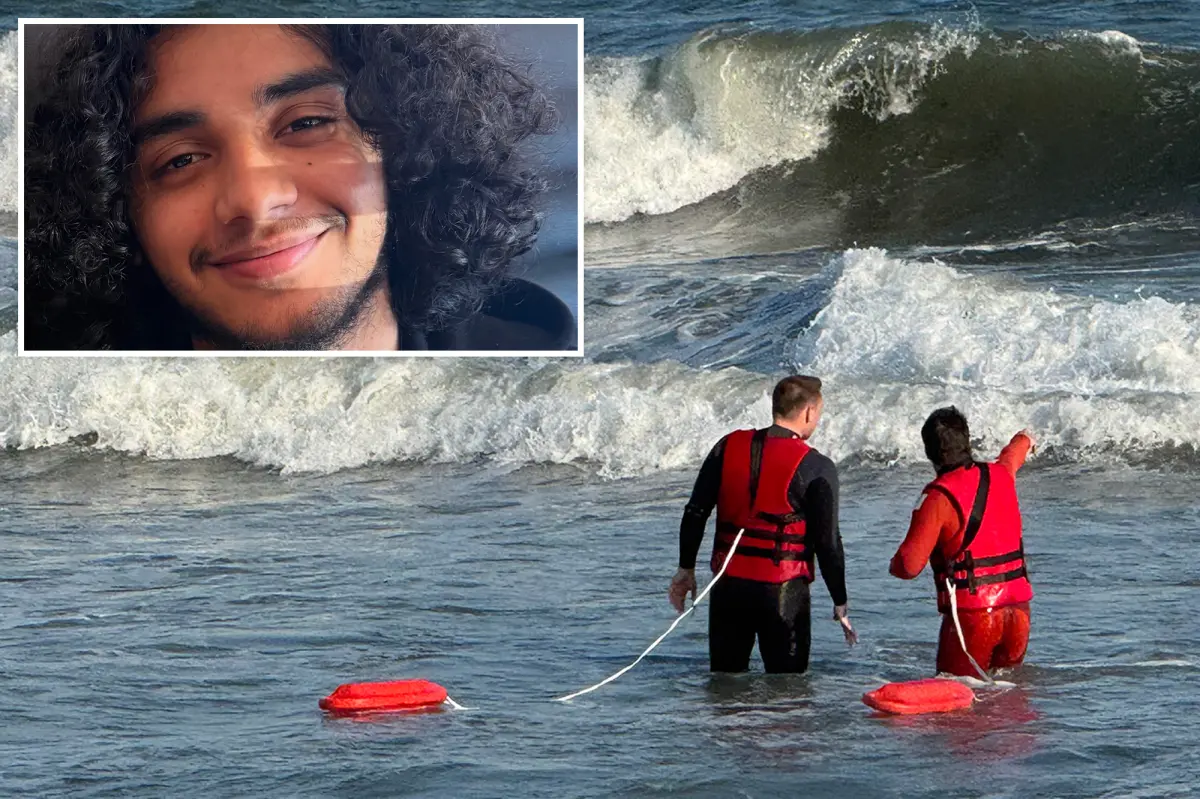
Behind every devastating headline of a life claimed by the sea lies a deeply personal narrative of love, ambition, and unfulfilled potential. Eighteen-year-old Brandon Figueroa was a young man standing on the absolute precipice of his future, a vibrant Bronx senior whose eyes were firmly fixed on the horizon of adulthood and all its beautiful possibilities. As a dedicated student at The Urban Assembly Bronx Academy of Letters, Brandon was only weeks away from the crowning achievement of his young life: walking proudly across the stage to receive his high school diploma at his graduation next month. To his mother, Jeanette Munoz, and his devastated family in the community of Soundview, he was not merely a good kid, but a vital source of joy, a beacon of hope, and a promise whose gentle nature and industrious spirit illuminated their lives. Brandon did not merely dream of a better life; he had meticulously mapped out a practical, honorable path for himself, aspiring to become a skilled professional electrician. He had already planned to enroll in trade school immediately after graduation, viewing it as a vehicle to turn his hands-on talents into a/solid, lifelong career that would support both himself and the family that loved him so dearly. The heartbreaking tragedy of his sudden disappearance is magnified by this sense of brilliant, impending promise, transforming what should have been a beautiful season of celebratory milestones, graduation caps, and joyful family gatherings into an agonizing period of unimaginable grief, unanswered questions, and profound, echoing emptiness. The sudden shattering of his bright trajectory has left his family, friends, and school community struggling to reconcile the vibrant, determined young man they knew with the shocking reality of his absence, proving that the deepest pain of this tragedy lies in mourning not just who Brandon was, but the incredible person he was so fiercely and beautifully striving to become.
The tragedy unfolded on a Tuesday afternoon, a day when the deceptive pull of the ocean proved irresistible to a group of teenagers seeking a temporary escape from the bustling streets of the city. Rockaway Beach, with its vast expanse of sand and crashing waves, has long been a sanctuary for young New Yorkers looking to celebrate the approaching end of the school year and the first warm breaths of late spring. At around 3:30 p.m., near the intersection of 73rd Street and Shore Front Parkway, Brandon and four of his friends stepped into the surf, completely unaware of the treacherous, invisible undertows that lurk beneath the water’s surface during the shoulder season. The ocean in mid-May can be a deceptive predator—visually stunning, refreshing, and highly inviting from the safety of the dry sand, yet icy, turbulent, and mercilessly powerful below the cresting waves. This early in the year, the shoreline entirely lacks the protective, watchful presence of municipal lifeguards, who do not officially begin their daily seasonal patrols on New York City beaches until the Memorial Day holiday weekend. Without these trained eyes scanning the swells and warning swimmers of danger, the water becomes a beautiful but lethal frontier, where even a brief moment of youthful exuberance can instantly escalate into a life-or-death struggle against unseen rip currents that can quickly overpower even the strongest, most athletic swimmers in a matter of seconds. For Brandon and his companions, what was meant to be a joyful celebration of friendship on a beautiful afternoon became a sudden encounter with the raw, uncaring forces of nature, illustrating just how quickly a tranquil local escape can transform into a site of profound human disaster.
What began as an afternoon of carefree laughter among close friends quickly dissolved into an absolute nightmare of panic, adrenaline, and lung-bursting desperation. As the five teenagers ventured into the choppy, unpredictable waters, they were suddenly caught in a violent current that turned their playful swim into an immediate battle for survival. Bystanders on the beach watched in mounting horror as the raw power of the ocean began to pull the teenagers deeper into the dangerous surf. Nemaiah Dos Santos, an eyewitness who watched the tragedy unfurl from the shore, recalled the terrifying sequence of events as four of the teenagers desperately fought their way back toward the safety of the sand. In a display of heroic but heartbreaking devotion, one of Brandon’s friends refused to let the ocean claim him, physically grabbing hold of Brandon and struggling with every ounce of his remaining strength to pull him back to shore through the relentless, crushing waves. However, the sheer physical force of the tide proved tragically overwhelming; as they struggled against the pulling undertow, a massive surge of water violently ripped Brandon from his friend’s desperate, slipping grasp, sweeping him further out into the deep, gray expanse of the Atlantic. In that devastating fraction of a second, the thin thread of physical safety was shattered, leaving his friends utterly helpless on the shoreline, screaming in agony as they watched Brandon disappear into the sea, helpless against the violent whims of an ocean that had claimed one of their own in the blink of an eye.
The emotional aftermath on the beach was immediate, raw, and deeply traumatizing for everyone who witnessed the heartbreaking struggle unfold. After Brandon was swept away, his frantic and exhausted friends scrambled onto the sand, immediately dialing 911 in a state of sheer, inconsolable panic, their voices shaking as they begged for emergency responders. The horror of the moment left a permanent scar on the bystanders who could do nothing but watch the tragedy play out from the safety of the boardwalk. Dos Santos, visibly shaken by the memory, expressed the profound psychological weight of witnessing such an intimate and terrifying struggle, admitting to breaking down in tears for the young man and the friend who had fought so hard to save him, noting how deeply agonizing it is to watch someone try in vain to rescue a peer only to have them swept away by a force beyond human control. Another witness, Julian Eastmead, described the agonizing scene that followed as the teenagers stood on the shoreline, clutching their cell phones with trembling, sand-covered hands, their faces wet with tears, as they made the devastating phone calls to their families to deliver the unimaginable news that they would not be bringing Brandon home. The sheer weight of those phone calls—filled with broken sobs, frantic explanations, and sudden, life-altering shock—reverberated across the beach, transforming the sunny seaside landscape into a tragic space of collective mourning, leaving a deep sense of despair that lingered long after the sun went down.
As the emergency calls flooded the dispatch system, the calm of the afternoon was shattered by the screeching sirens of emergency vehicles as the FDNY and NYPD launched a massive, coordinated search and rescue operation. Rescue swimmers, specialized marine boats, and helicopters swarmed the waters off Rockaway Beach, scanning the churning whitecaps and aerial vistas in a desperate, race-against-the-clock bid to locate the missing eighteen-year-old. Despite their rapid response and the deployment of advanced maritime search technology, the unforgiving conditions of the ocean and the strong afternoon currents stymied their efforts, leaving rescue crews empty-handed as twilight began to fall over the water. This heartbreaking incident highlights a recurring, systemic danger that plagues New York City coastal communities every spring: the deadly gap between the arrival of warm spring weather and the official deployment of city lifeguards on Memorial Day weekend. Year after year, eager teenagers and families are drawn to the beaches during unseasonably warm May days, unaware that the lack of active lifeguards, combined with cold water temperatures and strong currents, creates an incredibly hazardous environment. Brandon’s tragic disappearance serves as a somber, urgent reminder of the critical importance of water safety education, the necessity of swimming only when lifeguards are present, and the terrifying reality that the ocean does not wait for lifeguard chairs to be staffed before asserting its fatal power.
In the wake of this devastating loss, a profound wave of grief has united the Soundview community, Brandon’s high school peers, and his loving family as they try to navigate a harsh new reality without him. In an effort to cope with the sudden financial and emotional burden, his mother, Jeanette Munoz, established a GoFundMe campaign, openly sharing her family’s agonizing struggle to survive this unforeseen tragedy and seeking support to honor her beloved son’s memory and legacy. The campaign has quickly become a digital sanctuary for shared grief, where friends, teachers, and compassionate neighbors have come together to offer condolences, share memories, and remember a young man who was defined by his kindness, his quiet ambition, and his bright smile. As his classmates at The Urban Assembly Bronx Academy of Letters prepare to put on their graduation caps and gowns next month, there will be a heartbreaking, noticeable void in their ranks—an empty chair that should have belonging to a young man on his way to trade school to build his dreams. Though Brandon’s life was tragically cut short in the turbulent waters of Rockaway Beach, the impact of his gentle spirit and the love he cultivated among his family and peers will endure, standing as a testament to a life that, though far too brief, was incredibly rich with love, potential, and an enduring promise that will never be forgotten by those who had the privilege of knowing him.