



Cold Front in the Arctic: Nuuk Protests Reveal Deepening Tensions Over America’s Footprint in Greenland
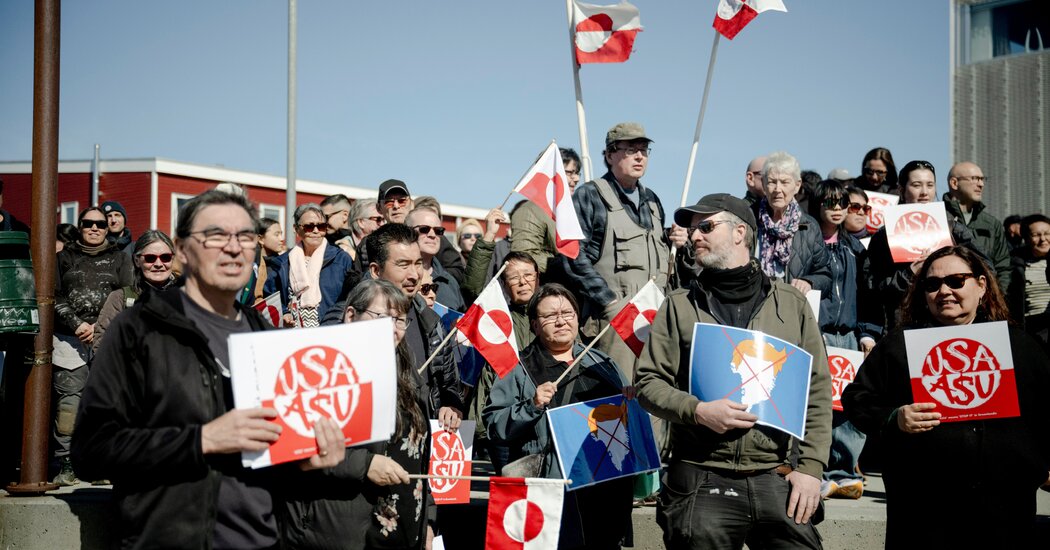
Under the shadow of snow-dusted peaks overlooking the southwestern coast of Greenland, the serene skyline of Nuuk was shattered on Thursday by the rhythmic chants of hundreds of local demonstrators marching in defiance of America’s rapidly expanding footprint in the high north. Inside the sleek, newly minted United States Consulate building in the heart of the capital, local dignitaries and American diplomats mingled over musk ox hot dogs, lamb sliders, and chicken waffles, attempting to project an aura of warm bilateral cooperation and mutual prosperity. Yet, just outside the building’s glass facade, the atmosphere painted a radically different picture of modern diplomacy, as a spirited crowd of Greenlanders clogged the central thoroughfares, braving the biting wind to carry hand-painted signs reading “We don’t want your money” and warning that Washington is sending a “MAGA Trojan horse.” The physical discordance was unmistakable: while diplomatic elites raised glasses wrapped in patriotic red, white, and blue, the chilling Arctic air carried the loud, persistent demands of a localized resistance yelling “Go away!” to a foreign power they view with deep suspicion. This dramatic face-off highlights a mounting tension in Nuuk, where the local population is finding itself caught in the crosshairs of a major superpower’s aggressive pivot toward the polar north, prompting deep concerns over whether this sudden influx of American diplomatic and military attention will ultimately erode Greenland’s hard-won autonomy.
Cookies, Red Hats, and Colonial Echoes: The Tone-Deaf Charm Offensive in the Capital
The friction on Nuuk’s streets did not materialize in a vacuum; rather, it was the direct culmination of what many Greenlanders view as a clumsily executed and highly patronizing charm offensive orchestrated by Washington in the days leading up to the consulate’s high-profile ribbon-cutting. Just days prior to the grand opening, Louisiana Governor Jeff Landry, acting as President Donald Trump’s special envoy to Greenland, embarked on a highly publicized but widely criticized tour of the capital, during which he attempted to curry favor with ordinary citizens by handing out chocolate chip cookies and iconic red “Make America Great Again” hats to people he met on the streets. This heavy-handed display of American electoral aesthetics found very few takers in a country with a strong social-democratic welfare model, and instead drew swift, sharp condemnation from Greenlandic officials who viewed the gesture as an intrusive, tone-deaf insult to their sophisticated political culture. Local organizers, like seasoned account manager Aqqalukkuluk Fontain, who helped mobilize Thursday’s protests, publicly rebuked the administration’s strategy as an overt push of aggressive propaganda that fails to understand the intelligence and resilience of the Greenlandic people. For a population currently navigating the delicate path toward full independence from the Kingdom of Denmark, this performative outreach serves as a stark reminder of colonial-style paternalism, raising global alarms that American interest has less to do with genuine partnership and more to do with exploiting a strategic geopolitical vacuum under the guise of casual goodwill.
The Geopolitical Grand Strategy: Washington’s Unyielding Arctic Obsession
Behind the festive bunting and the controversial cookie-diplomacy lies a calculated, high-stakes push by the United States to significantly expand its footprint across Greenland, a semiautonomous territory of Denmark that has suddenly returned to the center of global strategic calculations. Although public attention was first captured by the Trump administration’s bizarre and widely ridiculed proposal to outright purchase the world’s largest island, confidential negotiations currently unfolding in Washington reveal a far more serious, systematic campaign to integrate Greenland into the American economic, diplomatic, and security orbit. Under the guise of fostering localized development, American strategists are quietly lobbying for unprecedented access to Greenlandic infrastructure, airfields, and rich mineral resources, seeking to establish a permanent bulwark in the northern hemisphere. Despite the administration stepping back from its threats of forced acquisition, the relentless expansion of the diplomatic mission in Nuuk signals that the White House’s ambition to dominate the polar region remains entirely unchanged. This state of affairs places Nuuk’s local government in an incredibly precarious position, forced to balance the enticing prospect of American investment—which could support their long-term path to independence—against the very real danger of becoming a vassal state in a renewed era of great power competition.
Resurrecting Cold War Ghosts: Military Reoccupation in a Melting Polar Landscape
The opening of this massive diplomatic hub is not merely an exercise in civil relations; it is the visible vanguard of a broader remilitarization strategy designed to counter Russian and Chinese influence in a rapidly changing Arctic. During the height of World War II and the subsequent decades of the Cold War, the United States maintained an extensive military network across Greenland, stationing thousands of troops at remote outposts that were eventually abandoned as global tensions thawed, leaving behind only the lonely radar installations at Pituffik Space Base. Today, however, as climate change accelerates the melting of Greenland’s massive ice sheet, previously inaccessible shipping lanes and vast, untapped reserves of oil, gas, and rare earth minerals are opening up, transforming the Arctic from a frozen barrier into a highly contested geopolitical highway. In response to this new environmental and strategic reality, American defense officials have spent the past several weeks actively surveying these abandoned, decaying military installations with a concrete plan to rebuild and reoccupy them. While Washington frames this military resurgence as a necessary measure to guarantee regional security and safeguard international trade routes, many locals fear that the reintroduction of American troops will turn their peaceful homeland back into a prime target for international conflict, sacrificing Greenlandic sovereignty at the altar of militarized global hegemony.
From a Red Shack to a 30,000-Square-Foot Fortress: The Scale of Ambition
The dramatic scale of America’s shifting strategy is perfectly mirrored in the physical evolution of its diplomatic presence in Nuuk, which has evolved from an unassuming outpost into an imposing municipal landmark. When the United States first re-established its diplomatic mission to Greenland in 2020 after a decades-long hiatus, it operated out of a modest, traditional red wooden house on the edge of town—a quiet nod to local architectural styles that blended seamlessly into the surrounding community and housed just two full-time diplomats. In stark contrast, the newly unveiled consulate occupies a towering, ultra-modern 30,000-square-foot facility situated along one of Nuuk’s busiest and most visible commercial thoroughfares, representing an exponential leap in administrative capacity and visual dominance. During the grand opening ceremonies, guests wandered through cavernous halls adorned with stylized posters detailing the history of American-Greenlandic cooperation, though observers noted that large swaths of the massive building remained eerily empty, sterile, and clearly unfinished. Despite a refusal from State Department representatives to clarify exactly how many diplomats and intelligence personnel will ultimately be stationed within these concrete walls, the sheer scale of the building speaks volumes about Washington’s long-term intentions, signaling a permanent, heavily fortified presence that is built to supervise and influence the island’s political trajectory for decades to come.
Shadows on the Fjord: Suspicious Minds and the Fight for Autonomy
As the formal speeches concluded inside the new consulate, with American Consul Susan A. Wilson praising the virtues of “human-to-human connections” and Ambassador Ken Howery outlining plans for a “deepening partnership,” the demonstrators outside responded with a powerful, haunting display of silent resistance. Turning their backs to the modern glass facade, the crowd stood in absolute, freezing silence for two minutes—a quiet protest against what they describe as a stealthy, non-transparent campaign to compromise Greenlandic autonomy—before resuming their fiery chants for the Americans to leave. This profound skepticism is shared by prominent local figures, including Nivi Christensen, a prominent Nuuk museum director, who pointed out the suspicious absence of prominent national flags and official signage on the building, comparing it unfavorably to other foreign consulates that operate with open pride and transparency. The community’s deep-seated anxiety stems from the perception that this massive diplomatic fortress operates on a mandate of hidden agendas, functioning as a modern command center for foreign interests rather than an open door for cultural exchange. Ultimately, the battle brewing on Nuuk’s streets is a struggle for self-determination; as the ice continues to melt and the world’s superpowers cast their covetous glances northward, Greenlanders are making it-undeniably clear that they will not let their country be quietly bartered away in the corridors of distant empires.