






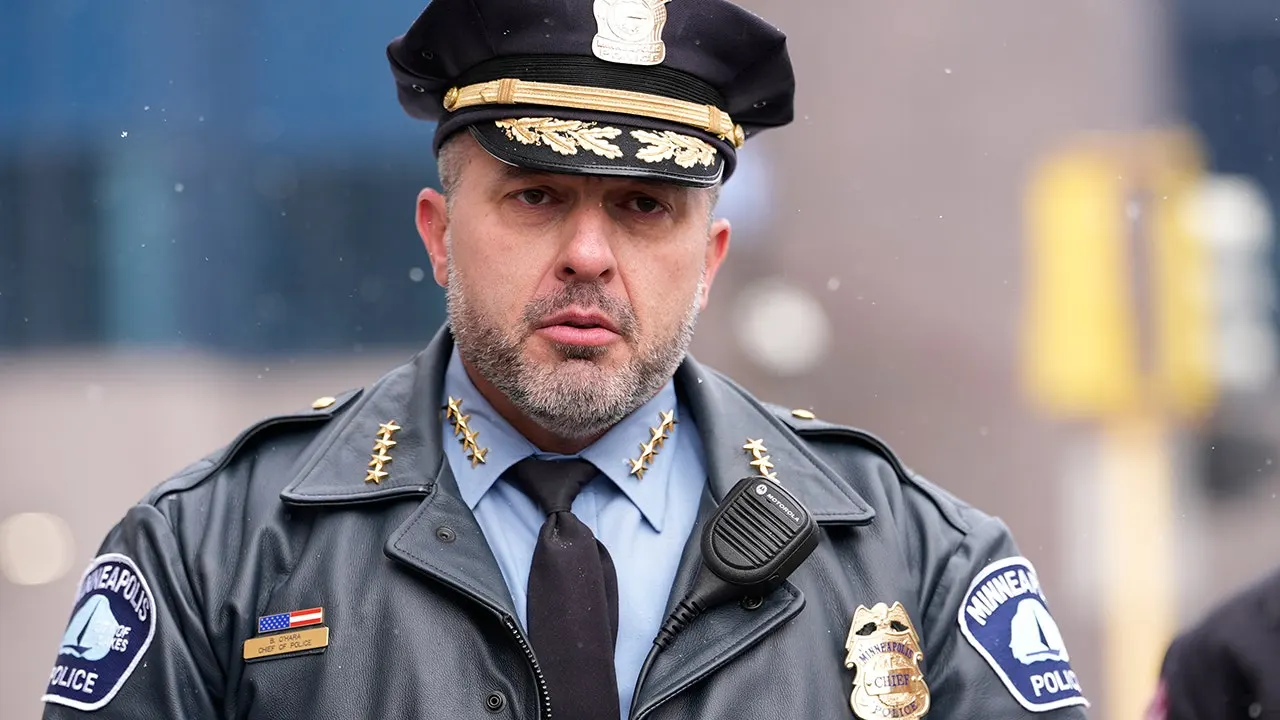
The city of Minneapolis, still navigating the tender and exhausting path toward systemic healing, once again finds itself grappling with a profound leadership crisis that strikes at the very heart of public accountability and municipal faith. The abrupt resignation of Minneapolis Police Chief Brian O’Hara is not merely a bureaucratic transition or a routine shakeup in city management; rather, it is a deeply human drama that highlights the precarious nature of public trust in a community that has spent years under a relentless global spotlight. When Mayor Jacob Frey stepped up to the podium on a somber Tuesday, his expression mirrored the collective weariness of a city that has endured consecutive waves of social upheaval, systemic scrutiny, and institutional reform. Frey’s announcement that O’Hara—who took the reins of the struggling department in November 2022 with promises of transparency and cultural transformation—had resigned, marked the bittersweet end of a tenure born of high hopes and desperate expectations. This high-profile departure did not stem from a sudden spike in neighborhood violence or a failure to implement the operational strategies demanded by a reform-minded city council; instead, it arose from a quiet, internal breach of integrity that shattered the relationship between the city’s top law enforcement official and the administration that appointed him. For a police department still fighting to restore its tarnished credibility, the chief’s office is far more than an administrative post; it is a symbolic beacon of ethical authority. When that authority is compromised, even by a personal misjudgment, the damage to the collective morale of both the officers on the beat and the citizens on the street is fast and unforgiving. Mayor Frey’s painful decision to accept O’Hara’s resignation highlights the uncompromising reality of modern public service, where the personal behavior of leaders is subject to the same rigorous standards of accountability they are expected to enforce upon others, proving that in a city divided, trust remains the most fragile currency of all.
The complex chain of events that culminated in this dramatic fall from grace began quietly last year, catalyzed by an anonymous complaint that thrust Chief O’Hara into the intense and unrelenting glare of an internal investigation. The accusation was deeply personal and professionally devastating, alleging that the chief had engaged in sexually intimate relationships with city employees under his direct or indirect influence—a claim that threatened to instantly undo his hard-won authority and cast a shadow of impropriety over the entire department. Recognizing that even the whisper of such misconduct could derail the progress of a city striving to rebuild, Mayor Frey and city leadership initiated a comprehensive and exhaustive independent inquiry. Over several agonizing months, an outside investigative team left no stone unturned, conducting extensive, deep-dive interviews with a wide spectrum of municipal employees, digging through bureaucratic records, and exploring the delicate interpersonal dynamics of city hall. For the chief, living under the weight of such an intensive probe must have been an incredibly isolating and stressful experience, with his professional legacy and personal dignity hanging in the balance with every session. When the investigation finally concluded, the official report yielded a conclusion that should have brought profound relief: the sensational allegations concerning inappropriate intimate relationships were determined to be officially unsubstantiated. Yet, the administrative relief of being cleared of the primary charge was immediately overshadowed by a separate, much more troubling finding regarding how O’Hara handled the pressure of the investigation itself, proving that sometimes the fear of scrutiny can drive a leader to make choices far more damaging than the accusations they seek to avoid, ultimately turning a moment of clearance into a catalyst for professional self-destruction.
The tragedy of O’Hara’s departure lies not in the unsubstantiated rumors of his personal life, but in the panic-driven, self-protective actions he took while attempting to navigate the high-stakes investigative process. In a secondary, parallel report delivered to Mayor Frey, investigators revealed that while the chief was legally cleared of the initial relationship allegations, he had actively and intentionally interfered with the investigation itself—a fatal error of judgment for any citizen, but an absolute betrayal of duty for the custodian of the law. Specifically, the inquiry discovered that during the original probe, O’Hara had intentionally deleted a contact card for a specific individual from his city-issued cellular phone, in what investigators characterized as a deliberate attempt to shield evidence of his personal connection to that person from those reviewing his conduct. Furthermore, despite receiving explicit, unambiguous instructions not to discuss the ongoing investigation with anyone to protect the sanctity and objectivity of the inquiry, O’Hara reached out to another city employee to complain that his city-issued cell phone had been seized for forensic analysis, compromising the secure perimeter of the probe. These actions, which may have originated from a very human sense of panic, vulnerability, or a misguided desire to protect his privacy, effectively severed the critical thread of trust that bound him to his office and his mayor. It was this active choice to obstruct and bypass the rules that Mayor Frey determined to be an irredeemable breach of the public trust, prompting him to notify the chief that he faced severe disciplinary action up to and including immediate termination, which ultimately prompted O’Hara’s resignative exit, illustrating the timeless lesson that the cover-up is frequently far more hazardous than the initial crisis.
To truly understand the weight of this resignation, one must place it within the broader, deeply complicated context of Minneapolis’s ongoing struggle to redefine itself in the wake of George Floyd’s murder in 2020. O’Hara assumed leadership of the department in November 2022, entering a pressure-cooker environment where he was tasked with executing sweeping, historic reforms to the department’s training regimens, culture, and use-of-force policies under a federal consent decree and intense community skepticism. Throughout his time in office, O’Hara had to navigate the department through multiple high-profile crises that tested his operational capability, including the highly sensitive shooting incident at the Annunciation Catholic Church and the controversial implementation of Operation Metro Surge, a federal immigration and crime suppression crackdown that heightened anxieties within the city’s marginalized communities, particularly among Somali youth. Under such relentless and compounding pressures, being the chief of police in Minneapolis is an incredibly demanding, highly isolated endeavor where every statement is analyzed and every action is viewed through a lens of historical grievance and hope for reform. In this fragile ecosystem, the police chief is not merely a bureaucratic manager but a living embodiment of the city’s commitment to justice, meaning that any personal lapse in integrity is not just an individual failure but a systemic setback that threatens to dismantle the painstakingly built confidence of a community desperately searching for reasons to trust the police again, highlighting how easily administrative instability can delay the deeply needed cultural evolution of a metropolitan force.
In the immediate aftermath of this shocking departure, Mayor Frey acted swiftly to stabilize the department by appointing Assistant Chief Katie Blackwell to take over the mantle of leadership, thrusting her into one of the most intellectually and emotionally demanding roles in American municipal governance. Blackwell steps into the role of chief at a time when the department is desperately in need of consistent, calm stewardship to keep officers focused on public safety and to assure the community that the path toward systemic reform will not falter. Her challenge is further compounded by the quiet acknowledgment that the city’s internal struggles with O’Hara are far from fully resolved, as the mayor’s office confirmed that there are still seventeen active, open complaints against the former chief that are currently being processed through separate administrative channels. While city officials, including mayoral spokesperson Jennifer Lor, have refrained from disclosing the exact nature or severity of these pending complaints to preserve the integrity of those ongoing investigations, their presence highlights the complex, highly litigious, and defensive atmosphere that has long characterized the upper echelons of the department’s administration. For the everyday residents of Minneapolis, who are weary of administrative chaos and simply long for a safe, just city, Blackwell’s appointment represents a critical turning point where the department must demonstrate that its commitment to progress is larger than any one individual, and that structural stability can endure even when its highest leaders falter under the weight of personal accountability, showing that true systemic reform requires resilient systems that do not depend on the flawlessness of a single person.
Ultimately, the story of Chief Brian O’Hara’s rise and fall serves as a sobering and profoundly human lesson about the fragility of leadership, the inevitability of human error, and the uncompromising demands of modern ethical standards. Mayor Frey’s candid reflection that “everyone makes mistakes, including me” injected a rare note of genuine humanity and vulnerability into a standard political press conference, recognizing that the burden of leadership in a traumatized city is an almost impossible weight for any individual to carry flawlessly. Yet, as the mayor so poignantly asserted, when you agree to serve as the chief of the Minneapolis Police Department, “trust is not secondary to the job, it is the job,” and once that fundamental trust is fractured, the ability to lead effectively is lost forever. The bitter irony of O’Hara’s downfall is that the original, highly damaging allegations about his personal life were ultimately found to be groundless, meaning he was destroyed not by the truth of his actions, but by his fear of the truth-seeking process itself, showcasing how the human instinct of self-preservation can often become an individual’s greatest vulnerability. As Minneapolis enters yet another chapter of transition and reflection, both the city’s leadership and its citizens are left to grapple with the realization that genuine police reform is not just about changing written policies or adjusting tactical procedures, but about cultivating human leaders who possess the rare moral courage to stand completely transparent in the face of intense public scrutiny, proving that absolute honesty remains the only foundation upon which a truly just community can be built, piece by painful piece.