



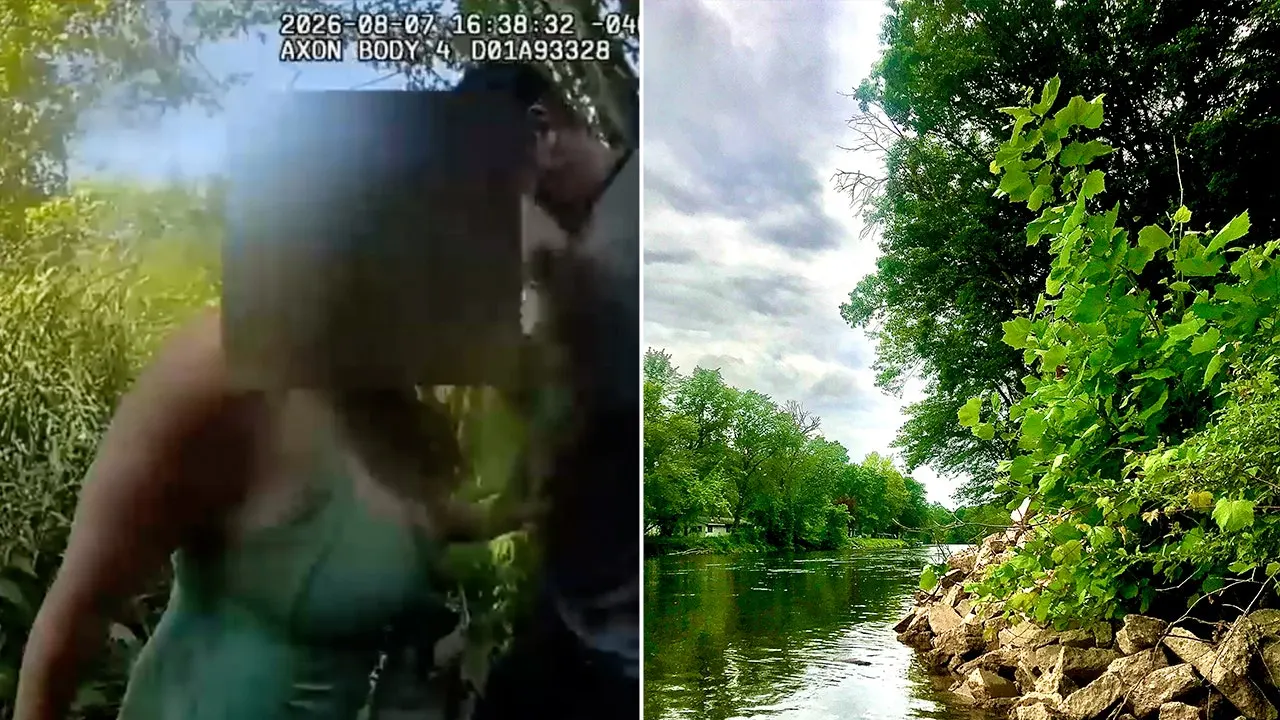
The Muskegon River in Michigan is widely celebrated as a scenic sanctuary for summer recreation, drawing thousands of eager outdoor enthusiasts and local families each year who seek to escape the frantic monotony of modern life by drifting lazily down its gentle, sun-dappled currents. It was this very promise of a peaceful, carefree afternoon under the warm August sky that lured Jazman Hock, her cousin Sarah Vida, and Sarah’s bright-eyed nine-year-old son, Kayden Kovalcik, onto the river for what was supposed to be a memorable family outing. Armed with little more than lighthearted expectations and a set of inexpensive, brightly colored inflatable rafts designed strictly for the calm, protected waters of a backyard swimming pool rather than a dynamic river environment, the trio launched into the water, anticipating a brief and refreshing four-hour float. However, the deceptive serenity of the natural world often masks its inherent volatility, and the gentle current soon swept them into areas where the river’s true, untamed character became terrifyingly apparent. As the hours slipped away, the fragile, thin plastic of their pool toys proved entirely inadequate against the sharp river debris, submerged branches, and jagged stones lurking just beneath the surface. One by one, their flimsy rafts ruptured, deflated, and ultimately fell apart, leaving the family stranded in the middle of the river, miles away from their intended destination, without cell service, and completely disoriented. Left with no means of transport and lacking any knowledge of the surrounding geography, they made the fateful, desperate decision to abandon their ruined rafts and venture into the dense, overgrown forest flanking the riverbanks in a bid to find a road or help, unknowingly stepping into a vast, swampy, and unforgiving wilderness that would hold them captive for three harrowing days.
As the first night descended upon the thick Michigan canopy, the lighthearted atmosphere of their summer outing vanished entirely, replaced by the cold, damp, and terrifying reality of survival in an unfamiliar forest. With the temperature rapidly dropping and the darkness cloaking the towering trees in menacing shadows, Jazman and Sarah were forced to confront a parent’s absolute worst nightmare: keeping a young, vulnerable child safe, warm, and alive in a hostile environment with absolutely no shelter or protective gear. The trio possessed only a meager supply of protein bars and bottled water, items that would have barely sufficed for a brief afternoon hike, let alone a multi-day ordeal in the deep woods. Instantly, a profound and fiercely protective maternal instinct took over the two women, who silently agreed to sacrifice their own physical well-being entirely for the sake of young Kayden. They gave every single bite of food and every precious drop of water to the nine-year-old boy, ensuring he maintained his physical strength and morale while they voluntarily faced the agony of starvation and dehydration. To sustain their own rapidly failing bodies over the seventy-two-hour ordeal, Jazman and Sarah resorted to gathering whatever meager nourishment the forest floor could provide, chewing on bitter tree bark, swallowing wild flowers, and even consuming crawling ants to keep their basic bodily functions from shutting down entirely. Dressed in nothing but basic, thin swimwear, their skin was completely exposed to the elements, leaving them vulnerable to the relentless, painful onslaught of biting insects, thorny thickets, and the damp chill of the forest floor. The women endured these physical torments without complaint, wrapping their arms around Kayden to shield his bare skin from the cold ground, using their own bodies as human shields against the harsh wilderness, demonstrating a level of sacrifice that words can scarcely describe.
By the second and third days of their disappearance, the physical and psychological toll of their isolation had reached an agonizing peak, transforming their struggle into a slow, grinding battle of endurance against a seemingly indifferent natural world. The dense undergrowth of the Michigan wilderness near the Mill Iron Road Boat Launch is a chaotic, swampy labyrinth of thick marsh grass, tangled briars, and muddy wetlands that fiercely resist any attempt at navigation, making every step an exhausting feat. Every movement the family made in search of a path home resulted in deep, bloody lacerations across their exposed limbs, leaving Jazman and Sarah severely cut up, bruised, and structurally weakened by the combined effects of dehydration, physical exhaustion, and lack of nutrition. Kayden, shirtless and highly vulnerable, relied entirely on the emotional fortitude of his mother and cousin, who despite their own overwhelming terror, forced themselves to project an aura of hope and calm to keep his panic from spiraling into despair. The psychological weight of watching the sun rise and set repeatedly, hearing the distant, mocking sounds of passing vehicles or boats while remaining utterly lost and invisible, threatened to break their spirits at any moment. Their bodies were screaming for rest, their feet were swollen and bleeding, and their minds were clouded by exhaustion, yet they kept moving forward through the suffocating green prison, driven entirely by the primal, unyielding urge to survive just one more hour, hoping against hope that someone was looking for them. During the pitch-black nights, the forest came alive with unfamiliar, terrifying noises—the rustling of unseen predators, the creaking of ancient trees, and the damp, heavy silence of the swamp. Every shadow seemed to morph into a threat, and the lack of sleep began to play tricks on their minds, causing them to hear phantom voices calling their names. Yet, even as their physical energy dwindled to almost nothing, the bond between the three of them grew stronger, as they huddled together for warmth, sharing quiet words of encouragement to drown out the oppressive darkness of the wilderness.
Fortunately, while the family fought for their lives in the shadows of the forest, a massive, coordinated rescue operation was mobilizing on the outside, driven by a desperate community and emergency responders who refused to let them fade away. The sudden disappearance of the trio had sparked a widespread panic throughout the region, uniting local fire departments, emergency medical services, volunteers, and state agencies in a frantic, high-stakes race against the clock. On August 8, the critical breakthrough finally came when a highly trained Michigan State Police K-9 team paired up with dedicated Michigan Department of Natural Resources Conservation Officers to comb the dense, swampy terrain northeast of the boat launch. The searchers waded through chest-high forest grass, muddy bogs, and thick, swampy wetlands, their hearts heavy with the knowledge that time was rapidly running out for the missing family. Dramatic body camera footage captured the raw, heart-pounding intensity of these final moments, showing the rescue team pushing through the nearly impenetrable foliage, their voices raw and strained as they continually yelled into the dense woods. “Make some noise… Yell!” one searcher pleaded into the vast silence, desperate for any sign of life, hoping that their voices would pierce through the thick canopy and reach the ears of the lost souls who had spent seventy-two hours in terrifying isolation. The search dog, working tirelessly through the oppressive humidity and thick brush, sniffed the air for any scent of human presence, leading the handlers deeper into the unforgiving marshland. The rescuers themselves were exhausted, their uniforms soaked in sweat and river water, and their boots sinking deep into the mud with every step, yet they refused to slow their pace. They knew that with every passing hour, the chances of finding the family alive dwindled significantly, turning the search into a frantic, adrenaline-fueled mission where every rustle of the leaves could mean the difference between life and death.
Then, in a moment that can only be described as a miracle of human connection, a faint, answering voice echoed through the trees, guiding the emotional rescuers directly to the stranded trio. The body camera footage reveals the overwhelming relief and raw shock of the encounter as the searchers finally broke through the brush to find Jazman, Sarah, and Kayden huddled together in the wild. The physical toll of the ordeal was immediately apparent; Sarah was covered in painful cuts and barely able to stand, while a shirtless Kayden looked up at his saviors with an innocent, heartbreaking clarity. “We got lost on the river,” the young boy explained to the searchers, his voice steady despite the trauma he had just endured, as he recounted how their brief four-hour trip had gone so terribly wrong. The rescuers themselves were visibly shaken by the gravity of the moment, with one officer repeatedly gasping “oh my God” in disbelief and relief, while another wrapped one of the women in a tight, protective embrace, whispering “good job, good job” as she wept. When a conservation officer gently urged Sarah to sit down, pointing out how badly her legs were lacerated and noting that she surely couldn’t walk much further, her quiet, defiant reply of “I’m forcing myself” encapsulated the extraordinary, unbreakable willpower that had kept her family alive against all odds. The emotional dam broke for the survivors as the realization that they were finally safe washed over them, ending their seventy-two hours of terror in an instant. The rescuers immediately began assessing their injuries, offering water, and wrapping them in warm blankets to combat the shock and exposure. The tender interaction between the hardened officers and the traumatized family highlighted the deep, instinctual empathy that drives search-and-rescue personnel, who often carry the emotional weight of these life-and-death situations long after the mission is complete.
The successful recovery of Jazman Hock, Sarah Vida, and Kayden Kovalcik stands as a profound testament to both the limits of human endurance and the incredible power of a united community. In the aftermath of the rescue, the Michigan State Police expressed their deepest gratitude in a heartfelt public message, praising the seamless collaboration of the Unified Command that brought together multiple law enforcement agencies, rescue teams, and selfless volunteers who refused to abandon the search. This harrowing event serves as a stark, cautionary reminder of how quickly a simple summer adventure can transform into a life-threatening crisis when nature is underestimated and proper safety equipment is neglected. Yet, far beyond the logistical lessons of river safety, the story of this family’s survival will be remembered for its deeply moving display of human love and sacrifice. It is a story of two women who willingly starved themselves so a child could eat, who endured physical agony to shield him from fear, and of a dedicated rescue force that searched tirelessly until the lost were found. Ultimately, their rescue is not just a triumph of search-and-rescue tactics, but a beautiful celebration of the human spirit’s refusal to surrender to the darkness of the wilderness, proving that even in our darkest moments, hope and survival can prevail. As the family begins their physical and emotional recovery, the community continues to rally around them, offering support and celebrating their miraculous return. Their story will undoubtedly be told for years to come along the banks of the Muskegon River, serving as both a sober warning to future tubers and a beautiful epic of maternal devotion. It reminds us all of the fragile thread upon which human life hangs, the fierce protective instincts of motherhood, and the relentless dedication of those who put their own lives on the line to bring the lost back home into the warm embrace of safety.