


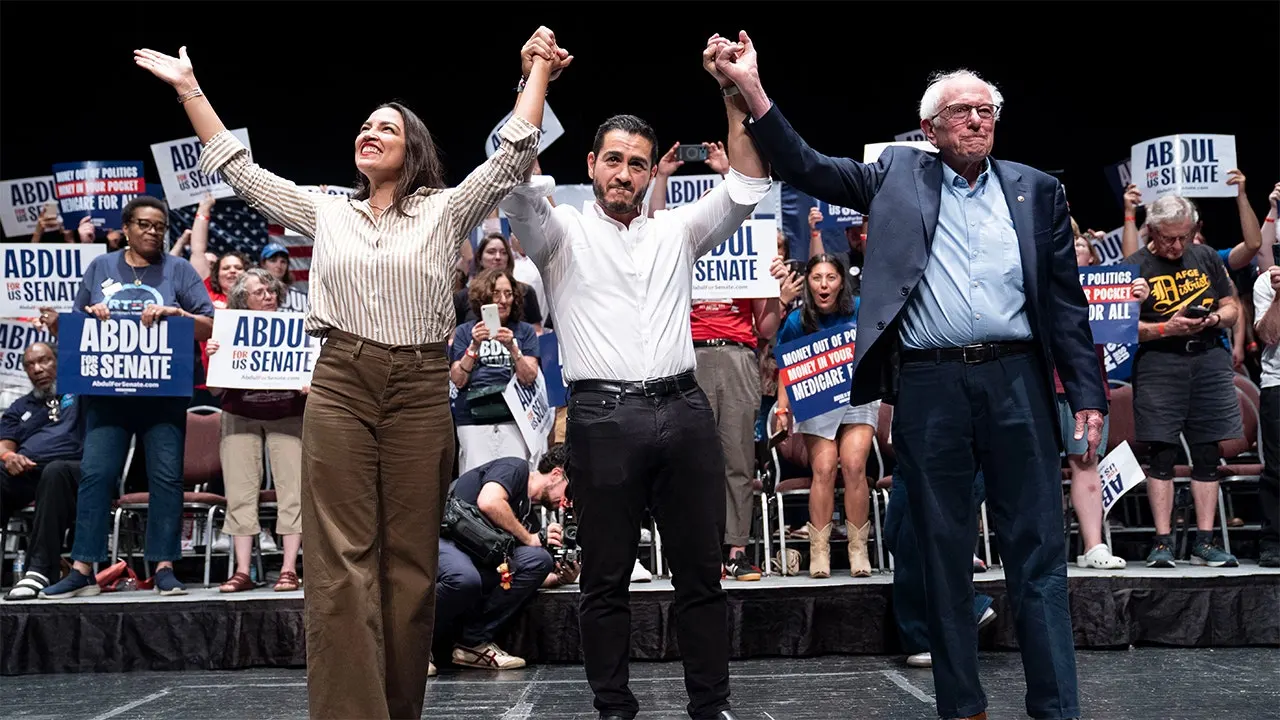
The complex and often turbulent landscape of American politics is currently witnessing a defining moment in Michigan, where the state’s primary election is serving as a high-stakes battleground for the future direction of the Democratic Party. This contest is far more than a routine exercise in local democracy; it represents a deep ideological civil war between the party’s moderate establishment and its increasingly vocal progressive wing. On one side of this divide stands the pragmatism of candidates like Haley Stevens, who represent a traditional, center-left approach focused on economic stability, bipartisan cooperation, and broad-based coalition building that appeals to suburban voters. Conversely, the progressive movement, championed by figures such as Abdul El-Sayed, demands a radical departure from the status quo, pushing for systemic overhauls, universal healthcare, and aggressive environmental policies. Adding fuel to this political fire is the resurfacing of controversial past statements that have come back to haunt El-Sayed at the worst possible moment, serving as a stark reminder of how digital histories can derail modern campaigns. Conservative commentators like Liz Peek have framed this choice as a decision between Stevens’ sensible normalcy and El-Sayed’s far-left ideals. This electoral clash in Michigan is a microcosm of the national struggle facing Democrats as they attempt to balance progressive passion with moderate electability. The outcome will not only decide local representation but will also signal to national strategists which path offers the safest route to victory in upcoming general elections, making Michigan the ultimate testing ground for a party trying to unite a fractured base.
While the political machinery grinds on, America’s cultural landscape is simultaneously being reshaped by intense debates where sports, gender identity, and media representation collide in highly public ways. A prominent flashpoint in this ongoing culture war is conservative commentator Clay Travis’s provocative ten-million-dollar challenge to the WNBA’s Las Vegas Aces, daring them to face off against an elite boys’ high school team. Although critics dismiss the challenge as a polarizing publicity stunt, it has successfully tapped into a deep-seated national conversation regarding physical biology, gender equity, and the preservation of women’s sports categories in the modern era. This debate is mirrored in the digital realm, where controversial online personalities like far-left streamer Hasan Piker face heavy criticism for seemingly downplaying or dismissing the oppressive, anti-women, and anti-LGBTQ policies of extremist groups like Hamas, revealing a jarring double standard in modern progressive advocacy. At the same time, female athletes such as Sophie Cunningham are finding themselves caught in the crossfire of online outrage, facing harsh and unfounded accusations of being anti-trans and anti-black from activist critics simply for navigating these complex social terrains. These controversies highlight a society deeply divided over the boundaries of inclusion and identity, showing that sports are no longer just about athletic achievement, but have instead become a primary stage for battling out competing visions of social justice and personal values.
Away from the cameras of cultural commentators, the physical enforcement of national laws and the negotiation of federal power continue to shape the daily reality of millions of Americans. In a striking demonstration of federal law enforcement capability, Immigration and Customs Enforcement (ICE) reported a record-shattering fifty-one thousand arrests in the single month of July, a statistic that underscores the immense scale and urgency of current border security operations. This enforcement surge comes alongside a major legal victory for federal agents in New York, where a federal judge blocked state-level attempts to restrict and penalize masked ICE agents, reasserting federal supremacy over local political resistance. This ongoing tension between federal authority and local progressive policy highlights the deep divisions within the American legal and political systems regarding immigration reform. Yet, even as these high-tension operations unfold across the country, a surprising display of political pragmatism occurred in the halls of Congress. Senate Majority Leader Chuck Schumer managed to defuse a looming government shutdown by offering crucial concessions to Senate Republicans, handing an early legislative victory to John Thune. This maneuver proved that despite the seemingly irreconcilable differences that define modern Washington, the catastrophic economic threat of a government shutdown can still compel political adversaries to put aside their rhetoric, if only temporarily, to keep the wheels of government turning.
This delicate search for stability at home contrasts sharply with the volatile, unpredictable forces of global conflict and domestic natural disasters that threaten public safety and economic well-being. On the world stage, the precarious nature of global supply chains was brought into sharp relief when a merchant vessel in a vital Middle Eastern shipping corridor was left burning after a series of four relentless attacks, with crew members tragically reported missing. This terrifying incident highlights the immense physical dangers faced by mariners keeping global oil routes open amidst rising geopolitical hostilities. Back in the United States, this energy vulnerability has fueled domestic anger over high fuel prices, prompting former President Donald Trump to launch a scathing attack on major oil conglomerates like Exxon and Chevron, accusing them of reaping astronomical profits while ordinary citizens struggle under the weight of inflation and conflict-driven energy costs. This vulnerability is not limited to international waters or economic policies; it is also felt acutely at the community level, as seen in Spokane, Washington, where local authorities successfully arrested and charged a suspect for deliberately starting a destructive wildfire. These concurrent crises demonstrate how global conflicts, corporate greed, and localized criminal acts can combine to create an environment of constant anxiety, forcing everyday citizens to navigate the economic and physical fallout of events far beyond their control.
As Americans navigate these physical and economic hardships, there is also a profound, growing skepticism regarding the cultural and commercial institutions that have historically anchored society. A prominent historian recently voiced these concerns by publicly criticizing the controversial ideological shifts he observed within the exhibits of the Smithsonian Institution, warning that the curation of national history is being distorted to fit modern political agendas rather than preserving objective historical truths. This anxiety over the erosion of traditional values is not confined to prestigious academic museums; it extends to the everyday commercial brands that Americans hold dear, such as the rustic restaurant chain Cracker Barrel. The beloved southern-themed franchise once again faced fierce backlash from its intensely loyal customer base after introducing progressive menu items and modern marketing initiatives, causing outrage among traditionalists who view the establishment as a sanctuary of nostalgic, unpretentious American heritage. This corporate misstep illustrates a broader cultural conflict where corporate leaders, in their rush to project modern social awareness, alienate the core demographic that built their brand. It highlights a widespread desire among many citizens to preserve local and national touchstones as a vital defense against a rapidly changing and increasingly unfamiliar cultural landscape.
Despite these persistent cultural clashes and institutional anxieties, there remain powerful narratives of transparency, personal growth, and extraordinary human achievement that offer a sense of hope for the future. In a surprising moment of public accountability, former White House Covid advisor Dr. Ashish Jha made a candid confession on CNN regarding the plausible lab-leak origins of the pandemic, signaling a welcome return to scientific humility and open dialogue after years of rigid public health narratives. Meanwhile, the global fascination with traditional systems continues to play out in the ongoing drama of the British royal family, where a new book details the “very serious damage” that Prince Harry and Meghan Markle’s high-profile departure inflicted on the monarchy, reflecting the universal human struggle between individual freedom and institutional duty. Yet, even as public figures navigate these complex institutional challenges, ordinary individuals are finding agency through simple, science-backed lifestyle changes, with new dietary studies suggesting that living a longer, healthier life can be achieved through accessible, everyday nutritional adjustments. Ultimately, the most powerful remedy for modern cynicism lies in our capacity for awe, beautifully captured by political columnist Juan Williams, who shared how his faith in the American spirit was deeply renewed upon welcoming his astronaut nephew back to Earth after a mission in space, reminding us all that despite our earthly divisions, humanity is still capable of reaching for the heavens and achieving the extraordinary.