



A VIP Seat Left Vacant: Why Mexico’s President is Skipping the Historic World Cup Kickoff
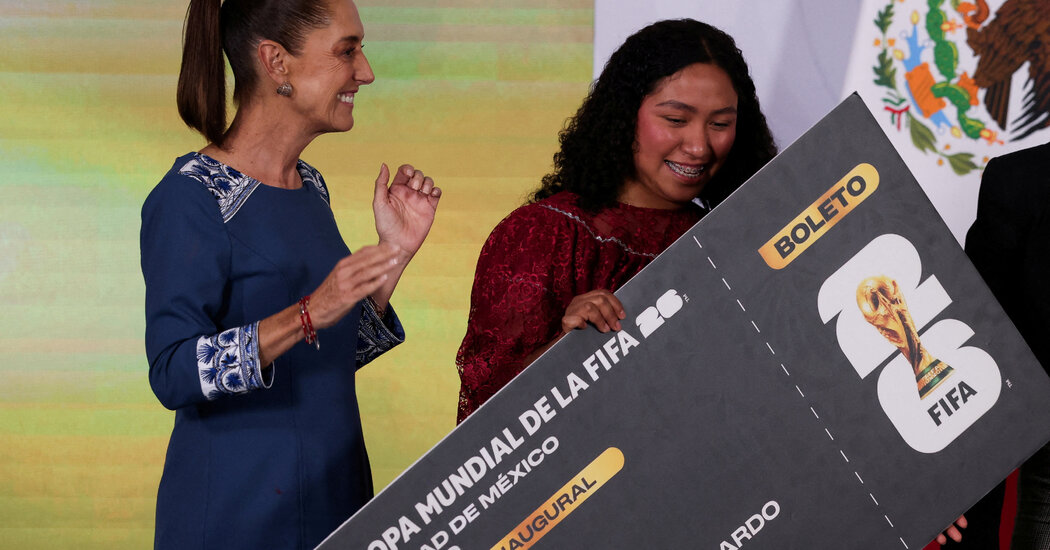
When tens of thousands of passionate fans stream into Mexico City’s state-of-the-art Banorte Stadium this Thursday to witness the highly anticipated FIFA World Cup opener between Mexico and South Africa, a conspicuous void will remain at the very apex of the venue’s luxury suites. Traditionally, the opening match of the world’s most watched sporting spectacle serves as a glittering stage for host-nation heads of state, offering them a prime-time global platform to project soft power, cultivate international goodwill, and bask in the pride of their citizens. Yet, President Claudia Sheinbaum of Mexico has made the unprecedented decision to decline her VIP invitation, choosing instead to surrender her presidential seat to a young woman from one of the country’s most marginalized regions. This calculated move breaks sharply with the deeply entrenched tradition of political leaders using mega-sporting events to bolster their public images. While Sheinbaum initially announced her intention to watch the high-stakes match surrounded by thousands of her working-class supporters in the historic Zócalo—the massive public square in the heart of the capital—she has recently had to temper those plans, hinting that she may pivot to a more private setting should planned civil unrest and security concerns boil over in the metropolitan center. This remarkable decision has ignited a fierce national conversation, highlighting the complex intersection of sports, power, and political theater in modern Latin America, where a simple sports ticket can be transformed into a potent tool of statecraft.
The Barefoot Champion: Yolett Cervantes Cuaquehua’s Journey to the Banorte Stadium
In place of the president, the plush leather seats of the executive suite will be occupied by Yolett Cervantes Cuaquehua, a 21-year-old Indigenous Nahua athlete whose remarkable journey from the mist-covered, rural highlands of Veracruz State to the crown jewel of international soccer has captured the imagination of the public. Cervantes secured her seat at the global sporting event by defeating more than one thousand talented young finalists in a highly competitive, government-sponsored national contest designed to find a deserving representative of the Mexican populace. Her winning entry—a stunning, barefoot display of soccer ball juggling, performed while wearing her community’s traditional hand-woven Indigenous attire—went viral across emotional social media platforms, symbolizing a profound celebration of identity, resilience, and grassroots talent. Lacking access to professional trainers, manicured turf fields, or modern athletic equipment, Cervantes honed her extraordinary physical coordination in the rugged terrain of her mountain village, her passion for the sport originally sparked during a childhood trip to Spain to watch Real Madrid face Juventus—a dream reward she earned by winning a state-level public speaking competition. The sheer emotional gravity of her achievement was fully realized when she received the life-altering news that she would represent the president while working in the agricultural fields alongside her mother. For Cervantes, the moment represents a historic, almost unimaginable shift in the country’s social hierarchy, marking the first time in modern memory that a sitting Mexican president has voluntarily stepped aside to elevate a young woman from an Indigenous community to the absolute pinnacle of global athletic prestige.
Optics of Inequality: Addressing Cost Barriers and Gender Exclusion in Latin American Sport
President Sheinbaum’s decision to hand over her VIP credentials is a carefully constructed statement aimed at the glaring economic inequalities and systemic gender barriers that still define the sporting landscape. In recent years, the FIFA World Cup has faced intense criticism from human rights groups and sports advocates for its hyper-commercialization, which has resulted in astronomical ticket prices that effectively lock out the average citizen. By choosing to boycott the stadium, Sheinbaum has masterfully positioned herself in solidarity with the millions of ordinary citizens who find themselves priced out of their own national celebration. Furthermore, the president has framed the elevation of Cervantes as a direct attack on the patriarchal structures that have historically dominated professional soccer, a sport where women have long been denied equal access to leadership roles, refereeing credentials, executive positions, and media opportunities. During a press conference earlier this year, Sheinbaum spoke passionately about the historic exclusion of female voices from the beautiful game, asserting that her administration is committed to dismantling these traditional barriers so that young women can assert their rights and pursue their athletic dreams without limitation. By placing an Indigenous female athlete in the most exclusive seat in the house, Sheinbaum has effectively turned a symbol of corporate luxury into a powerful, visual testament to social justice, gender equity, and cultural representation.
An Unprecedented Snub: Why North America’s Leaders Are Giving the Opening Matches the Cold Shoulder
Intriguingly, Sheinbaum’s refusal to attend the opening match is not an isolated event but rather part of a broader, unexpected trend of political absenteeism across the three co-host nations of this year’s tournament. To the north, Canadian Prime Minister Mark Carney is also scheduled to miss his country’s highly anticipated opening clash against Bosnia and Herzegovina in Toronto, opting instead to fly to Europe for critical diplomatic meetings and the annual Group of 7 summit. Meanwhile, in the United States, President Donald Trump has chosen to skip the opening ceremonies in his country, directing sharp criticism toward the exorbitant ticket pricing structures implemented by soccer’s governing body. Despite years of intense personal lobbying, diplomatic courting, and ceremonial ticket gifts from FIFA President Gianni Infantino, Trump openly admitted to journalists that he could not justify the cost of attendance, declaring that even he would refuse to pay such inflated prices. While it remains highly uncertain whether Carney or Trump will attend subsequent matches during the grueling, six-week tournament, this collective retreat by North American leaders signals a shifting dynamic in the relationship between democratic politicians and major sporting institutions. As public anger over inflation and corporate greed continues to mount globally, associating too closely with the wealthy elite of FIFA’s inner circle has increasingly become a political liability that modern leaders are eager to avoid.
The Political Tinderbox: Domestic Protests and Cartel Controversies Shadowing the Tournament
Beneath the inspiring narrative of social progress lies a far more volatile political landscape that analysts suggest heavily influenced President Sheinbaum’s strategic decision to stay away from the stadium. The Morena administration is currently navigating a convergence of severe domestic crises, including intense international scrutiny over allegations that high-ranking party officials have been shielded from U.S. federal prosecutors investigating cartel collusion. Simultaneously, the country has been gripped by massive, paralyzing protests led by disgruntled teachers demanding wage increases and pension overhauls, alongside federal judges opposing controversial constitutional reforms that threaten judicial independence. These domestic grievances have coalesced into a highly organized, anti-World Cup movement, with activists openly planning to use the massive international media presence surrounding the stadiums to launch highly visible protests. Because the eyes of the global community will be focused squarely on Mexico City, dissident groups view the tournament as an unprecedented opportunity to broadcast their frustrations regarding corruption, violence, and economic stagnation to a worldwide audience. By choosing not to attend the high-profile opening game, Sheinbaum effectively removes her physical presence from the center of this brewing storm, attempting to decouple her personal brand from any chaotic demonstrations that might disrupt the international broadcast.
Evaluating the Strategy: Avoiding the Stadium Boos and the Future of Sheinbaum’s Public Image
Historically, the soccer stadium has proven to be an incredibly hostile environment for Mexican presidents, serving as a rare public forum where displeased citizens can bypass security protocols to collectively vent their frustrations. Sports sociologists note that the astronomical ticket prices for this year’s World Cup mean that the live audience at Banorte Stadium will consist overwhelmingly of the country’s wealthy, corporate elite—a demographic that is fundamentally opposed to Sheinbaum’s left-wing, populist political platform. Had the president decided to take her place in the VIP box, she would have faced an incredibly high probability of being subjected to deafening, internationally televised boos from the stadium crowds, a public relations disaster that could severely damage her administration’s authority at home and abroad. By executing this brilliant political pivot—surrendering her seat to a celebrated young Indigenous woman while remaining outside the stadium doors—Sheinbaum has successfully transformed a moment of acute political vulnerability into a narrative of empowerment and class solidarity. While critics may dismiss the gesture as cynical populist theater, the move has undeniably shielded her from public humiliation while reinforcing her image as a champion of the common people. Ultimately, as Yolett Cervantes Cuaquehua takes her historic place in the VIP box, her presence will stand as a powerful testament to a changing nation, even as the complex political maneuvers of her president continue to play out in the shadow of the world’s greatest game.