



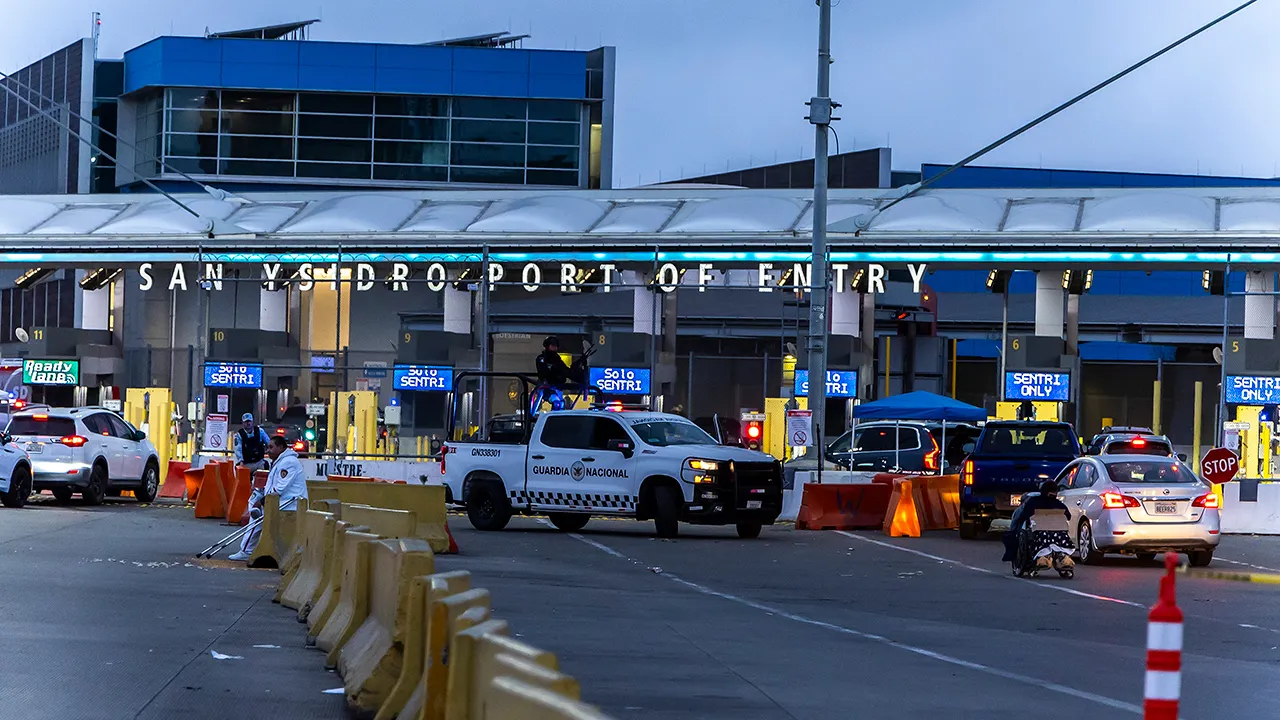
In the sweltering late-morning heat of a Southern California August, the San Ysidro Port of Entry hums with the relentless mechanical rhythm of thousands of daily commuters. This sprawling concrete expanse serves as the busiest land border crossing in the Western Hemisphere, a vital artery connecting Tijuana, Mexico, with San Diego, California. For the average traveler, it is a mundane checkpoint—a momentary pause for a passport scan, a casual glance from an officer, and then a swift glide onto the freeway. Yet, beneath this veneer of routine and logistical efficiency lies a silent, high-stakes war, where every vehicle, every bolt, and every human face presents a potential entry point for destruction. The officers of U.S. Customs and Border Protection (CBP) understand this duality viscerally, their senses perpetually sharpened for the subtle telltale signs of deception. On the morning of August 3rd, their attention fixed upon an unlikely anomaly—a young man, just 22 years old, a Mexican national, perched atop a sleek, modern 2024 Revoo electric moped. In a sea of SUVs, sedan cars, and freight trucks, this environmentally conscious, compact two-wheeler looked out of place, like a hummingbird amidst condors. But to the seasoned law enforcement eye, that incongruity was precisely the point. Smugglers are constantly adapting, pivoting from the clichéd hidden compartments in pickup trucks to unconventional, low-profile conveyances. As the rider coolly applied for admission into the United States, a flicker of nervous energy may have betrayed his practiced facade, prompting an officer to wave him out of the primary line and into the secondary inspection area—a decision that would soon unravel a chilling cargo of immense lethal potential.
The secondary inspection bay is where the cat-and-mouse game intensifies, a space imbued with the cold, meticulous atmosphere of a forensic laboratory. Here, the moped was maneuvered under a nonintrusive imaging system, a revolutionary piece of technology that functions like an x-ray vision, peeling back the vehicle’s metal and plastic sheathing to expose hidden densities. The monitors flickered, displaying the internal architecture of the moped—the battery housing, the wiring, the frame—and immediately, the officers’ keen eyes caught an irregularity. There, tucked beneath the rear of the moped, emerged a series of dense, rectangular anomalies that did not correspond to any mechanical function. It was the unmistakable signature of a custom-built smuggler’s den. To eradicate any lingering doubt, a CBP narcotics canine was brought in, its handler guiding the highly trained dog around the vehicle’s perimeter. The dog’s behavioral shift was instant and unmissable—a tense sniff, a scratch at the rear panel, a rigid alert. The signal was absolute. Under strict safety protocols, officers moved in, their tools jimmying open the hidden cavity. What they unveiled sent a shockwave of grim recognition through the bay: seven neatly sealed packages, containing a total of 16.53 pounds of white fentanyl powder. The estimated street value was staggering—$238,032—yet that dollar figure felt hollow, obscene, when considering the true currency of the contraband: death. Fentanyl is not a recreational high; it is a pharmaceutical-grade executioner, roughly 50 times more potent than heroin and 100 times more potent than morphine. A mere two milligrams can be fatal to a non-tolerant adult. Packed within that moped was enough poison to potentially extinguish millions of lives, a public health apocalypse compressed into a small, eco-friendly vehicle. San Ysidro Port Director Mariza Marin, who oversees these daily interdictions, later framed the incident in stark terms, acknowledging that “smugglers are employing innovative tactics to smuggle lethal drugs into the country,” even as she credited the officers’ unyielding vigilance, their utilization of training, canine resources, and cutting-edge nonintrusive technology to thwart these brazen attempts.
The arrest of the 22-year-old driver, however, transforms the seizure from a pure trophy of law enforcement into a profoundly human tragedy. Who exactly was this young man? Was he a hardened cartel operative, a trusted lieutenant who had clawed his way up the criminal ranks? Or was he more likely a disposable pawn, a “mule” recruited from the margins of Mexican society, forced into service by crippling debt, threats of violence against his family, or the desperate lure of quick cash that far exceeded any legitimate job prospects in a struggling economy? The shadowy logistics of the Sinaloa Cartel, the Jalisco New Generation, or a dozen smaller trafficking syndicates treat their foot soldiers as replaceable assets. The amount of fentanyl he carried had a wholesale price in Tijuana of perhaps $20,000—a staggering sum for a typical 22-year-old—but a drop in the ocean for the kingpins who orchestrated the shipment. Now, instead of returning home with a wad of cash, he faces the terrifying machinery of the U.S. federal justice system, charged with narcotics importation, a offense that carries mandatory minimum sentences measured in decades. Alongside the fentanyl, CBP officers also seized the moped itself, a GPS tracker meticulously installed beneath the frame, and the driver’s cellphone. These electronic devices are the silent witnesses to the crime, the telltale threads connecting the street-level mule to the operational spider web far above him. The GPS tracker indicates that cartel handlers were likely monitoring the moped’s location in real-time, ensuring the driver stayed on course, or perhaps tracking him in case he attempted to steal the product. The cellphone, now in the hands of forensic examiners, will inevitably reveal encrypted messages, phone numbers, GPS routes, and coded lingo that could lead to further arrests or intelligence on smuggling routes. Yet, as the cuffs clicked around his wrists, one wonders what was going through his mind—the fear of the immediate jail cell, the shame of his failure, or the looming dread of retribution against his loved ones back home, a brutal reality that cartels often enforce upon the failed men they’ve lost.
This incident, however, is not an isolated blip on the radar; it is a microcosm of a relentless, daily deluge. Just a few months prior, in mid-May, officers at the same San Ysidro Port of Entry, alongside their counterparts at the Calexico East Port of Entry roughly 100 miles to the east, were engaged in a similarly dramatic game of interception. On a single day, May 17th, they confiscated over $300,000 worth of narcotics in two separate vehicles. At San Ysidro, a 2013 Honda Civic was flagged for secondary inspection after a scan revealed suspicious densities in the vehicle’s firewall—the steel barrier separating the engine from the passenger compartment. After the vehicle was dismantled, officers uncovered six tightly-packed packages of white fentanyl powder carrying a street value of approximately $113,600. But the smugglers hadn’t stopped there. In the same hidden cavity, they found 8.4 pounds of cocaine valued at around $161,600, a dirty cocktail of stimulant and opioid designed to cater to a broad spectrum of addicted customers. The seizure totaled $275,200 from a single compact car. That same afternoon, roughly 100 miles away, the Calexico East Port of Entry saw a 2011 Nissan Cube pull up to the inspection booth. A scan quickly revealed anomalies in the vehicle’s flooring. Officers tore up the carpet and floor pan to discover a staggering 63 packages of methamphetamine—a powerful, psychosis-inducing stimulant that wreaks havoc on users and their communities. The sheer volume of these simultaneous busts underscores the ruthlessly diverse and adaptable nature of the drug trade. Smugglers aren’t loyal to a single conveyance or a single drug class; they are logistical experts who diversify their portfolios, moving fentanyl, cocaine, and meth through whatever vehicle best fits the current customs profile, always seeking to exploit gaps in enforcement even as they accept that some loads will inevitably be lost.
To truly humanize this story, one must step out of the statistical report and into the boots of the CBP officers who live this reality every shift. The psychological and emotional toll of their work is immense. They stand for hours in the hot exhaust and dust of the border, scanning thousands of faces and vehicles daily. They are trained to read human behavior—the slight tremor in a hand holding a passport, the averted gaze, the over-the-top friendliness that masks terror. Yet, the most insidious challenge is the sheer volume they must process. Cars, mopeds, RVs, pedestrians, semi-trucks, and trains—none are exempt from inspection, and all can be retrofitted as drug transport. The officers must remain hyper-vigilant, a state of constant cognitive strain where sleep deprivation and chronic stress are occupational hazards. The nonintrusive imaging technology is a powerful ally, but its effectiveness depends wholly on the human operator’s ability to interpret the shadows and anomalies. The K-9 units are heroic partners, their noses capable of detecting narcotics even when carefully sealed in plastic and hidden within metallic housing. But behind every K-9 is a handler who notices the dog’s subtle sign—the flick of a tail, the pause—and confidently acts. Each successful seizure is a victory, but as they place the seven packages of fentanyl into evidence bags, the officers are acutely aware that they’ve only caught one thread of an endless tapestry. For every moped they stop, a hundred mundane vehicles roll by, and they can only pray they didn’t miss a similar secret. They carry the heavy knowledge that a single mistake—an overlooked compartment, a faulty interpretation of a scan—could result in a thousand-fentanyl pills hitting the streets of San Diego, triggering a cascade of overdoses that will make national headlines. At home, their families worry about their mental health, about the grim stories they carry; they don’t always ask for the details, understanding that the dark reality may be too heavy to bear.
In the final analysis, the seizure of 16.53 pounds of fentanyl from an electric moped is far more than a routine police blotter item. It serves as a tragic, human mirror held up to the cataclysmic opioid crisis that is ravaging the United States. Behind the sterile numbers of weight and street value are the unnamed addicts who would have consumed it, the mothers who would have found their children unresponsive, the emergency room doctors who would have administered naloxone in vain, and the families who would have been shattered by funerals. The 22-year-old driver, with his jet-black hair and brand-new moped, is a haunting victim of a ruthless economic system that preys on the desperation of the young and the vulnerable. His capture may represent justice, but it also underscores the cyclical tragedy of cartel capitalism—losses are written off as business expenses, and new mules are recruited before the ink dries on the arrest paperwork. Meanwhile, the officers return to their posts, their determination steeled but their exhaustion ever-present. They are the thin green line standing between a dangerous synthetic poison and the public, engaging in a mission that feels like shoveling sand against a relentless tide. Each bust, whether involving a massive tile shipment or a humble electric moped, is a saving of lives—yet the war rages on. The war is fought not in grand, romanticized drug raids, but in the dusty, mundane bay of an inspection station, where officers use patience, superior technology, and the unshakeable loyalty of their four-legged partners to tip the scales ever so slightly in the favor of safety, one innovative, deadly conveyance at a time. Until the insatiable demand for these substances is addressed at its root, the vigilance of these dedicated men and women remains society’s most powerful—and heart-wrenching—defense.