

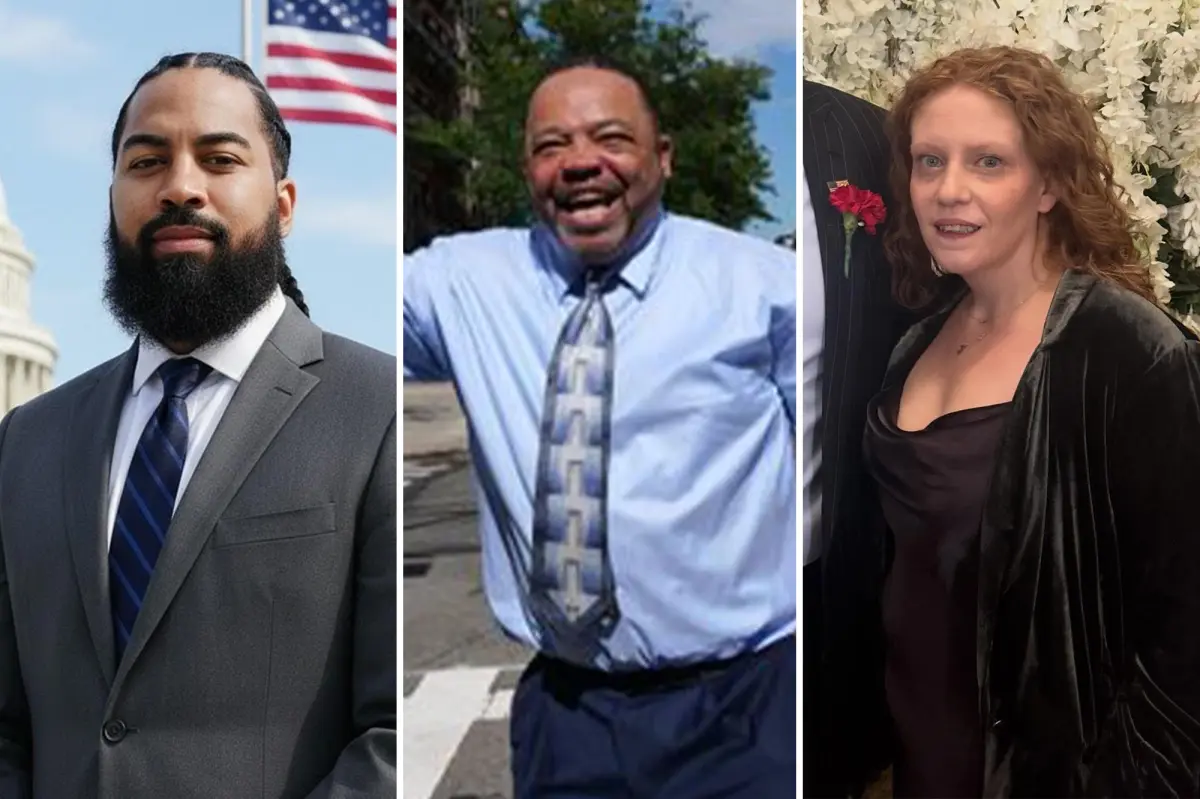
The landscape of New York City politics has long been characterized by intense internal battles within the Democratic Party, where the real debate over the city’s future often begins and ends in the June primaries. Recently, this dynamic was on full display as three progressive, left-leaning candidates—each championed by local progressive leaders like state Assemblyman Zohran Mamdani—emerged victorious from hotly contested Democratic primaries. These victories signaled a continuing leftward shift in some of the city’s most iconic neighborhoods, setting the stage for what many assumed would be an uncontested march to Washington. However, the democratic process requires a counterweight, and three Republican contenders have stepped forward to challenge this narrative. Melvin Rivera, Jennifer Moore, and Jomo M. Williams will appear on the November general election ballots, representing a quiet but determined conservative effort to offer an alternative in these deep-blue districts. Though their statistical chances of winning remain slim in districts historically dominated by Democratic voters, their campaigns represent a vital human element in local politics: the refusal to let major ideological shifts occur without a spirited public debate.
The contest in New York’s Seventh Congressional District highlights this ideological clash, where Melvin Rivera is set to face Claire Valdez, a formidable community organizer backed by the Democratic Socialists of America. Riviera’s background defies the typical stereotype of a modern conservative candidate, presenting a deeply human story of grassroots advocacy. Born and raised in Brooklyn, Rivera has spent over three decades working on the front lines of his community as a tenant organizer and neighborhood activist. His political journey this year took an unusual path; he originally entered the race as a write-in candidate in the Democratic primary, reflecting his deep roots in the local community rather than a strict adherence to partisan branding. However, his message of public safety, economic reform, and family values quickly caught the attention of local conservative groups, leading to an endorsement from the Dominican American GOP club. For Rivera, conservative values are not abstract political theories designed for cable news; they are practical, everyday principles focused on protecting working-class families, supporting small businesses, and ensuring that the streets of Brooklyn remain safe and prosperous for the next generation.
A different kind of political drama is unfolding in the Tenth Congressional District, where the progressive wing achieved a massive victory as former City Comptroller Brad Lander unseated the moderate incumbent Representative Dan Goldman. In the wake of this political earthquake, Jennifer Moore has stepped forward as the Republican candidate, aiming to capture the votes of those who feel alienated by Lander’s progressive agenda. Moore, an experienced Brooklyn GOP operative, did not expect to find herself in the spotlight of a high-stakes congressional race; local political insiders described her last-minute addition to the ballot as a strategic move to ensure the party had a presence. However, Lander’s primary victory has infused her campaign with a sudden, urgent purpose. Moore sees her candidacy as an essential service to the community, offering a mainstream alternative to voters from all political parties who are concerned about the fiscal and social implications of Lander’s platform. By positioning herself as a pragmatic voice of moderation, Moore hopes to unite a diverse coalition of voters who believe that the district’s representation should focus on practical governance rather than national ideological crusades.
In the Thirteenth Congressional District, the race features Jomo M. Williams, a candidate whose unique political history challenges the conventional boundaries of American partisanship. Williams, who will face progressive newcomer Darializa Avila Chevalier, has spent years navigating the complex waters of New York City politics, including a run for City Council in 2021 under the banner of the Black Lives Matter Party. While that affiliation might suggest a progressive ideological stance, Williams has consistently championed a nuanced and deeply pragmatic approach to community safety that resonates with many working-class residents. He has openly rejected the progressive movement’s calls to defund law enforcement, advocating instead for a balanced philosophy of “law and order” that protects citizens without resorting to systemic abuse. Williams speaks passionately about his desire to move away from a system defined by racial profiling, police brutality, and mass incarceration, while simultaneously demanding that neighborhoods receive the protection they need to thrive. His campaign represents a heartfelt attempt to bridge the gap between civil rights advocacy and public safety, offering a voice to those who feel neglected by both major political parties.
Running for office as a Republican in the heart of New York City is an immense challenge that requires a deep sense of civic duty and personal resilience. The registration advantages for Democrats in these districts are overwhelming, and GOP candidates must frequently contend with limited campaign budgets, minimal media coverage, and the skepticism of an electorate accustomed to single-party representation. Yet, the personal sacrifices made by Rivera, Moore, and Williams underscore a profound truth about American democracy: campaigns are about more than just winning elections; they are about representation, dialogue, and giving voice to the voiceless. Throughout the city’s diverse neighborhoods, there are countless residents—immigrants, small business owners, and working-class families—who worry about rising consumer costs, underperforming schools, and public safety, yet feel their concerns are ignored by an increasingly progressive political establishment. By placing their names on the ballot, these three candidates ensure that these vital issues remain a part of the public conversation, forcing their opponents to address the daily realities of all their potential constituents rather than just their progressive base.
Ultimately, the upcoming general election in these three congressional districts represents a critical moment of reflection for New York City voters. Although historical voting patterns suggest that Valdez, Lander, and Chevalier are the heavy favorites to win in November, the presence of Rivera, Moore, and Williams on the ballot prevents a simple political coronation and keeps the democratic process competitive. Their campaigns serve as a reminder that local governance is at its best when it is challenged, debated, and held accountable by differing perspectives. By presenting clear choices on issues ranging from tenant rights and fiscal responsibility to criminal justice reform and police accountability, these Republican challengers are performing an invaluable civic service. No matter the final tally when the ballots are counted, their efforts ensure that the rich, diverse tapestry of New York’s political thought is represented, demonstrating that every voice deserves to be heard in the ongoing struggle to shape the future of the city.