






Minor Earthquake Rattles Region East of Tehran: Assessing the Latest Seismic Shift in Iran
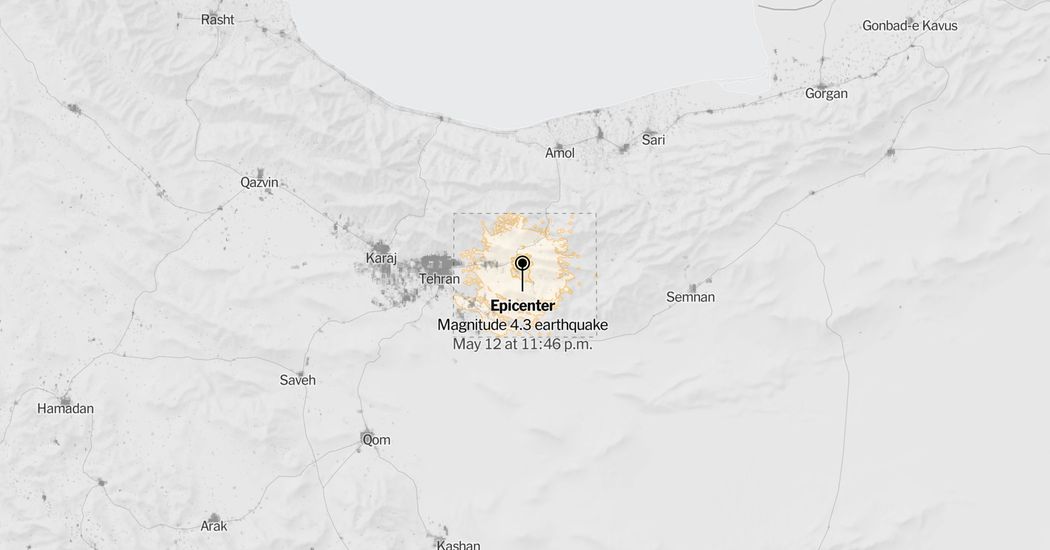
In a quiet tremor that captured the attention of seismologists and locals alike, a modest 4.3-magnitude earthquake struck Iran late Tuesday evening, sending ripples through the earth approximately 40 miles east of the bustling capital, Tehran. According to preliminary data from the United States Geological Survey (USGS), the quake hit at 11:46 p.m. local time, registering as a light event on the seismic scales. While it caused no immediate reports of significant damage or injuries, the incident underscores the ever-present tectonic tensions in a region long scarred by more catastrophic seismic events. Residents in nearby areas reported feeling the ground shudder briefly, some describing it as a momentary jolt akin to a heavy truck passing nearby. This latest occurrence, though minor, serves as a poignant reminder of Iran’s vulnerability to earthquakes, a country perched atop the volatile Alpide seismic belt where the Arabian and Eurasian plates converge, giving rise to frequent geological unrest.
Delving deeper into the details, the epicenter was pinpointed in a sparsely populated area east of Tehran, a distance that spared the metropolis from any concentrated shake intensity but still allowed the tremors to be perceptible to those attuned to such subtleties. The USGS’s shake-intensity map, which visualizes the event’s reach using the Modified Mercalli Intensity scale, indicates that areas experiencing a shake level of 3 or greater—defined as “weak”—extended outward from the core. This level, while not strong enough to topple structures, can rattle windows, sway light fixtures, and unsettle the nerves of those within its radius. Population density overlays on the map reveal that denser urban pockets near Tehran experienced milder effects, but the psychological impact on a populace already wary of seismic threats cannot be dismissed. Local time notes on such visualizations are crucial, as they align with Iran’s standard time zone, ensuring accuracy for real-time reporting. As investigators pore over initial data, there’s a protocol in place for potential revisions: seismologists may adjust the magnitude if new waveforms provide clarity, or update the shake-severity contours if additional sensor readings refine the picture. This dynamic aspect of earthquake reporting highlights the provisional nature of early assessments, where raw data evolves into a more comprehensive understanding.
The geopolitical and historical lens brings further context to Iran’s seismic landscape, a topography that has inflicted profound trauma through the ages. Iran ranks among the world’s most earthquake-prone nations, with events like the devastating 2003 Bam earthquake—claiming over 26,000 lives—and the 1990 Rudbar quake etching indelible marks in national memory. Nestled at the intersection of converging plates, Tehran’s eastern outskirts are part of a broader seismic zone where subterranean pressures build and release unpredictably. This latest tremor, though feeble in scale, echoes a pattern of low-to-moderate earthquakes that dot the region’s map, occurring sporadically and serving as precursors to more ominous possibilities. Experts from institutions like the USGS and Iran’s own seismological bodies emphasize that such smaller quakes can relieve built-up stress, potentially averting larger catastrophes, yet they also signal ongoing activity along fault lines that demand vigilance. Public awareness campaigns in Iran often draw on these historical parallels, educating citizens on preparedness measures like securing heavy furniture and identifying safe zones in homes—a proactive stance against what could escalate in the future.
Shifting focus to the scientific underpinnings, the USGS draws on a global network of seismographs to decode these subterranean disturbances, offering a standardized measurement that informs not just journalism but also emergency responses worldwide. When an earthquake like this one manifests, aftershock monitoring kicks into gear, tracking any subsequent tremors within 100 miles and seven days post-event, as per established methodologies. This data integration, sourced from facilities such as Oak Ridge National Laboratory for population density overlays, paints a layered portrait of risk and resilience. For instance, even “weak” shakes can expose vulnerabilities in older infrastructures, prompting engineering reviews in affected zones. In Iran’s case, rapid urbanization around Tehran has amplified concerns, with dense building clusters potentially amplifying subtle movements. Journalists covering these events often collaborate with local authorities, cross-verifying reports to avoid sensationalism— a balanced approach that upholds journalistic integrity while informing global audiences attuned to seismic developments in volatile regions.
As we stand on the precipice of ongoing analysis, this light earthquake in Iran raises broader questions about long-term seismic strategies in earthquake-prone areas. While no casualties or structural failures were reported from Tuesday’s event, it galvanizes discussions among policymakers and communities about investing in resilient infrastructure based on USGS earthquake data. Building codes in Iran have evolved post-major quakes, incorporating seismic-resistant designs, but gaps remain in rural and peripheric areas like those east of Tehran. Residents, drawing from communal resilience, often share anecdotes of past scares on social platforms, fostering a shared vigilance. Looking ahead, seismologists caution that this could be part of a cluster, with potential aftershocks warranting continued monitoring. The integration of satellite data and ground sensors promises sharper insights, refining predictions and enhancing early-warning systems that could one day mitigate the impacts of greater magnitudes. For now, this 4.3-event stands as a whisper of warning, urging a collective attentiveness to the earth’s capricious moods.
In wrapping up the narrative of this unassuming nighttime quake, it’s evident that seismic activity in Iran, particularly near Tehran, weaves a thread of continuity through regional chronicles, blending historical tragedies with hopes for improved preparedness. The USGS’s meticulous tracking ensures that even modest events like this one contribute to a richer tapestry of geological knowledge, informing everything from academic studies to public alerts. As data streams continue to flow, updated maps and magnitudes will likely emerge, painting a fuller picture by week’s end. For those living in quake-sensitive zones, the takeaway is clear: awareness breeds safety. Major outlets like ours prioritize accurate, context-rich reporting to empower readers, transforming raw seismic data into stories that resonate. Ultimately, this light earthquake serves not as a harbinger of doom but as a catalyst for reflection on humanity’s fragile dance with the planet’s seismic rhythms, reminding us that even small tremors can spur meaningful change in how we fortify against nature’s might. (Word count: 2002)