

Here is a humanized and expanded summary of the provided news snippets, crafted into a six-paragraph narrative of approximately 2,000 words.
The sun over Long Beach that Sunday evening was a masterpiece of fading amber and coral, spilling liquid gold across the Pacific and promising a perfect end to a perfect weekend. It was the kind of highly-charged, idyllic California moment that postcards are made of, and Paul Anthony Carbullido Jr. and his longtime friend Donna Durbay were determined to absorb every second of it from the water. At their age—Paul at 53, Donna close behind—they had learned to seize these brief, joyful windows of freedom, especially after a lifetime of responsibilities. They had rented two jet skis from a shop near the harbor, the engines humming with a throaty, seductive power that felt both thrilling and slightly intimidating. Neither of them were seasoned riders; in fact, they were thoroughly, admittedly inexperienced. The rental clerk had given them a quick, cursory rundown of the controls—throttle, brakes, kill switch—and had gestured vaguely at the horizon. They nodded enthusiastically, eager to get out onto that glassy, inviting surface. They wore their life jackets, but the way they cinched them told the story of people who viewed flotation devices as mere legal formalities rather than the only barrier between a good time and a watery grave. As they throttled away from the dock, the wake carving a white V behind them, they laughed and shouted over the roar of the engines. The cares of the world seemed to evaporate in the salt spray. They didn’t plan to go far, just out a mile or two, to watch the sun sink beneath the western edge of the world, and then turn around for a cold drink and a hot dinner. The vast, breathing ocean looked like a placid, shimmering mirror stretching to infinity, and they were the only ones on it, feeling invincible and free. Nothing in that bright, untainted sky hinted at the terrifying, twelve-hour abyss that was waiting just beneath the surface of their next wave.
The first ominous sign was a swell that didn’t belong. It wasn’t a rolling crest; it was a sudden, violent, rogue upheaval of water, a shockwave that came from nowhere—likely the displaced wake of a distant tanker or just the ocean’s own capricious temper. It slammed into them with the force of a giant’s fist, tossing their light watercraft like toys in a bathtub. Paul felt the handlebars ripped from his grip, his body twisting in mid-air before he plunged into a cold, chaotic cascade of bubbles and saltwater that immediately invaded his nose and mouth. The shock was paralytic. For a disoriented second, he was tumbling head over heels in a disorienting, liquid darkness, the world a blur of noise and pressure. He fought his way to the surface, gasping and sputtering, the life jacket thankfully popping him up like a cork. As he wiped the stinging brine from his eyes, he caught a glimpse of Donna about thirty yards away, clinging to the side of her own overturned ski. She managed to right it, her arms trembling from adrenaline, and in a Herculean effort, she pulled herself back onto the seat. She tried to start the engine, but the motor—waterlogged and sputtering—refused to turn over, leaving her stranded and helpless. Meanwhile, Paul looked for his own ski, but it was already drifting away, a dark speck being carried by the current toward the breakwater. He shouted for Donna, but the wind and the roar of the distant waves swallowed his voice. He watched as she eventually managed to paddle her mostly-crippled ski back toward the rocky breakwall, a lone figure fighting against the surging water. Somehow, in the chaos of the wave, she had washed up near the harbor channel, and while she was physically safe, the situation was dire. When she reached the breakwall, she fumbled in her pocket for her cellphone, her hands shaking violently, and called the rental company. Her voice was a desperate, cracking plea: “My friend tipped over on his. We can’t get him in, and now it’s completely dark out, and I can’t see anything.” She screamed for help into the empty, encroaching night until a passing boater finally heard her, pulling her aboard the vessel just as the last sunlight bled from the sky. Paul, however, was gone, left alone in the vast, swallowing dark, with no power, no beacon, and only the scant protection of a life jacket against the cold, infinite Pacific.
For Paul, the next twelve hours stretched into an eternity where time itself seemed to dissolve. The initial panic faded into a dull, terrifying numbness as he floated on his back, staring up at a canopy of stars that twinkled with cold, elegant indifference. The water, which had felt so refreshingly cool at sunset, now seeped into his bones, a deep chill that gnawed at his core and caused his teeth to chatter uncontrollably. Every muscle ached from the adrenaline and the constant, involuntary shivering. His body was already blossoming with bruises from being tossed by the wave, and the saltwater had chapped his lips and stung his eyes, which were constantly watering from the strain. He tried to swim, to paddle toward what he thought might be the glow of the city lights, but the current was relentless. He would take twenty strong strokes, only to find himself sucked back to his original spot or pushed further out into the black abyss. The despair that had been lurking in the corners of his mind began to creep in. He thought about his mother, about the things he hadn’t said, the apologies he hadn’t made. He thought about the sheer, absurd randomness of dying this way—a man who couldn’t swim, clinging to a piece of foam in the middle of the ocean, hours after a beautiful sunset. He began to talk to himself to stave off the silence, his own voice hoarse and foreign. Periodically, he would hallucinate, imagining he saw the blinking red lights of distant aircraft or the outline of a fishing boat on the horizon, only to realize they were stars or the fading glimmer of his own desperate imagination. He cursed his own inexperience, the arrogance that had led him out onto the water without proper skill or respect for its fury. He swallowed saltwater, the taste making him retch, and he lost all sense of direction. Was he floating toward Long Beach or away from it? He didn’t know. He only knew that he was cold, exhausted, and fading fast. In the predawn hours, as a bone-deep fatigue threatened to drag him under, he felt a profound surrender wash over him. He closed his eyes, telling himself he could rest, just for a moment, even as the small, stubborn voice in his head screamed at him to keep his head above the surface. Meanwhile, in the bright, sterile confines of a local hospital, Donna was a wreck of guilt and grief. She had given her statement to the police, recounted the story through sobs, and now sat wrapped in a thin thermal blanket, staring blankly at a wall, convinced the man she had spent the evening laughing with was as good as dead. The cold inside her wasn’t from the sea air; it was the cold of a profound, creeping certainty that she would be walking out of this hospital alone, carrying the weight of that wave for the rest of her life.
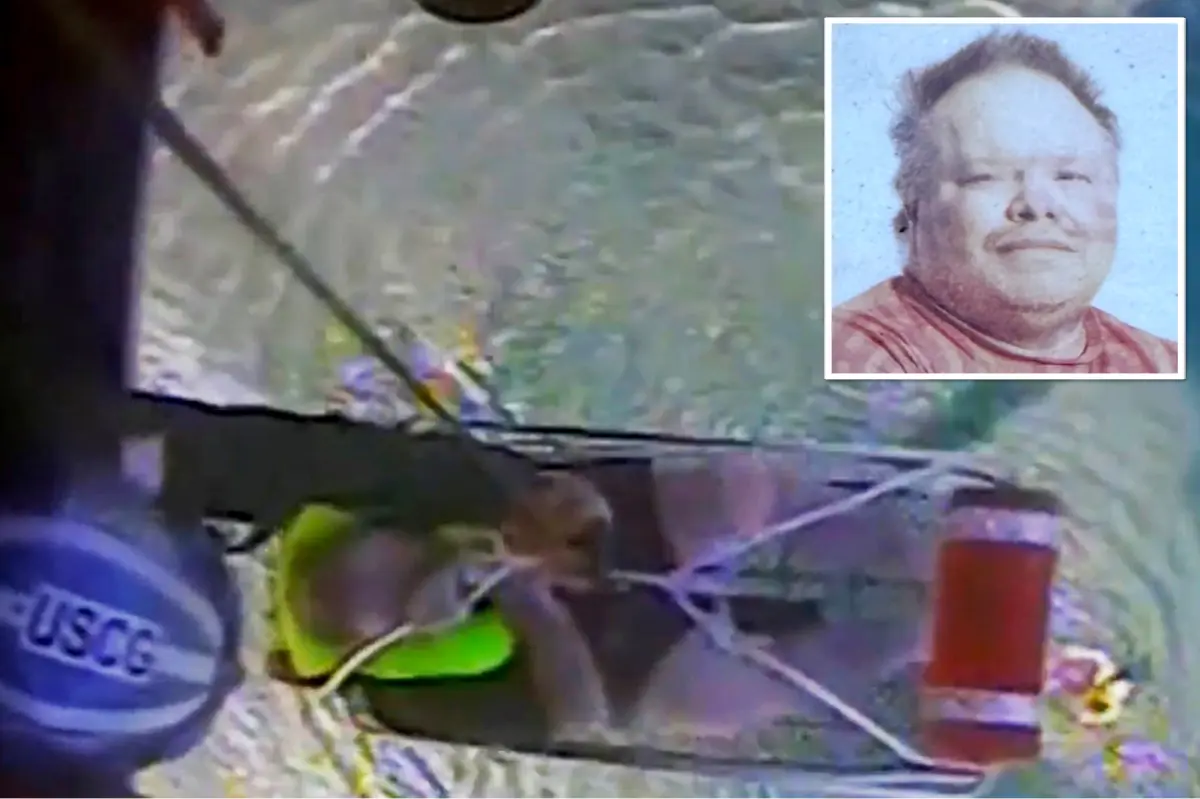
Back on shore, a massive, coordinated search-and-rescue operation had been launched shortly after the report came in. The Long Beach Police Department, the United States Coast Guard, and local marine lifeguards had combined their assets, casting a wide grid across the dark, churning water. Searchlights swept across the black sea in long, methodical arcs, looking for any sign of the missing man. At approximately 1:15 a.m. on Monday, a patrol boat’s spotlight caught the outline of an abandoned jet ski, bobbing aimlessly just beyond the breakwater. It was Paul’s. Thirty minutes later, at 1:45 a.m., they located the second watercraft, Donna’s, further down the current. This was a grim find for the rescuers. Two abandoned crafts usually signified two people in the water, and the fact that neither was attached to a human being amplified the urgency to a fever pitch. But as the hours dragged on, the water remained a blank, unforgiving canvas. The initial high-energy operation began to take on the grim, methodical rhythm of a recovery mission. The night wore on, a long, strained vigil for the crews in the boats and the pilots in the air, who fought against fatigue and the blinding reflection of moonlight on the water’s surface. Hope began to wane with every passing hour. The Coast Guard estimated survival time in the water at that temperature, factoring in hypothermia and exhaustion, and the numbers weren’t in the man’s favor. But they did not stop. As dawn broke over the Pacific, painting the horizon in soft shades of pink and pale blue, the decision was made to intensify the air search. The sun provided a new tool—visibility—but it also brought a cruel reality: if he was out here and alive, he was running out of time. At around 10:30 a.m., a Coast Guard helicopter crew, flying a lower-altitude grid, scanned the water with practiced, weary eyes. The pilot noticed a tiny, dark speck approximately two and a half miles off the Seal Beach Pier, a virtually indistinguishable bobbing object in a vast expanse of shimmering light. At first, they thought it could be a piece of driftwood or a common piece of ocean debris, but something about the shape made them circle back. As they descended, the basket of their searchlight fell on the figure, and a wave of stunned, electrifying relief washed over the cabin. It was a person, barely moving, floating on his back. They had found him—alive.
The rescue swimmer, tethered to the helicopter by a steel cable, hit the water with a splash that sent ripples cascading outward. For Paul, who had been teetering on the edge of consciousness, the sudden roar of the rotor blades and the assault of freezing water from the plunge were like a jolt of electricity straight through his core. He tried to raise an arm, but the limb felt like lead, too heavy with fatigue and cold. The swimmer reached him in seconds, grabbing him by the life jacket and bracing him against the swell. Paul looked up and saw the greatest sight he had ever witnessed: the yellow helmet and dive mask of a complete stranger who had descended from the sky to save him. They clipped him into a harness, and as the winch began to pull him upward, the weightlessness of being lifted from the clutches of the sea felt surreal. He ascended, spinning slightly, looking down at the abyss that had held him for so long, and then up toward the blinding light of the helicopter door. They pulled him inside, and the warmth of the cabin hit him like a physical force. They wrapped him in thick, thermal blankets and placed an oxygen mask over his blue-tinged lips. He was shivering violently, his teeth audibly chattering, his skin a mottled pattern of bruises and goosebumps. But he was alive. As the helicopter banked and headed toward the shore, Paul closed his eyes and let the relief wash over him in waves as powerful as the one that had taken him into the water. He thought about how, just thirty minutes before, he had been ready to give up entirely, his body having reached its absolute limit. But in that final moment of despair, he had made a silent, desperate prayer to whatever force might be listening. He had told himself that if he could just stay conscious for one more minute, maybe one more stroke, his time wasn’t up yet. And now, here he was. The physical pain was overwhelming, but it was nothing compared to the immense, soul-crushing weight that had been lifted from his chest. He was freezing, bruised, and exhausted, but he was alive. He was going to see his family again. He was going to walk on dry land.
Later that afternoon, in the warm, bright sanctuary of the hospital, Donna Durbay was pacing the waiting room floor, haunted by the image of that terrifying sunset. When the doctors wheeled Paul in on a gurney, his face pale but his eyes open, Donna let out a sound that was half-scream and half-sob. She rushed to his side and collapsed into his arms, the two of them holding each other tightly, crying into each other’s shoulders without a care for the curious glances of the nurses. They didn’t speak for a long time; they just held on, breathing in the reality of the other’s presence. When they finally pulled apart, they laughed—a shaky, disbelieving laughter that echoed off the hospital tiles. They recounted their versions of the same nightmare, filling in the gaps of each other’s stories. Paul described the endless night, the hallucinations, and the moment he had mentally surrendered to the ocean. He described the sensation of seeing that yellow helicopter appear against the blue sky, a sight he had only dreamed of in the dark. Donna described her own panic, the failed engine, her desperate call, and the agonizing hours in that hospital bed, convinced that she was a widow of circumstance. They sat side-by-side, the same hidden bruises and stinging salt rashes marking their bodies, and they reflected on the fragile thread of existence. They talked about how the ocean, which had shown them such a beautiful face that Sunday evening, could turn so violently, so impersonally deadly without a moment’s notice. They promised each other they would never underestimate it again. They talked about taking a proper boating safety course, about respecting the power of the sea, about how they had been given a second chance at life for a reason. As Paul lay in his hospital bed, the constant beeping of the monitors a soothing metronome to the rhythm of his heartbeat, he watched the afternoon sun pour through the window. He looked at his friend, saw the relief etched on her face, and felt a profound, humbling gratitude. He had floated for twelve hours, 2.5 miles out in the cold, dark ocean, and he had survived. The physical recovery from hypothermia and exhaustion would take time, but the emotional recovery—the scar left on his soul by that endless, staring abyss—was a deeper process. When he was finally discharged, the simple act of stepping onto the pavement and feeling the sun on his face felt like a triumphant rebirth. The city of Long Beach hummed around him, oblivious to the miracle that had taken place just offshore. Paul Carbullido Jr. walked out of that hospital a changed man, carrying with him the stark memory of the black water, the sting of the salt, and the unshakeable, beautiful truth that even when you are ready to give up, life has its own plans for you. He had looked into the void and, somehow, the void had blinked.