


The electric crackle of Madison Square Garden during Game 3 of the NBA Finals is a sensory overload that few New Yorkers ever get to experience firsthand. For sports enthusiasts, the arena is a secular cathedral; during a championship run, it becomes the high-stakes theater of the city’s clean, raw ambition. Yet, amidst the sea of roaring fans, a fascinating study in political theater and human authenticity was quietly playing out high above the hardwood. Mayor Zohran Mamdani, a leader who has meticulously crafted a public image rooted in working-class solidarity and populist pragmatism, made a deliberate choice when he decided to attend this historic game. He would not be found lounging in the climate-controlled, bulletproof luxury suites reserved for billionaires and former presidents like Donald Trump, nor would he occupy the coveted, flashbulb-lit courtside seats where celebrities trade glances with athletes. Instead, Mamdani bought his own way into the rafters, choosing a $1,000 standing-room-only ticket positioned just above the legendary nosebleed section. This choice was both a literal and figurative statement, illustrating the challenging tightrope modern progressive politicians must walk as they navigate the seductive perks of high office while trying desperately to remain connected to the everyday people they represent.
While Mamdani’s decision to stand in the cheapest, highest section of the arena seemed like a victory for democratic humility, it also illuminated the invisible scaffolding of privilege that supports even the most well-intentioned public servants. The mayor did not navigate the chaotic, predatory marketplace of online ticket brokers that ordinary New Yorkers must brave. Instead, he utilized his access to a coveted pool of “house seats” reserved exclusively by Madison Square Garden for VIPs, executives, and influential public figures. Although Mamdani paid out of pocket, bypassing the absolute baseline of ethical misconduct, the transaction itself highlighted a systemic disparity. Had an ordinary Knickerbockers fan attempted to purchase a similar face-value ticket directly from the box office during the high-demand playoff run, they would have faced prices more than double what the mayor paid, assuming they were lucky enough to secure a ticket at all before the secondary markets inflated the prices into the thousands. This tension between technical compliance and true equity is a gray area often explored by the city’s Conflicts of Interest Board. In a landmark 2000 advisory opinion, the board warned that while buying “hot tickets” through exclusive channels might not technically violate anti-gift laws, the sheer scarcity of such opportunities means public officials who exploit their access do so at their own moral and political peril, leaving them open to accusations of leveraging public office for private pleasure.
This ethical tightrope is a familiar path for New York politicians, many of whom have fallen from it in spectacular fashion. Former Governor David A. Paterson remains a cautionary tale in this regard; in 2009, his attempts to secure free World Series tickets from the New York Yankees resulted in a historic $62,125 fine from the state ethics commission. Reflecting on his own past indiscretions, Paterson noted that the culture of political privilege often encourages a boastful hubris that can easily blind leaders to how their actions look to the public. He remarked that Mamdani’s decision to pay for his ticket was a step in the right direction, free from the corrupt transactions that defined other local administrations. Indeed, Mamdani’s behavior stands in stark contrast to his immediate predecessor, Eric Adams, whose tenure was repeatedly dogged by controversies involving free tickets to high-profile concerts and sporting events in exchange for vaguely defined “official acts.” For ethics experts like Richard Briffault, a Columbia Law School professor, Mamdani’s financial transaction effectively cleared him of formal ethical wrongdoing, even if it underscored a broader cultural reality where those in power are continuously afforded opportunities unavailable to the public. Briffault’s dry comparison to the “royal boxes” of British nobility serves as a reminder that even in a democracy, the powerful are rarely treated like everyone else.
To understand why Mamdani went to such lengths to stand in the rafters, one must understand his carefully curated identity as a political outsider. Since ascending to the mayoralty, Mamdani has worked tirelessly to maintain the populist charm that characterized his grassroots campaign. Despite earning a comfortable $259,000 annual salary, living in the historic, rent-free Gracie Mansion, and having access to a fleet of chauffeured, security-laden SUVs, he frequently rejects the traditional trappings of his office. He is regularly spotted swiping his MetroCard on the subway, dining at cheap, unassuming eateries in Queens, and commuting via CitiBike. He famously made headlines by skipping the Met Gala—an opulent playground for the city’s elite—viewing it as an offensive display of wealth in a city wounded by economic inequality. Mamdani is deeply aware of how sports culture has been gentrified, pricing out the very working-class New Yorkers who form the historic soul of the city’s fanbases. In an effort to combat this trend beyond his own personal choices, he championing initiatives like securing a public lottery of 1,000 discounted World Cup tickets for just $50 each, attempting to democratize access to major cultural events and bridge the widening chasm between the wealthy elite and the struggling public.
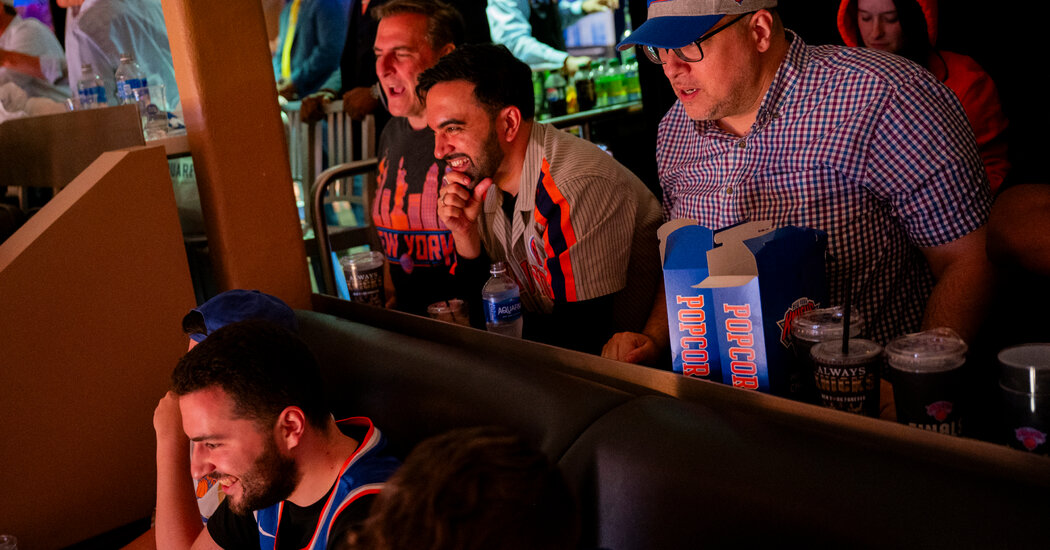
Mamdani was not alone in his high-altitude excursion; he was accompanied by a small contingent of state lawmakers, including State Senator Julia Salazar and Deputy Majority Leader Michael Gianaris. The legislators each paid approximately $900 for their standing-room-only spots, standing shoulder-to-shoulder with their constituents. Salazar vehemently defended the group’s choice, arguing that purchasing these tickets directly from the Madison Square Garden box office was far more ethical than lining the pockets of exploitative corporate ticket resellers like StubHub. This collective presence of high-ranking state officials in the arena’s upper deck presented a stark visual contrast to the heavy-handed security measures down below. Nearby, Donald Trump’s attendance required a virtual fortress; his desire to sit court-side was vetoed by a cautious Secret Service detailed to protect the former president, forcing him into a specialized, bulletproof viewing box. Even high in the rafters, Mamdani’s presence required careful coordination, with city security teams quietly scouting the standing-room-only areas prior to his arrival to ensure the mayor’s safety without disrupting the organic, high-energy environment of the crowd.
Ultimately, the most humanizing moment of the evening had nothing to do with policy, ethics, or security protocols, but rather with a simple piece of clothing. Standing in the crowded rafters, shouting alongside lifelong Knicks fans, Mamdani wore a custom, short-sleeved guayabera shirt in the team’s classic blue and orange, featuring a beautifully stitched Knicks insignia over his heart. Rather than wearing a designer piece, the mayor chose a shirt created by Danny Peguero, a local independent artist from the neighborhood. At $125, the shirt was a modest, stylish nod to the city’s rich cultural tapestry and a testament to Mamdani’s commitment to supporting local creators. The image of the mayor, dressed in a local designer’s shirt, holding a cold drink, and cheering from the noisy nosebleed section, encapsulates the modern political challenge of authenticity. In an era where trust in public institutions is at an all-time low, Mamdani’s night at the Garden represents a sincere, if imperfect, attempt to stay grounded. It shows a politician trying to balance the unavoidable privileges of his station with a genuine desire to remain, first and foremost, a neighbor and a fan among fellow New Yorkers.