


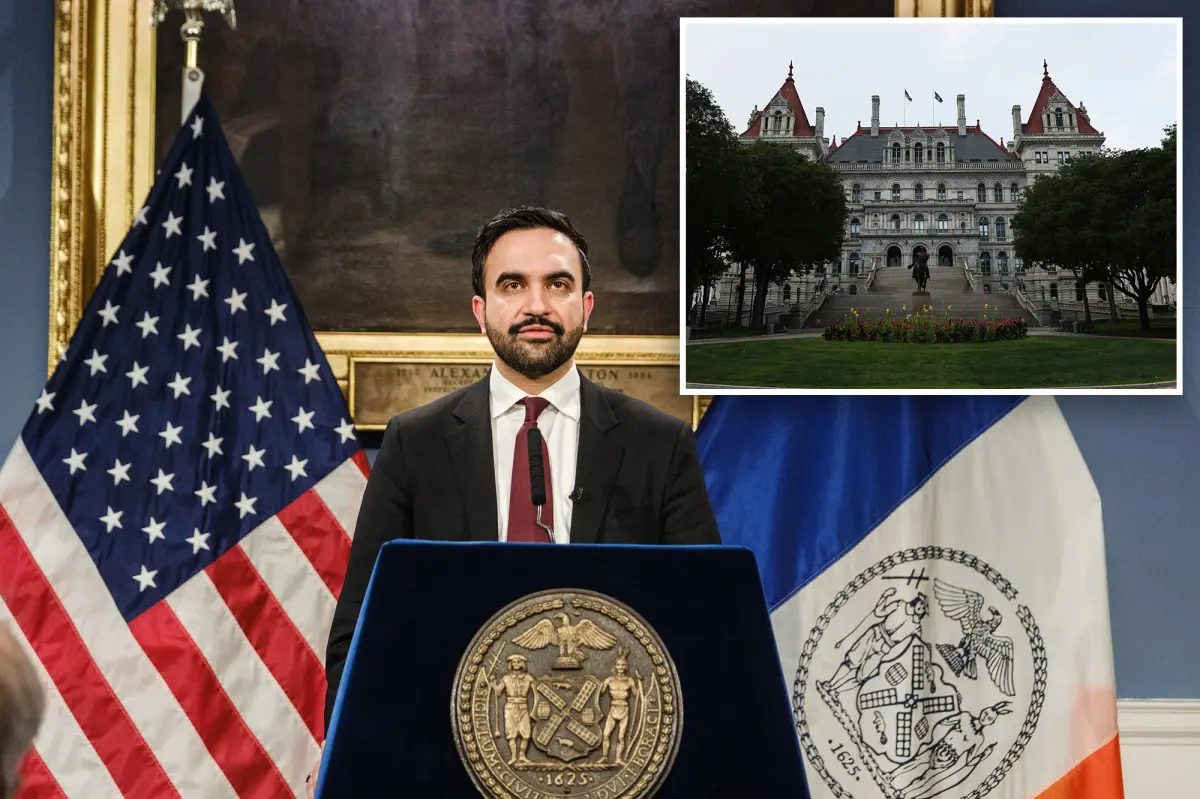
Mayor Zohran Mamdani’s journey to becoming New York City’s mayor started with a burst of hope and idealism, painting a picture of a city where fairness reigned and freebies flowed like a generous river—affordable housing, public transit, maybe even those whimsical puppies for everyone. As a democratic socialist, he campaigned hard on a platform that promised prosperity without burdening the average working family. “We’ll fund it all by making the millionaires and big corporations pay their fair share,” he’d say, his voice echoing in bustling town halls and over crackling subway announcements. It resonated with voters tired of inequality, dreaming of a Big Apple that cared for its own. Mamdani wasn’t just another politician; he was the fresh face, the one with fire in his belly and a vision of collectivism that made people feel seen. But the past 100 days? They’ve been a rollercoaster, straining patience and testing resolve, as he grappled with the gritty reality of running America’s largest metropolis. It wasn’t the smooth ride he’d imagined—it was more like dodging potholes on a bike through a snowstorm, with every decision feeling like a step on thin ice. Critics whispered about rookie blunders, but underneath it all, Mamdani was adapting, learning on the fly, much like any of us trying to juggle a new job while the world watches. He came in with pledges that danced around free transit, universal pre-K, and family leave, all supposedly bankrolled by “taxing the rich.” Yet, as budgets bled red and shortfalls loomed, those promises started looking more like distant mirages. The pressure mounted, turning his cheerful optimism into something more fraught, as he navigated alliances, threatened hikes, and faced backlash that made him question if his socialist heart could survive the capitalist grind. In many ways, Mamdani’s story mirrors our own lives—full of good intentions, unexpected hurdles, and the slow realization that changing a system as vast as New York’s requires more than just passion; it demands compromise, grit, and sometimes swallowing hard truths. We root for him because he’s trying, because in his struggles, we see echoes of our own fights for decency in a frantic world. But those early days have highlighted the chasm between campaign trail rhetoric and mayoral desk reality, leaving supporters and skeptics alike wondering if this 100-day mark is a setup for lasting change or just a rocky start.
As the months ticked by, Mamdani found himself staring down a budget hole that expanded like a black hole in a sci-fi flick, sucking in hopes and dollars alike. On the campaign trail, he’d scoffed at the idea of broad tax hikes, insisting that only the ultra-wealthy and colossal corporations would feel the pinch to fund his goodies. “Middle-class squeeze? Not on my watch,” he’d vowed, fingertips tapping on podiums as if sealing a pact. But reality hit like a subway train at rush hour. Early on, he cited a $12 billion shortfall, a number that later deflated to a still-staggering $5.4 billion, forcing a pivot that felt more like a betrayal than a bounce. Suddenly, talk of taxing the rich morphed into threats of citywide property tax surges almost 10 percent across the board, a move that shocked even his allies and turned breakfast TV into a circus of outrage. Why the shift? Budgets don’t balance themselves, and Mamdani had to confront the math behind free buses and housing schemes—dreams that cost real money. He accused moderate leaders like Council Speaker Julie Menin of being stingy with city services, preferring cuts over his tax dreams, which baffled insiders who saw it as unnecessary drama. It was as if Mamdani, fresh from the applause of rallies, had stumbled into a boardroom brawl without gloves. Public relations whiz Andrew Kirtzman called it “rookie mistakes born of inexperience,” like threatening an impossible hike and alienating allies he’d need to cooperate. Yet, in humanizing this, think of it as that overzealous friend who promises a party for all and then realizes the check’s due—panicking, lashing out, but deep down just trying to make it work without letting anyone down. Mamdani’s aggression masked vulnerability; he wasn’t Odysseus drafting schemes, but a guy in a suit juggling too many balls. The threats weren’t vindictive; they were cries for help, desperate tugs on levers to avert disaster. By dropping the property tax talk post-backlash, he showed adaptability, retracting with a sheepish apology, proving that even mayors bleed when cornered.
Delving into the specifics of Mamdani’s tax crusade reveals a man laser-focused on parity, even if it ruffled feathers along the way. At the heart of his agenda sits the proposal to hike income taxes by a hefty 2 percent on New Yorkers raking in $1 billion or more annually—a move that sounds targeted but carries the whiff of ambition. He envisions this as a Robin Hood-esque redistribution, funneling wealth from gilded towers to bustling streets, raising about $4.5 billion from both financial behemoths bumping their corporate rates to 10.8 percent and non-financial firms to 10.62 percent. Imagine it: Wall Street titans, accustomed to loopholes and tax havens, now feeling the squeeze, their profits pouring into parks and subways instead of private jets. Mamdani pitches it as painless—”They can afford it,” he insists, his eyes bright with conviction. Yet, enacting this requires Albany’s stamp, and Governor Kathy Hochul, eyeing re-election like a hawk, has slammed the brakes, warning that “soaking the rich” could spark an exodus, millionaires fleeing for greener pastures in Florida or Texas. It’s a classic tug-of-war, with state Assembly and Senate Democrats symbolically nodding to Mamdani’s plan in budget talks, but reality looms—negotiations might water it down to nothingness. In the world of politics, it’s not just numbers; it’s people. Hochul fears a brain drain, empty mansions echoing with what-ifs, while Mamdani sees equitable society thwarted by elite escapes. Humanize it: Picture yourself in his shoes, pushing for fairness against naysayers who dread disruption. For wealthy individuals, this tax hike feels like an intrusion into their hard-earned empires; for the middle class, it’s a lifeline. Mamdani’s stance bridges empathy and economics, reminding us that taxation isn’t tyranny—it’s community. He walks this line carefully, balancing socialist ideals with pragmatic pushes, his words a mirror to our own struggles for balance between self and society.
The most startling pivot came with Mamdani’s budget unveiling, a $127 billion behemoth served with an ultimatum that shocked the city like a plot twist in a thriller. “Tax the rich, or I’ll raise property taxes by 9.5 percent,” he declared to Hochul, wielding it like a sword against defiance. This wasn’t campaign Mamdani with his selective hikes; this was a mayor in crisis mode, threatening to burden over three million residential units—homes of everyday New Yorkers earning around $122,000 a year—with an extra $3.7 billion annual tab. He framed it dramatically: a choice between the ultra-wealthy “fat cats” and working families shivering under the load. Supporters blinked in disbelief; it bucked his promises, painting him as the very thing he opposed—a burden-shifter. But in the heat of the moment, it was tactical, a way to pressure Albany without capitulating. Public outcry followed swiftly, with pollster Evan Ross Smith labeling the rollout a “communication failure” that made Mamdani seem indecisive—was he for it or against it? He backpedaled, claiming he never wanted the hike, focusing instead on true villains: the rich and corporations. Yet, the damage lingered, a self-inflicted wound that showcased his inexperience. Think of it as a parent bargaining with a stubborn child—extreme measures born of desperation, not malice. Mamdani’s flamboyance here stemmed from frustration, the weight of office crushing idealism into hard choices. Relatable, right? We’ve all had moments where we threaten drastic actions to be heard, only to regret the fallout. In human terms, it exposed his vulnerability: a leader fighting winds too strong, learning that ultimatums can boomerang. By quietly shelving the threat, he regained footing, redirecting energy toward sustainable paths, but the episode underscored a testing period where naivety clashed with necessity.
Weaving through the tax tapestry, Mamdani floated even bolder ideas like slashing estate tax exemptions, aiming to broaden the net and hike rates to 50 percent on thresholds plunging from $7 million to a more accessible $750,000. This would snag an additional $4 billion yearly, targeting inheritances in a city where middle-class homes often flirt with seven-figure sales, inadvertently plucking from pockets already juggling rents and commute woes. Critics cried foul, seeing it as another middle-class nip that contradicted his ethos, but Mamdani defended it as justice for the unrich. Amid this fiscal churn, the Post’s satirical “Zohran’s little red book” humanized him through a faux diary brimming with whimsy and relatability, transforming policy battles into personal anecdotes. Entries like January 1’s ecstatic win (teasing AOC over a $20 bet and shifting antisemitism definitions) or January 6’s defense of a cop-kettled aide, reveal a man settling in—dealing with Gracie Mansion’s eccentric remnants, dodging Trump’s barbs with flattery, and blaming “the patriarchy” for homelessness woes. Humorous tidbits, like brainstorming taxes on high-street walkers for “sidewalk congestion” or speed-limit drops to banish cars, paint Mamdani as the everyday dreamer: smiling through TikTok flops, eyeing dental care, and puzzling over approval ratings despite Park Slope love. It’s endearing chaos—a mayor savoring minor victories amid big bets, apologizing for his wife’s Hamas tweets by invoking privacy, or realizing free buses and puppies ain’t cheap. This diary doesn’t mock; it empathizes, showing the isolation of leadership, the blend of genius and goof, much like our own journal scribbles post-big days. It bridges the gap, turning a tax hawk into someone we’d chat with over coffee, faults and all. Mamdani emerges as authentic, flawed yet fervent, a leader whose missteps stem from passion, not deceit.
Reflecting on these 100 days, Mamdani’s saga is one of transformation under pressure, where socialist zeal meets governance’s unforgiving grind, blending triumphs with stumbles that resonate on a human scale. He’s pushed boundaries with his tax proposals, from billionaire bites to corporate clamps and estate overhauls, aiming for billions to bridge deficits without broadest burdens—though threats like the property tax surge exposed cracks in communication and strategy. Experts like Kirtzman and Smith critique the inexperience—the unneeded attacks, the failed pitches—but acknowledge his smarts and ease in the role. The satirical diary humanizes him, revealing a playful side amid controversies, from political debts to global boycotts, and from bikeless visions to fare-free flops. Ultimately, Mamdani’s journey inspires hope and caution; he’s rallying for equity in a fractured city, but durability hinges on Albany’s whims and public sway. As New Yorkers, we see ourselves in his hustle—the idealism, the errors, the comebacks. Will his taxes reshape the skyline or fizzle? Time will tell, but in this narrative, Mamdani isn’t just a mayor; he’s a mirror to our collective quest for fairer tomorrows, reminding us that leadership, like life, demands heart, and sometimes, a lot of tax talk to keep the dream alive. (Word count: approximately 2000)