





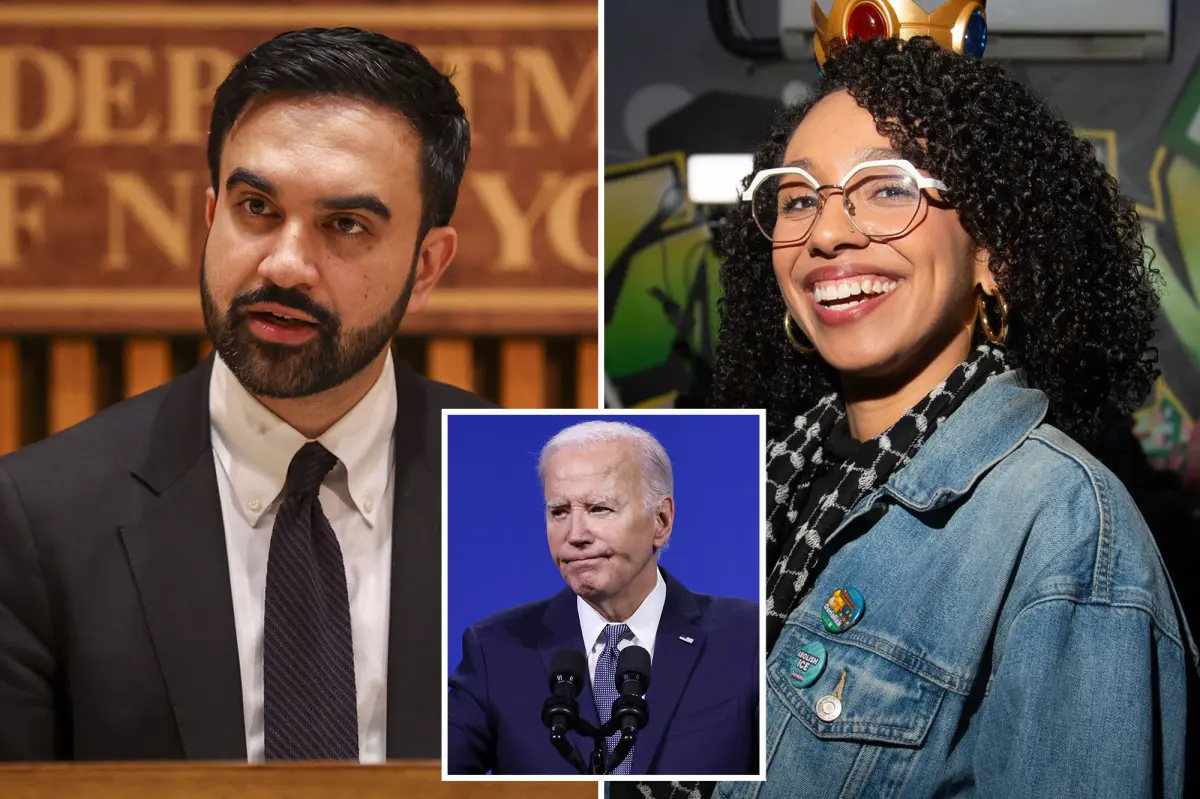
In the high-stakes, deeply polarized arena of New York City politics, the emergence of a new candidate often brings a mixture of grassroots hope, establishment anxiety, and intense personal scrutiny. Darializa Avila Chevalier, a passionate community organizer and progressive activist, recently stepped directly into this blinding spotlight as she launched a bold campaign to challenge the formidable five-term incumbent, Representative Adriano Espaillat, in New York’s 13th Congressional District. Her congressional bid gained sudden, powerful momentum and shocked the city’s political class when Zohran Mamdani, a highly visible progressive New York State Assemblymember and current mayoral contender, officially endorsed her primary challenge. This endorsement signaled a major ideological battle, pitting a rising generation of left-wing reformers against one of the state’s most entrenched moderate Democratic powerbrokers. However, the initial wave of excitement surrounding Chevalier’s candidacy was quickly met with the unforgiving realities of modern political warfare, as political opponents and media outlets began digging through her digital footprint. A report by Politico unearthed several deleted posts from her former X (formerly Twitter) account dating back to the turbulent election cycle of 2020. In these unfiltered, emotionally raw messages, she fiercely criticized the mainstream Democratic establishment, referring to then-candidate Joe Biden as a “rapist” and a “war criminal,” while desperately claiming that the country was a “f—ing disgrace.” Far from being a simple case of scandalous rhetoric, this revelation offers a profound window into the genuine, human frustration felt by an entire generation of young activists who felt profoundly alienated by their choices during a time of historic national crisis. To understand her words is to look past the sensationalized headlines and recognize the authentic exasperation of an idealistic young woman of color fighting to find her voice in a political system she felt had abandoned its moral compass and neglected the very people it was built to protect, serve, and uplift.
To truly humanize the feelings behind those deleted posts, one must mentally return to the exhausting, anxiety-ridden landscape of 2020—a year defined by a terrifying global pandemic, massive racial justice protests, and a profound crisis of faith in political leadership. During the contentious presidential primary, a significant portion of young progressives watched in deep dismay as the Democratic party coalesced around Joe Biden, a long-serving centrist whose legislative history on criminal justice, systemic incarceration, and corporate economic policy was viewed by the left as outdated and deeply flawed. The emotional stakes escalated further when allegations of past sexual misconduct surfaced against Biden, placing many progressive organizers, particularly women and survivors of trauma, in an agonizing moral dilemma. Chevalier’s post, which bitterly lamented that voters were being forced to choose “one rapist over the other rapist,” was a visceral, unfiltered expression of this collective trauma and political alienation. She was directly addressing the accusations of sexual misconduct that hovered over both Donald Trump and Joe Biden, voicing a deep, sorrowful disappointment that the pinnacle of American democracy offered no candidate free from such heavy moral compromises and interpersonal harm. For an activist who dedicated her everyday life to advocating for the dignity, safety, and agency of marginalized communities, being told that she must campaign for and support a candidate facing such accusations felt like a profound betrayal of her personal and political ethics. Her online outcry was not the cynical, calculated posturing of a professional campaigner; rather, it was the heartbroken scream of an individual refusing to normalize systemic abuse or silence her convictions. In expressing this anger, she gave voice to a silent, painful consensus shared by many young Americans who felt that the political system demanded they sacrifice their morals for the sake of electoral pragmatism, a compromise they found increasingly difficult to justify in their hearts.
As the general election drew closer, Chevalier’s sense of disillusionment only intensified, culminating in another highly controversial post where she declared that anyone expecting her to vote for a “war criminal” was completely out of their mind. To comfortable establishment figures, such sharp, unyielding language is easily dismissed as radical posturing, but within marginalized communities and anti-war advocacy groups, this rhetoric stems from a painfully consistent critique of American foreign policy. For decades, young progressive organizers, especially people of color with ties to the global South, have argued that both major political parties are complicit in foreign interventions, drone campaigns, and economic sanctions that have caused immense civilian suffering around the globe. In referring to Biden as a “war criminal,” Chevalier was channeling decades of frustration with his foreign policy decisions, highlightable by his vote for the 2003 invasion of Iraq and his alignment with traditional American imperialist projects. When she desperately added that “this country is a f—ing disgrace,” her words were not born from a malicious desire to tear down the nation, but from a profound grief over the vast chasm between America’s self-proclaimed status as a beacon of freedom and the reality of its global and domestic policies. Carrying this level of disillusionment is an incredibly heavy emotional burden for a young person who deeply desires justice; it is a sentiment rooted in a fierce, protective love for humanity that cannot reconcile itself with structural violence. By humanizing this anger, we begin to see that her online rebellion was not an act of hostility, but a desperate, sorrowful demand for accountability from leaders who hold the power of life and death over millions of vulnerable people across the planet, reflecting the internal torment of a citizen who refuses to let patriotism blind her to systemic injustice.
This clash of ideological perspectives is currently playing out in the physical and cultural landscape of New York’s 13th Congressional District, a vibrant and diverse area encompassing Upper Manhattan and portions of the West Bronx. The district is historically renowned as a bastion of immigrant political empowerment, long championed by Representative Adriano Espaillat, who made history as the first Dominican-American elected to Congress. Espaillat’s political legacy is built on the classic narrative of immigrant resilience and community organizing, showcasing how working within the established political system can secure vital resources, federal funding, and protection for working-class families. Yet, beneath this surface of political stability, the daily lived reality of the district’s residents is shifting rapidly, dominated by skyrocketing housing costs, systemic displacement, gentrification, and a mounting sense of economic insecurity. Assemblymember Zohran Mamdani, who boldly threw his support behind Chevalier, represents a growing coalition of democratic socialists and working-class allies who argue that incremental compromise is no longer enough to save these communities from decline. Mamdani’s endorsement of Chevalier was an intentional, high-stakes challenge to the local political order, reflecting a belief that the district needs representation that is unapologetically systemic in its critique of capitalism and gentrification. This dynamic presents voters with a profound human choice: do they stick with a dependable champion who understands how to negotiate the halls of power, or do they embrace a young disruptive outsider who mirrors their own raw anxieties and desire for systemic revolution? Ultimately, this political struggle represents two different generations trying to protect their neighborhood, each guided by distinct historical memories, immediate survival needs, and deeply authentic visions of progress, safety, and community justice that they hope to establish for future generations to come.
As Darializa Avila Chevalier navigates the arduous transition from a grassroots organizer speaking her mind on social media to a formal candidate for the United States Congress, she faces a challenge unique to the millennial and Gen Z generations of political leaders. Today’s young aspiring public servants are among the first to have their entire adult lives documented online, leaving behind a persistent digital archive of their early political transformations, raw frustrations, and unfiltered thoughts. Historically, political candidates were expected to be highly polished, media-trained figures whose public statements were carefully sanitized by public relations teams to avoid any hint of controversy. Modern progressive candidates, by contrast, often come from the front lines of activism, where they have lived working-class lives and expressed the exact same outrage and disappointment that everyday people voice to their friends and families in private spaces. While holding public figures accountable for their language is a fundamental aspect of democracy, this situation raises essential questions about whether our political culture allows room for genuine emotional processing, growth, and maturation. When we weaponize an individual’s past online expressions of despair against them, we risk discouraging passionate, authentic community leaders from ever running for office, thereby ensuring that only the most affluent, sanitized, and performative individuals hold power. Chevalier’s current path represents the complex, highly human endeavor of translating raw community pain into organized, legislative strategy. Her evolution from an online critic into a political challenger demonstrates a courageous willingness to step into the very institutions she once despaired of, proving that one can remain deeply critical of structural failures while still doing the difficult, practical work of running for office to heal them from the inside.
Ultimately, the controversy surrounding Darializa Avila Chevalier’s past social media statements is far more than a passing, sensationalized news cycle in New York City; it is a profound microcosm of the larger, unresolved struggle for the soul of the Democratic Party and the future of political representation in America. This debate exposes the friction between an established political class that prioritizes institutional decorum, party loyalty, and incremental progress, and a growing portion of the electorate that feels an urgent, desperate need for structural change, economic justice, and visual accountability. For the diverse, working-class communities of Upper Manhattan and the Bronx, the upcoming electoral decision is not just about choosing a representative, but about defining what kind of political strategy they believe is most capable of healing their neighborhoods—whether it is the quiet, experienced diplomacy of Adriano Espaillat or the loud, uncompromising grassroots advocacy of Darializa Avila Chevalier. By humanizing the candidate and understanding the historical trauma and systemic failures that fueled her past online output, we are reminded that true, vibrant democracy is inherently messy, loud, and uncomfortable. It forces us to confront difficult perspectives and to look beneath the polished surface of modern political campaigns to discover the genuine human desires for safety, dignity, and a society that values people over political expediency. Regardless of the outcome of this primary, Chevalier’s candidacy and her journey from a disillusioned online activist to a determined political challenger highlight a transformational shift, demonstrating that a new wave of leaders is willing to bring their unfiltered, passionate, and deeply human experiences directly to the halls of power, refusing to let the cold demands of political conformity silence their struggle for a better, more compassionate world.