





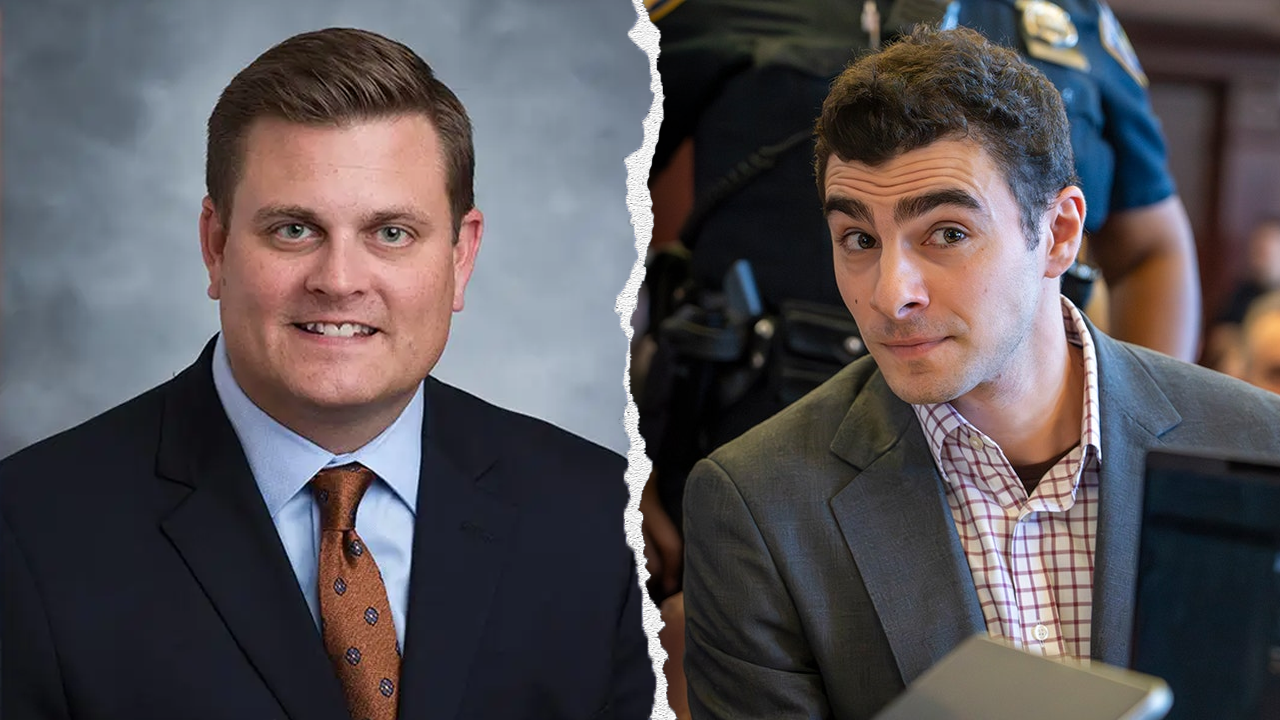
The violent intersection of two wildly different lives on a chilly New York morning has set the stage for one of the most high-stakes, psychologically fraught legal dramas in recent American history. Luigi Mangione, a twenty-eight-year-old former Ivy League graduate with ancestry rooted in privilege and academic promise, stands accused of executing a chillingly precise assassination of Brian Thompson, the prominent chief executive officer of UnitedHealthcare. The shooting, which occurred outside a high-profile corporate conference in midtown Manhattan—a place where neither man resided—shattered the routine of a bustling business morning and instantly captured the nation’s attention. Rather than a simple story of a random act of street violence, this case immediately transformed into a complex, multi-layered human tragedy that continues to captivate the public’s imagination. On one side of this tragedy is the family of Brian Thompson, a powerful healthcare executive whose life was abruptly and violently cut short, leaving a massive void in his corporate empire and his household. On the other side is the family of Mangione, who have had to watch their brilliant, highly educated son undergo a terrifying transformation from an elite scholar into an accused killer facing the prospect of spending the rest of his life behind bars. The upcoming trials represent not just a legal reckoning for the state or a mechanism to deliver justice, but a deeply intimate descent into the fragile nature of the human mind under extreme pressure. As the legal teams prepare to lock horns, the public is left to grapple with the terrifying speed with which a life of immense privilege and intellectual promise can fracture into absolute ruin. This case forces us to look past the sterile language of police reports and indictment papers to examine the profound emotional and psychological wreckage that remains in the wake of such a cataclysmic act of violence, raising uncomfortable questions about modern societal pressures and mental stability.
In a dramatic move that could fundamentally alter the trajectory of the upcoming state trial scheduled for September, Mangione’s defense team has indicated they will pursue an “extreme emotional disturbance” defense, a highly specialized and legally demanding strategy designed to mitigate his culpability. Under New York state law, this psychological defense does not seek to absolve the defendant of the act itself, but rather aims to humanize the perpetrator’s internal state at the moment of the crime in order to reduce the severity of the charge. If successfully argued, this strategy would legally downgrade a conviction for first-degree murder to first-degree manslaughter, which would dramatically lower the maximum sentencing ceiling from a hopeless term of life in prison to a maximum of twenty-five years. However, the legal threshold to prove extreme emotional disturbance is exceptionally high, requiring the defense to systematically convince a jury of three distinct, deeply complicated elements. First, they must prove that Mangione was experiencing a profound, overwhelming emotional crisis at the time of the shooting that caused an absolute “loss of self-control,” transforming him from a rational actor into someone driven entirely by blind, emotional impulse. Second, his lawyers must fashion a narrative that provides a “reasonable” explanation or excuse for this intense level of psychological distress, a task that requires them to translate Mangione’s subjective, internal pain into something that a jury of twelve ordinary citizens can find relatable or understandable. Finally, they must establish with absolute certainty that this severe emotional storm was actively raging in his mind at the precise second he allegedly pulled the trigger, bridge-building a direct connection between his fractured psyche and the physical act of violence. By utilizing this defense, his attorneys are attempting to shift the courtroom focus from the horrific physical details of the crime to the chaotic, painful landscape of Mangione’s inner world, hoping to evoke mercy from a jury.
While the “extreme emotional disturbance” defense offers a potential lifeline for Mangione in the state-level prosecution, legal experts warn that it represents an extraordinarily high-risk, double-edged sword that could ultimately seal his fate in a separate forum. James Leonard, a prominent defense attorney who has navigated complex, high-profile cases, describes this approach as high-stakes litigation at its most perilous, noting that the defense is essentially asking the jury for a form of emotional nullification. By arguing that Mangione was under extreme emotional distress when he committed the act, his lawyers are practically conceding the physical reality of the killing, admitting to the jury that their client was indeed the person holding the weapon that morning. This concession poses a devastating threat to his broader legal prospects because Mangione is also facing a separate, looms-large federal trial scheduled for early next year, where federal prosecutors are not bound by the state’s mitigation laws. Randolph Rice, a seasoned legal analyst, points out the profound strategic paradox native to this defense: if Mangione’s team successfully argues in a state court that he shot Thompson due to a complete loss of emotional control, they are effectively packaging and delivering an ironclad confession directly to federal prosecutors on a silver platter. The federal government, armed with this public state-court admission of guilt, can easily leverage it in their own trial to secure a conviction that carries a guaranteed penalty of life imprisonment without the possibility of parole. This creates a terrifying legal tightrope for the defense, who must carefully weigh the immediate, desperate need to avoid a state-level life sentence against the very real danger of permanently destroying their client’s chances of defense in the federal trial that will inevitably follow.
To defeat this psychological defense, state prosecutors are expected to present a stark, clinical counter-narrative that focuses not on a sudden loss of self-control, but on a chillingly systematic and prolonged display of cold premeditation. According to prosecutors and legal experts, the state will attempt to dismantle the image of a chaotic, broken mind by laying out a meticulous timeline that stretches far back before the December morning of the shooting. This timeline will rely heavily on physical evidence, including personal journals allegedly penned by Mangione months before the assassination, which reportedly document a highly calculated, deliberately planned plot to target the corporate executive. Prosecutors will argue that his extensive cross-country travel, his detailed logistical preparation, and his eventual stealthy arrival in New York City with the intent to ambush Thompson outside a business conference do not suggest a man who suddenly snapped. Instead, they will paint a portrait of an calculated, patient actor who operated with extreme clarity of purpose and cold logic, waiting for the perfect moment to execute a target he did not even know personally. The prosecution will emphasize that Mangione was neither a current customer of UnitedHealthcare nor had any direct personal relationship with Thompson, suggesting that his actions were public, symbolic, and planned rather than the result of a sudden personal emotional crisis. By contrasting the chaotic, impulsive nature of a true “extreme emotional disturbance” with the highly organized, patient plotting of a determined assassin, the state hopes to convince the jury that the killing was a cold-blooded execution rather than an uncontrollable act of passion, thereby demanding the maximum penalty under the law.
The battleground of this trial will therefore extend far beyond mere legal terminology, diving deep into the messy, subjective territory of human empathy and psychological evaluation. The defense team has already demonstrated a highly sophisticated capability to secure crucial legal victories, having successfully convinced a state judge to throw out severe, terrorism-related charges that could have carried mandatory life sentences, and persuading a federal judge to take the death penalty off the table before his federal trial begins. These early tactical wins show a defense team that is highly skilled, deeply strategic, and fully committed to fighting for Mangione’s life at every single turn. However, the human element of the trial will ultimately depend on whether a jury can find any common ground with a young man accused of such a high-profile, public killing. In a society increasingly exhausted by corporate malfeasance, healthcare frustrations, and systemic economic anxieties, the defense may try to subtly tap into a broader, collective sense of societal distress, although they must do so without appearing to excuse a horrific act of violence. Under New York’s legal guidelines, the explanation for Mangione’s mental state must be viewed from the subjective viewpoint of a person in his situation under the circumstances as he believed them to be, forcing the jurors to psychologically step into his shoes and view the world through his distorted, hurting eyes. This psychological deep-dive will turn the courtroom into a highly emotional space, where doctors, psychiatrists, and family members will dissect the private vulnerabilities, disappointments, and hidden pains of a young man who had everything to live for but chose a path of absolute destruction.
As the September trial date approaches, both the state of New York and the federal government are preparing for a series of explosive trials that will inevitably force a reckoning on the human cost of this tragedy. Regardless of the legal strategies used, the cold reality remains that a prominent executive is dead, a family’s patriarch has been permanently stolen from them, and an intellectually gifted young man has destroyed his own bright future. The final verdict will rest in the hands of everyday citizens who must look past the media sensationalism, the corporate politics, and the legal maneuvers to uncover the human truth of what transpired on that midtown sidewalk. If the jury accepts the emotional distress defense, it will be viewed as an extraordinary, historic victory for the defense, showing that even in the face of public outrage, the legal system can find room for psychological nuance and mitigation. If the jury rejects it, Mangione will face the bleak reality of spending the rest of his natural life behind bars, a tragic end to a life that once held limitless academic and social promise. The ultimate resolution of this case will stand as a powerful, sobering story of the devastating consequences of mental collapse, the cold precision of criminal law, and the complex, often messy search for justice in a world fractured by violence, loss, and pain. As the legal system begins to grind forward, the families of both Brian Thompson and Luigi Mangione are left to endure the agonizing, public dissection of their private grief, waiting to see how a jury of peers will write the final, somber chapter of this tragic American story.