





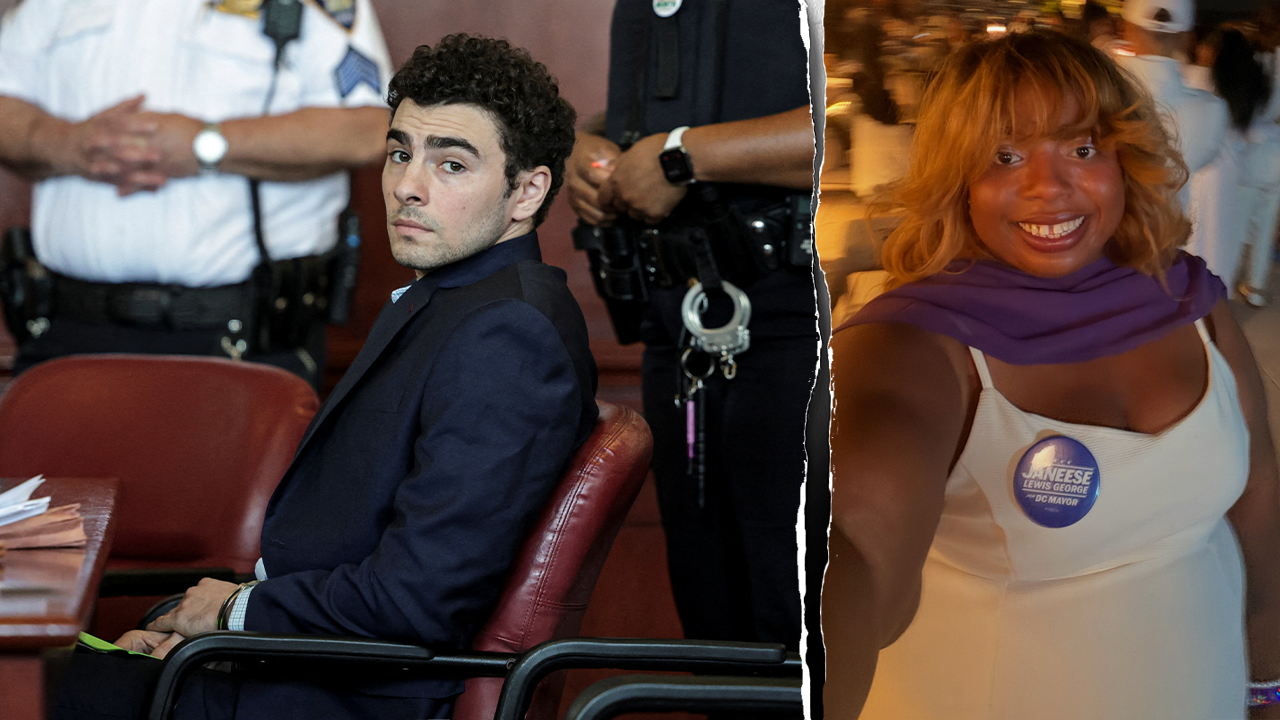
On a chilly December morning, the fast-paced, high-stakes heart of Manhattan was shattered by a sudden act of targeted violence that would quickly reverberate far beyond the borders of New York City, sparking a national debate on the ethics of corporate power and the desperation of the American public. The fatal shooting of UnitedHealthcare CEO Brian Thompson outside a Midtown Hilton hotel was initially met with universal shock, but as the hours turned into days, a bizarre and deeply polarized cultural phenomenon began to take root on the internet. As investigators identified Luigi Mangione—a brilliant Ivy League graduate from a prominent family—as the primary suspect, a surprising segment of the public began to project their own deep-seated frustrations onto him, transformatively framing him not as a cold-blooded killer, but as an unlikely, anti-establishment folk hero. This volatile mix of anti-corporate rage, systemic exhaustion, and social media sensationalism reached a boiling point when Makia Green, the political director for a prominent progressive mayoral campaign in Washington, D.C., took to the social media platform Threads to publicly advocate for Mangione’s freedom and executive pardon. Her digital plea, punctuated with hashtags like “#FreeLuigi” and calls to “pardon the youth,” instantly bridge-connected the cold reality of a homicide investigation with the fiery theater of modern progressive politics, leaving observers to grapple with how a search for justice could become so thoroughly entangled with systemic grief.
To understand how a professional political strategist like Makia Green could find herself publicly championing a suspected assassin, one must look closely at the profoundly frustrating relationship millions of everyday Americans have with the modern healthcare bureaucracy. In a series of raw, highly personal social media videos unearthed by reporters, Green shared her own agonizing struggles as a consumer navigating the labyrinth of UnitedHealthcare’s insurance network. She detailed the exhausting, dehumanizing experience of being assigned a primary care physician by her insurer, only to search repeatedly and discover that the doctor literally did not exist or was entirely unreachable within her plan’s framework. While insurance corporations often dismiss such complaints by pointing out that standard plans allow customers to select their own physicians, Green’s public venting captured a universal pain point felt by anyone who has ever spent hours on hold, faced denied claims, or felt abandoned by a faceless, profit-driven system. It was this intense, personal alienation that seemingly motivated her to view Mangione’s alleged actions through a distorted, empathetic lens. By calling for his release, Green was not merely reacting to a crime; she was expressing a desperate, albeit highly controversial, outcry against an industry that many believe prioritizes shareholder value over basic human survival, highlighting a dangerous societal tipping point where personal grievance can cloud fundamental moral clarity.
This controversial stance has cast a harsh, unforgiving spotlight on the political campaign of Janeese Lewis George, the Democratic socialist champion currently vying for the office of mayor in Washington, D.C. Within the highly charged political landscape of the nation’s capital, Lewis George has established herself as a passionate, uncompromising voice for radical systemic overhaul, building a platform that directly challenges long-standing municipal institutions. During her tenure on the city council, she gained national attention for her vow to reduce police funding in her home ward, while simultaneously advocating for expansive community safety programs, universal access to abortion care, and aggressive reforms to national institutions, including packing the Supreme Court and impeaching conservative Justice Clarence Thomas. For a campaign rooted in the ideals of compassion, equity, and the dismantling of oppressive structures, the revelation that its top political director was actively humanizing and defending an accused killer presented an immediate public relations crisis. It forced a difficult conversation about the boundaries of progressive activism: at what point does the legitimate pursuit of systemic, anti-capitalist reform cross the line into the dangerous validation of political violence, and how can a campaign maintain its moral authority when its inner circle sympathizes with those who resort to bloodshed?
The ideological storm surrounding the campaign in Washington bears a striking resemblance to recent controversies in other major progressive hubs, particularly in New York City, where fellow Democratic socialist and mayoral aspirant Zohran Mamdani recently found himself navigating his own storm related to the Mangione case. Across the metropolitan landscape, a growing subculture of ideological supporters has rallied around the suspected shooter, raising an astonishing $1.5 million to secure a high-powered legal defense team for a young man they have romanticized as a modern-day Robin Hood. This astonishing wave of financial and moral support highlights a profound, unsettling disconnect in contemporary society, where the sheer muscle of corporate healthcare’s lobbying power has left individuals feeling so utterly powerless that they are willing to sanitize a brutal act of street justice. When Mamdani’s campaign was briefly linked to a controversy involving outspoken Mangione supporters who had managed to obtain city-sanctioned press passes, it underscored how rapidly this polarizing case has forced politicians to walk a tightrope, desperately trying to validate the authentic economic pain of their working-class constituents without appearing to condone the ultimate lawlessness of assassination.
Lost beneath the sweeping geopolitical debates, the viral hashtags, and the lucrative defense funds is the tragic, irreversible human cost of that fateful December morning, beginning with the life of Brian Thompson himself. Thompson was not merely a corporate symbol or a target on an anti-capitalist manifesto; he was a human being, a husband, a father, and a colleague whose life was violently cut short in a premeditated ambush on a public sidewalk. The chilling details of the crime—which paint a picture of a calculated stalker shooting a man in the back before fleeing the state—stand in stark contrast to the idealized, heroic narrative constructed by online activists. The dramatic manhunt that followed transfixed the nation, culminating in the surreal image of Mangione, a highly educated Ivy League graduate, being quietly arrested by state troopers while eating a McDonald’s breakfast in Altoona, Pennsylvania. This bizarre arrest stripped away the carefully crafted myth of a revolutionary phantom, leaving behind the sobering reality of a troubled young man facing the gravity of his actions, and exposing the deep psychological chasm between online revolutionary posturing and the messy, devastating consequences of real-world violence.
As Luigi Mangione prepares to face the full weight of the American justice system, the legal road ahead promises to be as intensely scrutinized as the crime itself, with both state and federal prosecutors assembling formidable cases against him. Despite the chaotic delay of his initial court appearance due to a scheduling mix-up, the legal coordinates are firmly set, with a high-stakes state trial scheduled for September 8 that carries a maximum penalty of life in prison, followed closely by a federal trial early next year. Mangione has maintained his plea of not guilty, setting the stage for a dramatic courtroom battle that will likely put the entire American healthcare system on trial in the court of public opinion, even as the judge seeks to keep the focus strictly on the legality of the physical act. Ultimately, this tragic saga serves as a somber mirror for a deeply fractured nation, serving as a warning of what happens when public trust in essential institutions completely erodes. It reminds us that while the frustrations with corporate greed and inadequate healthcare are incredibly real and demand urgent, compassionate reform, the path toward a more humane and just society cannot be forged through the barrel of a gun or the glorification of tragedy, but through the hard, patient work of democratic empathy and systemic accountability.