





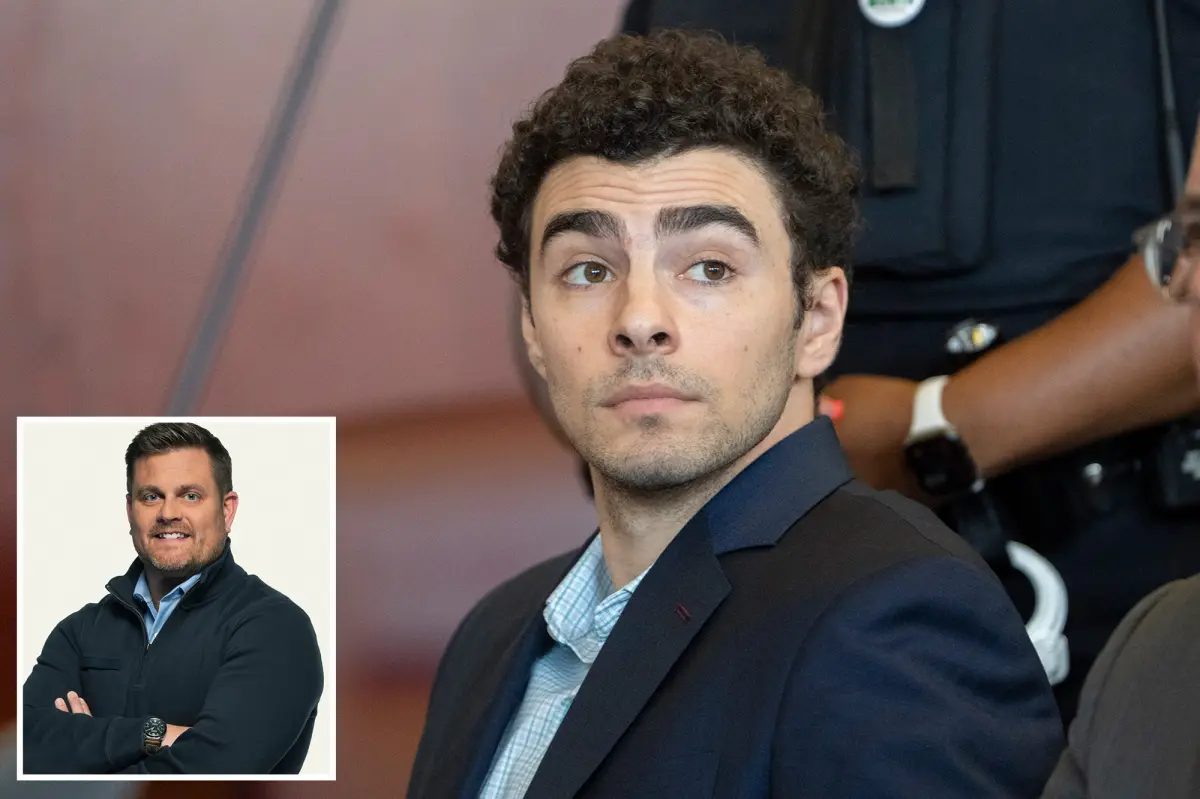
The high-stakes legal drama surrounding the assassination of UnitedHealthcare CEO Brian Thompson took an unexpected and highly consequential turn in a Manhattan courtroom, signaling a dramatic shift in the trial strategy of the accused gunman, Luigi Mangione. In a concise but monumental letter addressed to Manhattan Supreme Court Judge Gregory Carro, Mangione’s defense team abruptly announced the withdrawal of their previously filed notices under Criminal Procedure Law (CPL) 250.10. With this brief, formal declaration, the defense effectively discarded their plans to present psychiatric evidence at trial, abandoning what many legal analysts believed would be the cornerstone of their defense. By relinquishing this notice, Mangione has closed the door on arguing that he was suffering from an “extreme emotional disturbance” when he allegedly gunned down Thompson on a cold Midtown sidewalk in December 2024. This sudden pivot has sent shockwaves through legal circles, fundamentally altering the narrative of the upcoming trial and stripping Away a crucial legal safety net that could have spared the twenty-six-year-old Ivy League graduate from spending the rest of his life behind bars.
To understand the magnitude of this decision, one must look at the mechanics of New York State’s criminal justice system, where a CPL 250.10 notice serves as a mandatory gateway for introducing mental health defenses. In a homicide of this scale, an affirmative defense of “extreme emotional disturbance” is often a defense attorney’s most potent weapon, operating not as a claim of complete insanity, but as a mitigating factor that acknowledges the physical act of killing while pleading for mercy based on the defendant’s fractured mental state. Had Mangione’s legal team successfully argued that he was operating under an overwhelming, mind-altering emotional crisis that compromised his self-control, the presiding jury would have had the legal framework to find him guilty of first-degree manslaughter instead of first-degree murder. The difference between these two charges is vast and life-defining: a conviction for manslaughter carries a maximum sentence of twenty-five years, offering a eventual pathway to freedom, whereas a conviction for premeditated murder carries a mandatory life sentence without the possibility of parole. By stripping this defense from their arsenal, Mangione and his counsel have voluntarily walked away from this middle ground, choosing instead to face the state’s unmitigated, top-tier charges head-on, a gamble that raises profound questions about their overarching strategy and Mangione’s own frame of mind.
To humanize the young man at the center of this national conversation is to look beyond the chilling security camera footage and examine a life that seemed, at least from the outside, to be defined by privilege, intellect, and limitless potential. Raised in a prominent, wealthy Maryland family, Mangione was a standout student, eventually attending the University of Pennsylvania where he earned both a bachelor’s and a master’s degree in computer science, leaving behind a trail of peers who remembered him as brilliant, charismatic, and incredibly driven. However, beneath this polished exterior lay a deeply troubled young man who was quietly unraveling, plagued by agonizing, chronic back pain that resisted multiple medical interventions and left him feeling increasingly alienated from the active life he once loved. This physical torment, combined with a growing isolation, appears to have fostered a profound, dark obsession with what he perceived as the systemic cruelty of the American corporate healthcare machine. When police finally apprehended him at a Pennsylvania McDonald’s after a frantic multistate manhunt, they discovered a detailed manifesto that read less like the psychotic delusions of an unhinged mind and more like a calculated, albeit deeply radicalized, political treatise. This complex duality—an intellectual giant driven to desperate violence by chronic physical suffering and ideological fervor—is central to understanding why a standard psychiatric defense may have ultimately felt like an ill-fitting, or perhaps unacceptable, jacket for Mangione to wear.
In stark contrast to the unfolding narrative of the troubled shooter stands the tragic reality of his victim, Brian Thompson, and the agonizing grief of a family suddenly shattered on a public street. Thompson, a fifty-year-old devoted father of two and a powerful corporate executive, was in New York to attend an annual investor conference when his life was violently cut short in what prosecutors describe as a meticulously planned execution. In the immediate aftermath of the shooting, an unsettling and polarizing national conversation emerged, as millions of Americans, frustrated by their own battles with denial of care, astronomical premiums, and the labyrinthine hurdles of health insurance, began to project their systemic grievances onto the tragedy. For Thompson’s family, this public discourse added a layer of profound cruelty to their private grief, forcing them to watch the internet transform a cold-blooded killer into an ideological folk hero while dehumanizing a beloved husband and father as merely the face of an unpopular industry. This toxic cultural backdrop has elevated the trial beyond a simple determination of guilt or innocence, transforming it into a symbolic battleground where the boundaries of public anger, corporate responsibility, and the sanctity of human life are fiercely contested.
The sudden withdrawal of the psychiatric defense notice prompts intense speculation about the behind-the-scenes calculations of Mangione’s high-powered defense counsel and the personal agency of the defendant himself. Legal experts suggest that the decision may have been driven by a desire to avoid the highly intrusive, state-mandated psychiatric evaluations that accompany a CPL 250.10 filing, which would have allowed prosecution-aligned mental health professionals to dissect Mangione’s psyche, examine his personal journals, and potentially uncover highly damaging evidence of premeditation and calculating coldness. Furthermore, presenting an “extreme emotional disturbance” defense would have required a tacit admission that Mangione was temporarily “broken” or unstable, a characterization that may have deeply clashed with his pride and his desire to stand by the ideological convictions outlined in his written manifesto. By rejecting a defense that paints him as mentally incapacitated, Mangione may be asserting a desire to be judged on the perceived merits of his actions and beliefs, refusing to allow his political anger to be dismissed by the court as merely the tragic byproduct of a temporary mental breakdown.
As the legal teams prepare to lock horns before Judge Gregory Carro in the heart of Manhattan, the path to trial now lies open without the clarifying or complicating lens of a mental health defense, setting the stage for a dramatic and straightforward courtroom battle of evidence and intent. The prosecution will undoubtedly present a mountain of physical and digital forensic evidence to paint Mangione as a cold, calculating assassin who travelled to New York with a singular, lethal objective, while the defense must now construct an entirely different narrative structure to cast doubt on the state’s case or challenge the legality of the evidence gathered against him. For a watching nation, the trial will serve as a grim exploration of the limits of human endurance under physical pain, the radicalizing power of systemic frustration, and the sobering reality of a legal system that must ultimately weigh the value of a single human life against the chaotic forces of societal discontent. As the trial date approaches, the stakes could not be higher for Luigi Mangione, who has willfully stepped out from behind the shield of psychiatric mitigating circumstances to face the full, unyielding weight of the law, where the only outcomes left are total vindication or a lifetime behind bars.