


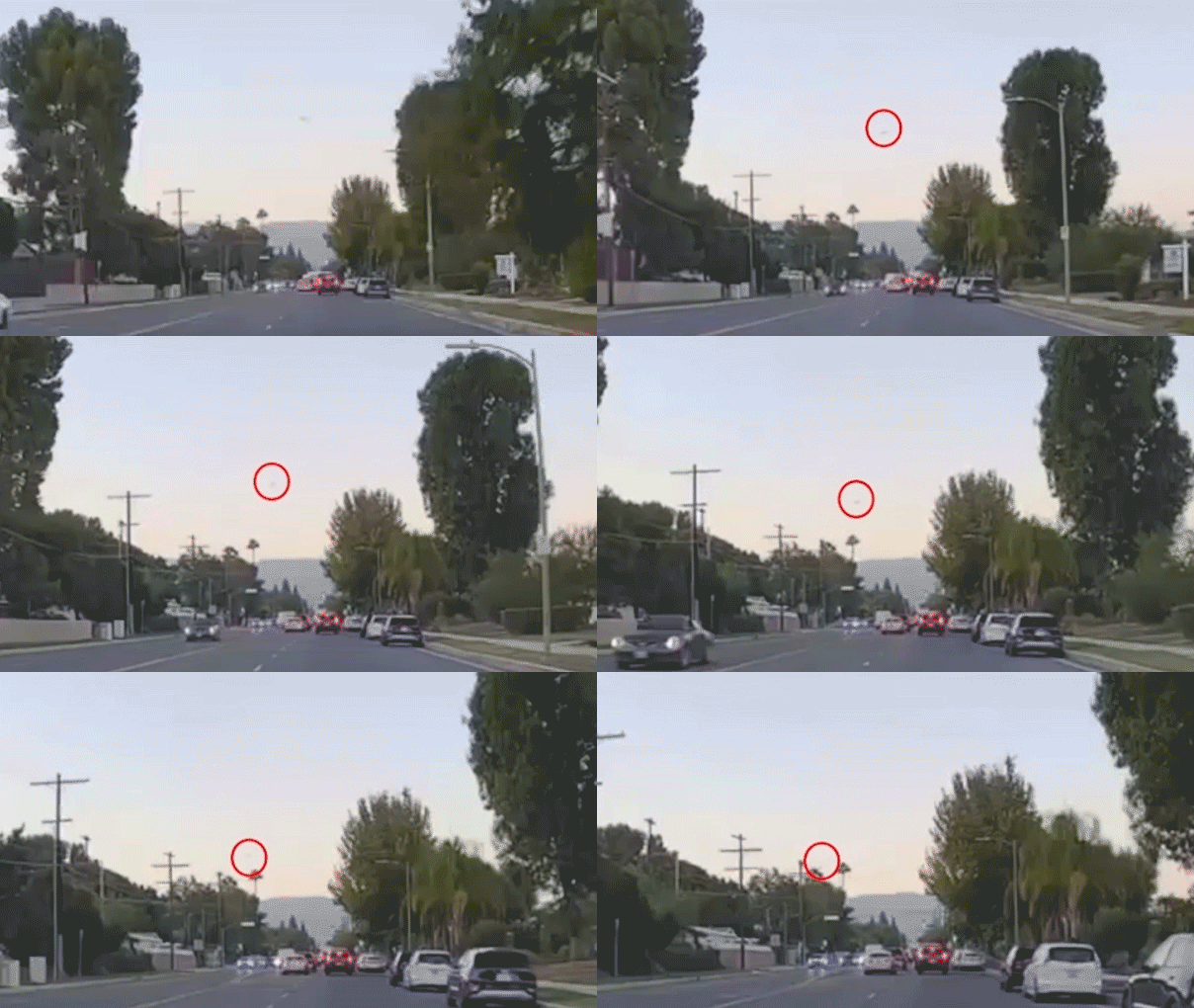
It was just another Tuesday afternoon on the streets of Los Angeles, the kind of bright, ordinary day when people are running errands, picking up kids, and commuting home. Driver Year Valencia had no reason to look up at the sky. But when he did, or rather when his dashcam caught the scene unfolding above, he saw something that would haunt him: a tiny dot in the distance, a news helicopter that had been flying over the city, suddenly plunging toward the ground. The video, later shared with local station KTLA, shows the aircraft dropping with terrifying speed, disappearing from view in a matter of seconds. For Valencia, the shock was immediate and deeply personal. “God, it’s so close, it could have happened to anyone,” he said. “My parents walk down the street.” The helicopter had been covering a separate, deadly crash when it went down itself, turning a routine newsgathering mission into a tragedy that claimed three lives and left a community reeling. The dashcam footage, captured by accident, has become a key piece of evidence in understanding how a normal day turned so suddenly catastrophic.
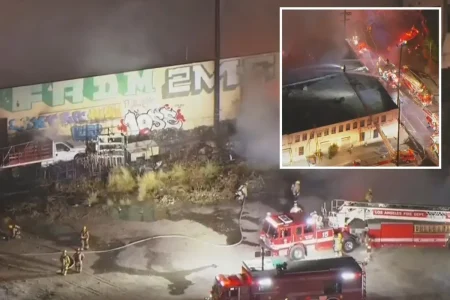
The crash took place in the Chatsworth neighborhood of the San Fernando Valley, an area known for its residential streets, storage facilities, and quiet industrial corners. The helicopter, a Eurocopter AS350 operated by Angel City Air, came down near a storage complex and burst into flames. The fire quickly spread, consuming at least four vehicles and two storage containers, leaving a scene of twisted metal and blackened debris. Killed in the crash were Eliana Moreno, a reporter for NBC4 and Telemundo 52; George Marciniw, the pilot; and 29-year-old Edy Gutierrez Mejia, who happened to be on the ground when the aircraft fell from the sky. The loss of Moreno, a young journalist with a promising career, and Marciniw, an experienced pilot, sent shockwaves through the news community, where colleagues remembered them not just as professionals but as people with warmth, dedication, and passion for their work. But it was Mejia’s death that underscored the cruel randomness of the tragedy. He was not in the air, not part of the news crew, not involved in any way other than being in the wrong place at the wrong time. The NTSB later described the scene as devastating, with emergency responders working for hours to extinguish the flames and recover the remains. For residents of Chatsworth, the smoke rising from the crash site was a jarring reminder of how fragile life can be, even in the middle of an ordinary afternoon.
The helicopter had been in the air for a reason: it was covering an earlier collision that had already left two people dead and six others injured. That crash involved an SUV and a city bus, and according to authorities, the sequence of events leading up to it was staggering. The SUV, driven by 36-year-old Bailee Lynn Rios, was reportedly traveling the wrong way, ran a red light, and struck another vehicle before slamming into the bus. The impact was violent enough to kill two people and send half a dozen others to hospitals with injuries of varying severity. Police arrested Rios on murder charges Tuesday night, and the Los Angeles County District Attorney’s Office began reviewing the case to determine what formal charges would be filed. The details of the investigation painted a picture of a chaotic, deadly chain reaction that left families shattered and investigators searching for answers. And then, as if the day had not already been tragic enough, the news helicopter sent to document the aftermath became part of the very story it was covering. The irony was not lost on anyone who saw the dashcam video: journalists and pilots risk their lives to inform the public, and sometimes that risk becomes unbearable reality. The earlier crash had already demanded attention, but the helicopter crash turned a local tragedy into a national story, drawing attention to the dangers faced by those who work in the skies above the city.
In the hours after the crash, investigators from the National Transportation Safety Board moved methodically through the wreckage, looking for clues that might explain why the helicopter suddenly lost altitude. The cause remained unknown Wednesday, but there was one piece of evidence that offered a window into the final moments of the flight: the helicopter’s own broadcast video, which had been transmitting live from the air before the crash. In the recording, an alarm can be heard sounding inside the cockpit as the aircraft begins to descend. NTSB investigator Fabian Salazar said the audio appeared to be consistent with changes in engine speed and likely cockpit advisory tones, the kind of alerts designed to warn pilots of a problem before it becomes catastrophic. Whether the warning was related to a mechanical failure, a fuel issue, or something else entirely remained unclear. The helicopter was a Eurocopter AS350, a single-engine aircraft widely used in newsgathering because of its reliability and maneuverability. It was operated by Angel City Air, a company that had long provided aerial support for NBC4 and Telemundo 52, allowing reporters to bring live images of traffic, fires, and breaking news to viewers across Southern California. Now that familiar sight in the sky was gone, and the silence left behind was filled with questions.
For the families of the victims, the days following the crash were a blur of grief and disbelief. Colleagues of Eliana Moreno remembered her as a bright and fearless journalist who cared deeply about the stories she told and the people she interviewed. George Marciniw was described as a skilled and cautious pilot who had logged countless hours in the air and was known for his calm demeanor in even the most stressful situations. And Edy Gutierrez Mejia, a young man with his whole life ahead of him, was mourned by friends and family who could not understand how a routine moment on the ground could end so suddenly. The community of Chatsworth, which had watched the smoke rise and felt the ground shake from the impact, came together in small ways—leaving flowers at the scene, sharing messages of support on social media, and holding each other a little closer. The crash also raised broader questions about the risks of aerial journalism, the importance of rigorous maintenance and safety protocols, and the fragile balance between informing the public and preserving the lives of those who do the informing. It was a reminder that the images viewers see on their screens, whether of wildfires, traffic jams, or tragic accidents, are captured by real people sitting in machines that are subject to the same laws of physics as everything else. And sometimes, despite all precautions, something goes terribly wrong.
As the NTSB continued its investigation, the dashcam video captured by Year Valencia remained a powerful artifact of the tragedy. It was, by all accounts, a lucky piece of footage—a tiny dot on the screen that became a story of life and death. But for Valencia, the video was not just evidence or news footage; it was a personal reminder of how close danger can come to home. “It’s so close, it could have happened to anyone,” he said, and the words resonated far beyond his own experience. In a city as vast and busy as Los Angeles, thousands of helicopters pass overhead every year, carrying news crews, police officers, medical teams, and sightseers. Most of them land safely, their work barely noticed by the people below. But this one did not, and the result was a tragedy that touched the lives of strangers who happened to be watching from the ground, or from their cars, or through the lens of a dashcam. The investigation into the cause of the crash would take months, and the legal case against the driver of the SUV would wind its way through the courts. But for the families, the colleagues, and the witnesses, the memory of that Tuesday afternoon would linger, a reminder of the thin line between the ordinary and the unimaginable. In the end, the story is not just about a helicopter crash or a bus collision. It is about people—people who set out to do their jobs, people who happened to be walking down the street, people who loved and were loved, and people who now must find a way to go on after a moment of sudden, inexplicable loss. And as the smoke cleared and the investigators packed up their equipment, the only comfort available was the hope that the truth would come out, and that the lives lost would not be forgotten.