


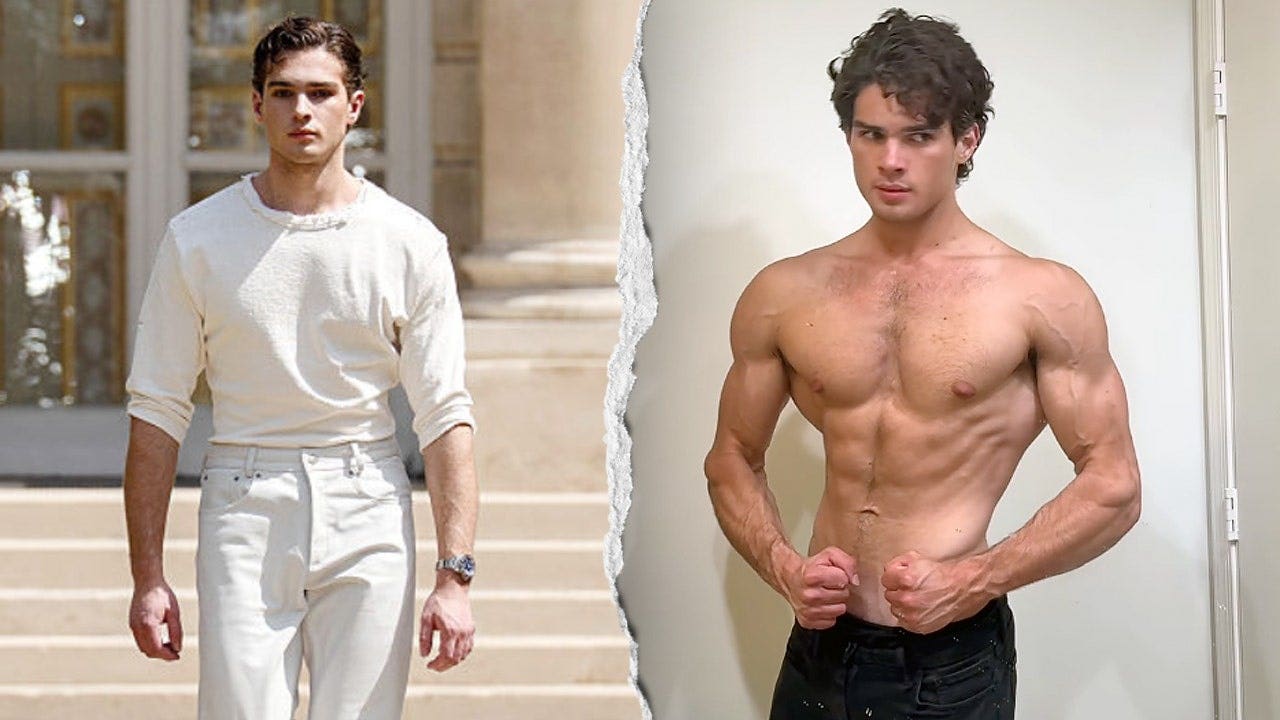
A rising internet personality known for promoting extreme self-improvement and physical appearance standards now faces a serious legal battle. Braden Peters, a 20-year-old influencer who operates under the online alias “Clavicular,” is confronting criminal charges in Massachusetts connected to a disturbing accusation involving a minor. According to court records, Peters has been charged with rape and drugging someone to facilitate sexual intercourse, alongside a misdemeanor alcohol-related offense. The case revolves around an incident that allegedly occurred at his family home on Cape Cod, painting a stark contrast between the carefully curated image he projects online and the accusations now laid against him.
The influencer had carved out a niche within the “looksmaxxing” movement, a popular trend among Generation Z that focuses on aggressively optimizing one’s physical attractiveness. His content, often streamed live to thousands of followers, traded in advice on facial symmetry, posture, and lifestyle changes designed to enhance appearance. The relationship that led to these charges began innocuously through Instagram, where a teenager, just 17 years old at the time, connected with the influencer over his content. According to police reports, Peters invited her to his family home under the auspices of helping him create “looksmaxxing” content, even arranging an Uber to transport her to his property. When she arrived, however, the situation allegedly devolved rapidly, with a livestream on Twitch and a series of instructions that would foreshadow the troubling events to come during an especially hot summer.
The woman told investigators that Peters was aware she was a minor but tried to disguise this fact for his benefit. She claimed that he carefully instructed her to claim on the livestream that she was 18 years old and to refer to any alcohol they consumed as “water” so that his account would not be permanently banned from the streaming platform. As the night progressed into evening, the digital evidence began to paint a concerning picture of her mental and physical state. She described feeling extremely intoxicated, with a deteriorating mental clarity and a growing confusion. When exploring footage recovered from Peters’ Twitch account during that evening, the woman can be heard slurring her words and expressing her heavily inebriated state right before the two shared a kiss. The teenager has stated that they later engaged in sexual activity, but she has recounted that she was in no condition to consent to anything.
Her report to the authorities went further, alleging a second sexual encounter which began when she woke up the following morning without her permission. This testimony ultimately led the police to a sobering conclusion: they believed that her level of intoxication at the time was so profound that she was legally and physically incapable of offering consent. As such, probable cause was established, and a formal criminal complaint was issued in early September, marking the beginning of a legal ordeal for the influencer, with his formal arraignment scheduled for mid-October.
Beyond the structure of the charges, this case problem issues a broader and essential conversation about the ethics of online influence, the responsibility of content creators, and the invisible lines between a curated persona and real-world behavior. In the era of social media, personalities like Peters are engine to celebrities of their own making, with audiences that devour their opinions and lifestyle mechanics. The power dynamic in play when an influencer, who holds immense social capital and the strategic reach to a huge audience, decides to invite a financially blind fan to their home is not an everyday scenario. When that space blurs into a situation involving a minor, alcohol, and resulting charges of sexual assault, the digital world suddenly becomes a disturbing arena. For a generation navigating their own identities and feelings of belonging, the actions alleged in this case warn of a low “what if” regarding those they choose to admire.
The public conflict has prompted immediate reactions from Peters, who dismisses the allegations as a form of manipulation. In social media posts, he presented text messages and a letter to suggest the accusations are fabricated, painting the account as a desperate act for financial gain, or perhaps notoriety. His representative distances him from the events, highlighting the specific timeline of a civil lawsuit that was initially filed without the sexual assault claim, only to have it later amended as an add-on, and then moved toward criminalization. This murky approach is packed with ferocious denials, pointing at the months between the alleged incident and the report made to the police. He paints a picture of a scheme, where the individuals involved contacted the police only after he had refused the financial requests.
However, the official police report provides a different type of context, explaining that the teenager’s delay in coming forward was born out of genuine shame and fear of personal family consequences. She confided that she kept the truth with herself due to inevitable shame of being in this situation and her despair at the possibility of breaking her grandparents’ hearts. More than a year had passed after the incident before she was emotionally prepared to go to police with an attorney by her side on a mid-November day in June. This is a pathway that’s not unusual in sexual assault cases, where the victim’s emotional timeline and healing trajectory does not align with society’s expectation for a split-second response, often making the pace a difficult truth to understand. In contrast, the case was aided by investigators speaking to Uber records and pulling dozens of hours of streamed video to reconstruct the events, evidence being key to building the picture of the alleged crime.
The incident is not the first time the influencer’s antics have bounced back from the screen into the public courts of legal problems. With a prior 2025 arrest in Florida for discharging a firearm in public, after a disturbing livestreamed scene. During that broadcast, Peters was that he was filming while allegedly firing repeated shots at a dead alligator, reportedly following the advice of a licensed airboat captain, but this would even hand him the vast seeds of a growing social media controversy. Just months earlier, he was also caught up in a physical fight which ended with him under a battery and conspiracy charge, after a fight between two women at an Airbnb property which family either states was posted to social media to exploit the situation. These aggressive, uncontrolled, and sometimes dangerous legal entanglements muck up a pattern of the digital persona and reality.
As the 20-year-old influencer, whose fame is built on aesthetic and personal transformation, awaits his court hearing date, the future of his digital empire hangs in the balance. His relevance in the “looksmaxxing” world has been a who’s who of new-age approaching to environmental and physical self-support, but now the court of law stares down with a much heavier verdict. For his fans, the situation may present a kind of jarring cognitive dissonance—how does a person who advocates for a strict, almost surgical approach to acceptable personal behavior demand respects in the ethics accusation facing him? The Massachusetts and Florida legal situations serve as a cautionary tale, not just about popularity or their impulses, but about the expectations, real-life consequences, and blurred connections between the digital and the private domain. At its core, this is not just a case of a binary between him and a teenage girl; it is about the right of a more vulnerable person securing their future, his leaving behind a mark that is both broken and distrusting, for the online world it created and the real-world audience it holds accountable. If found guilty, the charges could carry substantial prison time, but the social impact may be even longer-lasting, as scenes of a young life juggling with the massive waves of blurred past and a darkened future are enough to remain in the public spotlight, beyond any plea or sentence.