



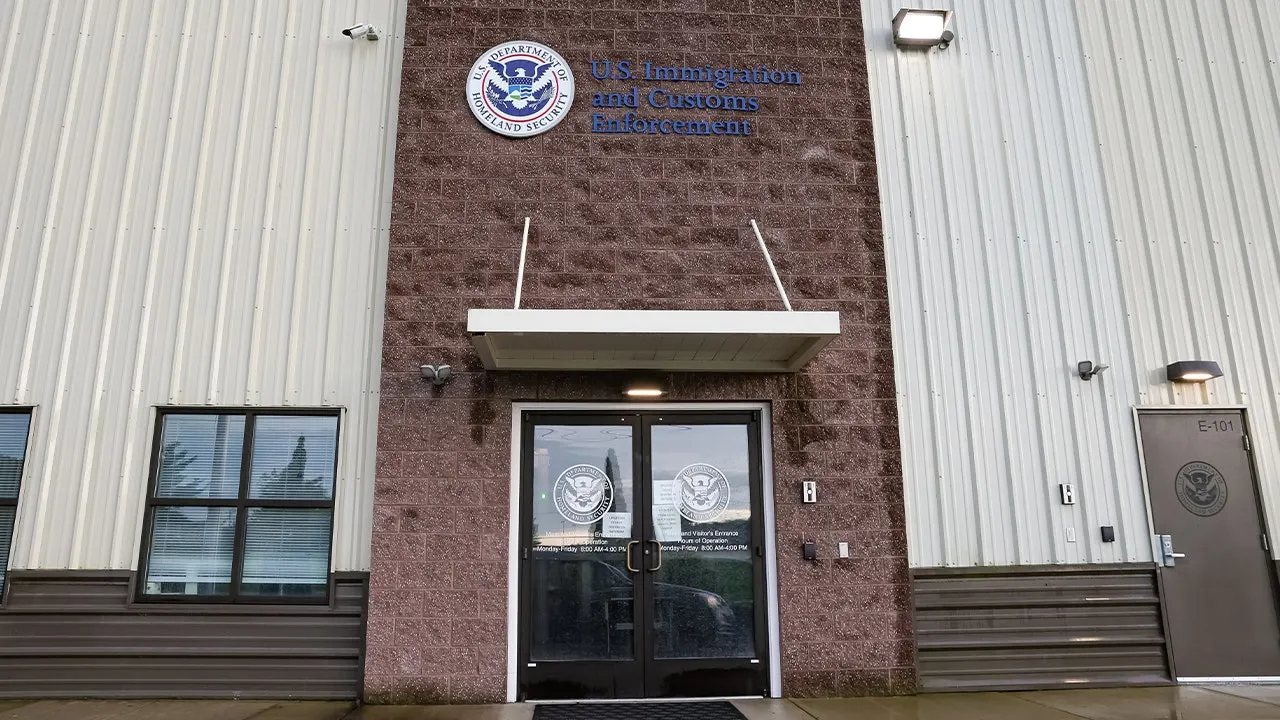
On what began as a completely unremarkable early summer morning on Monday, June 15, 2026, the workers and visitors inside the professional office park at 925 Keynote Circle in Brooklyn Heights, Ohio, were settling into their typical daily routines. For these individuals, a standard start to the workweek usually involved carrying warm travel mugs of freshly brewed coffee, booting up their desktop computer systems, exchanging polite weekend pleasantries, and sorting through an endless mountain of administrative paperwork and casework. The quiet, suburban Cleveland neighborhood, characterized by its beautifully manicured corporate lawns, clean paved pathways, and unassuming low-rise commercial buildings, offered a peaceful backdrop that incredibly rarely commanded national media attention. Yet, nested directly within this quiet office park is a critical facility housing several high-visibility federal operations—most notably, a satellite office of U.S. Immigration and Customs Enforcement (ICE) operating under the broader Detroit Field Office, alongside the Office of the Principal Legal Advisor (OPLA) and Enforcement and Removal Operations (ERO) bond acceptance facilities. While the civil servants stationed here are fully aware that their daily responsibilities involve navigating politically charged and legally complex realms of national security and immigration enforcement, none of them woke up that morning expecting to face an immediate, tangible threat to their very lives. The fragile veneer of daily normalcy was punctured in an instant when unexpected, frantic instructions began echoing down the hallways, ordering everyone to immediately drop their tasks and evacuate. Within minutes, the comfortable hum of administrative productivity was replaced by the cold, biting reality of emergency sirens, as hundreds of ordinary people—many of them parents, spouses, and community members who simply wanted to earn an honest living—were forced out onto the paved parking lots, left to watch in paralyzing confusion as their everyday workplace transformed into a potential disaster zone.
The sudden, terrifying disruption was initiated by a routine, yet incredibly vital, security sweep conducted by the Federal Protective Service (FPS), the agency charged with protecting federal facilities and checking for hidden hazards. During a standard walkthrough of a publicly accessible lobby within the ICE office building, an alert security officer and their highly trained canine partner were performing what initially seemed like a mundane, preventative patrol. However, everything changed in a split second when the K-9 suddenly altered its behavior, locking its focus onto a standard UPS drop box situated inside the building’s common area. This was not a false alarm or a safety drill; the extraordinary sensory capabilities of the working dog had detected the distinct chemical signatures of a live explosive device nestled inside a package. Instantly recognizing the grave significance of the canine’s alert, the handler activated immediate emergency protocols, notifying local law enforcement and initiating a rapid emergency evacuation sequence. The discovery of this hidden weapon of destruction highlighted the quiet, often overlooked heroism of the security personnel and working animals who serve as our first line of defense against tragedy. These brave guardians operate quietly in the background of our everyday lives, standing between innocent citizens and devastating violence, and their keen instincts on this particular Monday morning undoubtedly prevented a senseless, horrific catastrophe from unfolding in the heart of the Ohio suburbs, preserving countless lives before anyone even realized they were in danger.
As the gravity of the situation became apparent, emergency personnel expanded the evacuation zone, forcing at least seven nearby office buildings to empty their occupants onto the surrounding sidewalks. This massive evacuation painted a stark and poignant picture of human vulnerability, drawing together a diverse cross-section of people who found themselves united in shared anxiety. Among the evacuees standing in the warm morning air were not only high-ranking federal agents and legal analysts, but also administrative assistants, janitorial staff, delivery drivers, and private citizens who had simply come to the building to resolve personal legal matters or secure bonds for loved ones. Many of these visitors, who were already navigating the stress of complex immigration proceedings, suddenly found themselves caught in a terrifying security crisis that transcended foreign and domestic policy. As they stood together in the parking lots, watching police cruisers block off the entrances to the complex, a collective sense of fear and uncertainty hung heavily in the air. The ordinary physical structures that had symbolized order, bureaucracy, and public service just moments earlier were suddenly recast as dangerous targets, serving as a sobering reminder of how quickly the coordinates of daily human life can be rewritten by a single act of hostility.
Within minutes of the initial alert, a powerful and highly coordinated emergency response descended upon Brooklyn Heights, quickly transforming the tranquil business park into a bustling command post for federal and local law enforcement. Heavily armed police units, flashing emergency lights, and specialized tactical vehicles rushed to the scene, establishing a secure, wide-reaching perimeter to keep the public as far away from the potential blast radius as possible. Teams from the Federal Bureau of Investigation (FBI) and the Bureau of Alcohol, Tobacco, Firearms and Explosives (ATF) arrived in rapid succession to assist the Federal Protective Service, officially designating the chaotic scene as a “hazardous device incident.” The atmosphere grew incredibly tense as highly trained bomb disposal technicians, clad in heavy, cumbersome protective suits, prepared to face the volatile package directly. This high-stakes operation required an immense degree of physical courage and mental focus, as these specialists used advanced diagnostic technology and remote-controlled robotics to assess, isolate, and carefully neutralize the live explosive device. The sheer bravery exhibited by these technicians, who systematically walked toward an active threat while everyone else was fleeing, emphasized the profound selflessness that defines the emergency response community when faced with active, deadly peril.
Following hours of grueling tension, calculated risk, and precise execution by the explosive ordnance disposal teams, the crisis was finally resolved safely without any detonating blast, loss of life, or physical injuries. Once the live weapon was neutralized and the surrounding facility was thoroughly swept for any secondary hazards, federal authorities officially declared the area safe and issued the long-awaited “all-clear” signal. Relieved but visibly shaken, the employees and visitors were slowly escorted back to the building to reclaim their personal belongings and resume their interrupted workday. Yet, returning to a desk that sat only yards away from a live explosive device is a psychological hurdle that cannot be easily swept away by an official clearance. The emotional aftermath of such an ordeal lingers long after the police tape is taken down, and the incident serves as a poignant reminder of the human cost associated with public service. It highlights the undeniable truth that behind the official bureaucratic titles and controversial political debates surrounding agencies like ICE, ERO, and OPLA are real flesh-and-blood human beings—dedicated professionals who deserve to return home safely to their families at the end of every shift.
With the physical danger successfully mitigated, the focus of the federal apparatus has rapidly transitioned into a rigorous, multifaceted criminal investigation spearheaded by the FBI and the ATF to identify the perpetrator of this attempted attack. Law enforcement investigators are leaving no stone unturned, meticulously analyzing forensic evidence from the recovered device, combing through surveillance footage from surrounding businesses, and pursuing leads to discover who placed the bomb in the UPS box and what their underlying motives were. This deeply unsettling incident does not exist in a vacuum; it echoes a troubling, nationwide escalation in threats, vandalism, and direct hostility targeted toward federal buildings, civic institutions, and the public servants who operate within them. As the community of Brooklyn Heights begins the slow process of healing and moving forward from this collective trauma, the event stands as a powerful testament to the resilience of our communities and the absolute necessity of vigilance. Ultimately, the successful resolution of this terrifying incident is a story of survival, highlighted by the bravery of first responders, the dedication of law enforcement, and a shared hope that justice will be swiftly served to preserve the safety of those who serve the public.