


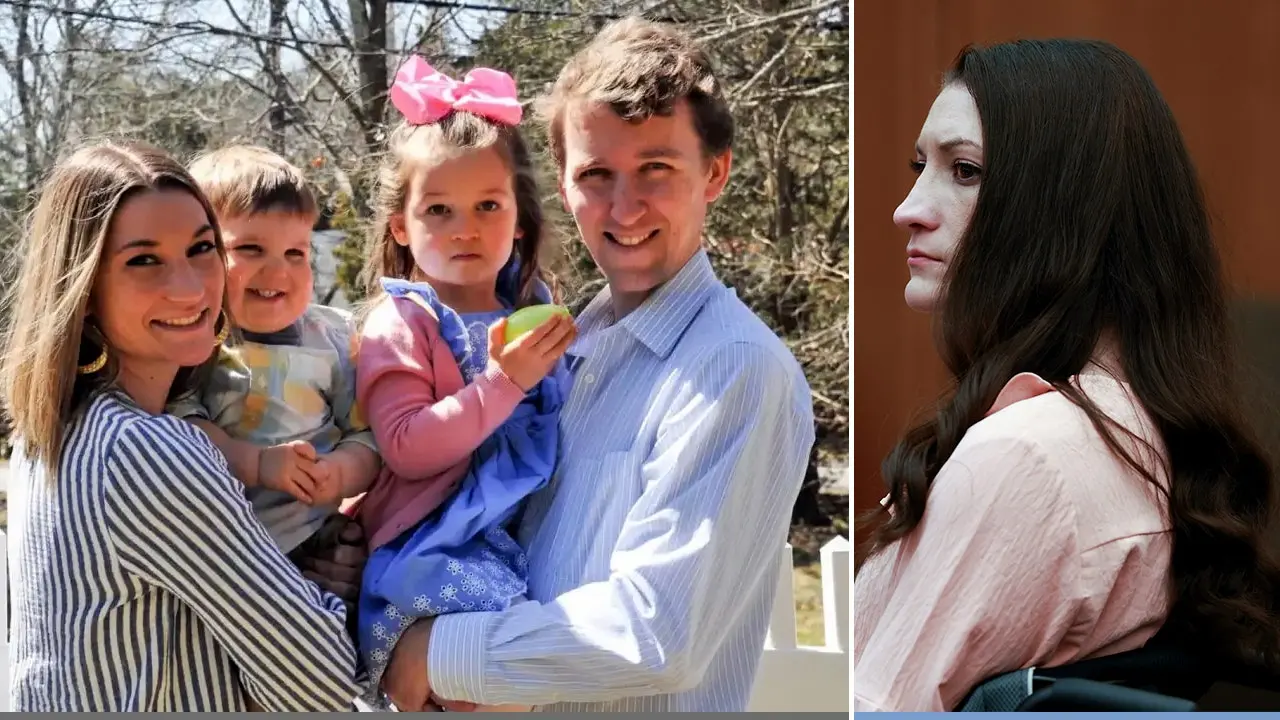
Nearly two years after the world first heard the name Lindsay Clancy, Paula Devlin still carries the weight of that case with her. Devlin, a 65-year-old juror from Whitman, Massachusetts, was one of twelve ordinary people asked to decide the fate of a former labor and delivery nurse accused of the unthinkable: strangling her three young children in their home. The trial ended in a hung jury and a mistrial, but for Devlin, the emotional aftermath has never ended. In an interview with Fox News Digital, she spoke openly about why she has become so vocal, why she believes the jury was unfairly accused of having an agenda, and why she hopes the case will spark a real conversation about women’s mental health after childbirth. “We didn’t know what was going on outside of that room, but we knew that we had a chance to get a conversation started that could change something, that could maybe stop this from ever happening again,” she said. The children were Cora, 5, Dawson, 3, and eight-month-old Callan. They were killed with exercise bands in January 2023. Clancy survived a fall from a second-story window after trying to take her own life and is now paralyzed. Devlin said she believes with her whole heart that if Clancy had been given the help she so desperately needed, those children would still be alive—and that five people would still be a family.
The backdrop of the tragedy is as heartbreaking as it is complicated. Lindsay Clancy was not a woman who ignored her own suffering. According to Devlin, she sought help repeatedly, but the help never came in time. As a nurse who had spent her career caring for mothers and babies, she was familiar with the dangers of postpartum depression and postpartum psychosis. Yet that knowledge did not save her. The case became a flashpoint in a national debate about maternal mental health, criminal responsibility, and the limits of the justice system when confronting mental illness. For Devlin, the facts were clear enough. She said the jury looked at the evidence and saw serious holes in the prosecution’s case. “The whole thing was based on mental health,” she said. When allegations surfaced that the jury had entered the case with a bias or an agenda, Devlin pushed back forcefully. “How can you have bias if only women can go through postpartum depression? Only women can go through postpartum psychosis. Only women can deliver a baby. That’s not biased. That’s just a fact,” she said. Her point was not that the crime was excusable, but that any fair consideration of what happened had to begin with the reality of a mother’s broken mental state.
Devlin’s comments over the weekend drew criticism from those who felt the jury may have been swayed by sympathy rather than the law. She denied that accusation Monday, insisting that the evidence shaped the verdict—or lack of one. In her view, a key flaw in the prosecution’s case was that no one could be found to say anything bad about Lindsay Clancy. “Nobody could find one bad thing to say about this person, and I would bet my house that those prosecutors looked everywhere to find somebody to be derogatory and say derogatory things about Lindsay. And nobody could,” Devlin said. That included the person who knew her most intimately: Patrick Clancy, her ex-husband and the father of the slain children. Even he did not speak ill of her, Devlin noted. That reality, she said, spoke volumes about who Lindsay was before her mind fractured. The prosecution’s task was to prove her guilty beyond a reasonable doubt, but if the people who knew her best could not describe her as a monster, the jurors were left with a far more painful portrait: a woman who loved her children, who was losing herself, and who slipped through every crack in a mental health system that failed her.
What made the case so agonizing for Devlin and her fellow jurors was not just the legal responsibility they carried, but the human weight of it. They were asked to decide whether a mentally ill woman should be held criminally accountable for acts committed in a state of profound psychological breakdown. That question did not admit easy answers. Devlin said she is still haunted by the children’s faces. “Those three little faces and just wondering if we missed something, if we didn’t ask the right questions of each other, if we could have done better—it’s hard not to feel like we failed,” she said. She acknowledged that people have told her the jury did not fail, but that reassurance is hard to accept. “Everybody says we didn’t fail, but it’s hard to not feel that when you’re given a task and you don’t accomplish it,” she said. The phrase “we let down Lindsay” was reportedly echoed by some jurors after the mistrial, and Devlin’s words reflect that lingering sense of anguish. The public may never know what happened inside the deliberation room, but for Devlin, the experience has been a reminder that justice is not always a clean verdict. Sometimes it is a messy, painful acknowledgment that a tragedy had no winners, only broken lives.
The broader conversation the case has ignited is one that Devlin says she hopes will outlast the headlines. She wants no other woman, no other husband, no other family to experience the same devastation. “I hope that no other woman or husband has to go through this,” she said. Her hope is that the story of Lindsay Clancy will push families, doctors, and lawmakers to take postpartum mental illness more seriously—to recognize the signs, to provide real support, and to stop treating maternal mental health as a footnote until it is too late. But not everyone agrees with Devlin’s framing. Some prosecutors and legal experts have argued that postpartum depression and postpartum psychosis are real, but that child killing still demands accountability. They worry that too much empathy for a defendant can obscure the fundamental injustice of a child’s death. That tension is at the heart of the case. Devlin, however, insists that the jury did not ignore the victims. They could not have; the faces of Cora, Dawson, and Callan were never far from their minds. The decision not to render a conviction was not a rejection of the children’s value, but a recognition that the evidence—especially the mental health evidence—was too complex to reduce to simple legal labels.
In the end, Paula Devlin’s reflections are less a legal analysis than a deeply human response to an unimaginable tragedy. She does not claim to have all the answers, and she does not pretend the outcome of the trial was satisfying. But she believes the case has the power to change something if people are willing to listen. “We knew that we had a chance to get a conversation started that could change something, that could maybe stop this from ever happening again,” she said. That is why she has spoken out, even at the cost of public criticism. She knows that some will hear her words and think she is making excuses. But Devlin sees it differently. She is not excusing what happened; she is trying to understand it, and in doing so, to help prevent the next tragedy. The system failed Lindsay Clancy, Devlin believes, and it failed her children. The jury’s inability to reach a verdict was not a triumph, and it was not a failure—it was a mirror held up to a society that too often ignores the cries of mothers in distress. As Devlin continues to live with the haunting memory of three small faces, her hope is that their deaths will not be in vain. If their story can save even one mother, one child, one family, she says, then perhaps the pain of carrying this case will have been worth something after all.