

The Lebanon Crucible: How the Levant’s Undying Conflict Threatens to Unravel the Fragile U.S.-Iran Peace Deal
Shadows Over Switzerland: The Diplomatic Collapse in the Shadow of the Levant
The ink was barely dry on the highly anticipated preliminary diplomatic accord between the United States and the Islamic Republic of Iran when the entire geopolitical architecture, meticulously assembled in the quiet chambers of Swiss diplomacy, threatened to collapse under the weight of regional violence. For the second time in a matter of weeks, the catalyst for this dramatic unraveling was not the uranium enrichment centrifuges of Natanz or the frozen assets of Tehran, but rather the blood-soaked, highly contested terrain of Lebanon. Long dismissed by casual observers of Middle Eastern affairs as a secondary theater—a mere proxy battleground in the broader, decade-long cold war between Washington, Jerusalem, and Tehran—the conflict in Lebanon has rapidly metastasized into the definitive obstacle to resolving the wider crisis. This dramatic shift came into sharp focus on Friday as the fragile silence of diplomatic corridors was shattered by a devastating resurgence of military violence between the Israeli Defense Forces (IDF) and the Iran-backed militant group Hezbollah, prompting an abrupt, unannounced suspension of high-level bilateral talks in Switzerland. While official spokespersons from both the State Department and the Iranian Foreign Ministry maintained a calculated silence regarding the cancellation, senior diplomatic sources speaking on the condition of anonymity confirmed that the Iranian delegation walked away from the negotiating table in direct protest of the punishing Israeli military campaign. According to regional defense analysts, this diplomatic breakdown underscores a fundamental shift in Tehran’s strategic calculus under its recently established leadership. This new guard views the territorial integrity of Lebanon and the preservation of Hezbollah not merely as external foreign policy cards to be played, but as existential pillars of Iran’s own national security architecture. This perspective was forged in the crucible of late 2024, when unprecedented Israeli intelligence and conventional military strikes systematically dismantled Hezbollah’s leadership structure, exposing the Iranian mainland to direct, unshielded confrontation with Israeli military power. Consequently, for the supreme decision-makers in Tehran, any durable settlement with the West is now entirely contingent on a complete, verifiable withdrawal of Israeli forces from Lebanese soil.
              ┌────────────────────────────────────────┐
              │   U.S.-Iran Preliminary Agreement      │
              │   - Demands military stop in Lebanon   │
              │   - Pledges Lebanese sovereignty       │
              └───────────────────┬────────────────────┘
                                  │
                     [Stalemate / No Signatures]
                                  │
         ┌────────────────────────┴────────────────────────┐
         ▼                                                 ▼
┌──────────────────────────┐ ┌──────────────────────────┐
│ Israeli Objectives │ │ Hezbollah/Iran Goals │
│ – Secure Northern Border │ │ – Expel Israeli Forces │
│ – Dismantle Infrastructure│ │ – Secure Southern Border │
│ – Maintain Occupation │ │ – Preserve Arsenal │
└──────────────────────────┘ └──────────────────────────┘
The Geometry of Escalation: How Nabatieh Shattered the Diplomatic Silence
This latest diplomatic rupture represents a grim repetition of a pattern that has plagued international mediators for months, illustrating how local theater-level tactical decisions instantly reverberate into global diplomatic crises. Just weeks prior, a similar diplomatic channel was derailed when Israel launched a series of high-intensity airstrikes targeting the southern suburbs of Beirut, triggering a massive, retaliatory Iranian ballistic missile strike on Israeli population centers, which in turn provoked a wave of precision Israeli counterstrikes deep within Iran’s borders. This cycle of violence is especially jarring given that it occurred just days after American and Iranian negotiators celebrated a breakthrough preliminary agreement. That document explicitly called for the “immediate and permanent termination of military operations” in Lebanon and committed both signatories to safeguarding the sovereign integrity of the Lebanese state. On paper, this language represented a significant diplomatic concession achieved by Iranian negotiators, who have long insisted that their domestic détente with the United States must be structurally linked to the security of their regional allies. However, this diplomatic victory has repeatedly run aground on the reality that the State of Israel, led by Prime Minister Benjamin Netanyahu, was never a party to these bilateral negotiations and has vociferously rejected any terms that would restrict its operational freedom to neutralize Hezbollah. The limits of this diplomacy were laid bare on Friday when the Israeli Ambassador to the United States, Yechiel Leiter, sought to project a cooperative posture by announcing that Israel had committed to a cessation of offensive campaigns in Lebanon to allow the U.S.-Iran framework a chance to survive. Yet, in the very same address, Leiter inserted a significant caveat: Israeli forces would continue active tactical operations in southern Lebanon to systematically dismantle Hezbollah’s military infrastructure and would remain deployed on Lebanese territory until that mission was fully achieved—an assertion that was met with a icy, cautious silence from Hezbollah’s surviving command structure in Beirut.
The Parchment Paradox: Binding Nations That Refuse to Sign
The fundamental crisis of the U.S.-Iran preliminary agreement lies in its structural detachment from the actual combatants on the ground, creating a diplomatic paradox where non-signatories wield absolute veto power over the peace process. While the document purports to dictate the behavior of regional actors through the influence of their respective patrons in Washington and Tehran, neither the Israeli government nor the leadership of Hezbollah has affixed their signatures to the memorandum, leaving both sides devoid of any binding legal mechanism to compel compliance. Consequently, the agreement systematically bypasses the two most radioactive issues at the core of the conflict: the timeline for a full Israeli military withdrawal from Lebanese territory, and the eventual disarmament and relocation of Hezbollah’s missile arsenal. While American diplomats have worked tirelessly to decouple these two theaters—hoping to secure a direct, bilateral understanding with Tehran while treating the Lebanese border war as a separate, manageable security issue—Iran has masterfully inverted this strategy. By treating Israel’s campaign in Lebanon as an active point of leverage, Tehran has successfully transformed the safety of its primary proxy into a prerequisite for any broader containment of its own regional ambitions. This dynamic has sparked deep anxiety within the incoming Trump administration, where the President-elect has reportedly expressed growing concern that Netanyahu’s uncompromising military posture could permanently scuttle a historic diplomatic deal with Tehran. In private communications, the President-elect has reportedly grown increasingly impatient with the Israeli Prime Minister, urging him to wind down active combat operations and pivot toward a stabilizing diplomatic resolution. This pressure appeared to yield temporary results when Israel significantly reduced its near-daily evacuation orders for southern Lebanese municipalities and dialed back the tempo of its airstrikes—until the fragile status quo shattered under Friday’s renewed violence.
| Key Diplomatic Factor | Iranian Position | Israeli Position | U.S. Administration Goal |
|---|---|---|---|
| Lebanese Sovereignty | Insists on immediate and total Israeli withdrawal. | Demands operational freedom of action in Southern Lebanon. | Stabilize the region through a bilateral framework. |
| Hezbollah’s Weaponry | Views the arsenal as vital for deterrence against Israel. | Demands complete disarmament before troop withdrawal. | Support state sovereignty under Lebanese military control. |
| Bilateral Channels | Translates tactical leverage in Lebanon into diplomatic gains. | Bypasses U.S.-Iran channels to pursue military objectives. | Establish a durable containment framework for Tehran. |
The Cost of Defiance: Ground Truths and Tactical Reality in the South
The fragility of diplomatic agreements has always been tested by the realities on the ground, and Friday’s military escalation in southern Lebanon provided a bloody reminder of the disconnect between Swiss conference rooms and the rocky terrain of the Levant. The latest spiral of violence began when Hezbollah fighters engineered a well-coordinated ambush against advancing Israeli ground troops on a strategic ridgeline overlooking Nabatieh, a major urban hub in southern Lebanon. The engagement resulted in the deaths of four Israeli soldiers, according to official military statements, prompting a massive and disproportionate response from the Israeli Air Force. Within hours, Israeli jets carried out more than 150 precision airstrikes across southern and eastern Lebanon, leaving at least 47 people dead and wounding dozens more, according to reports from the Lebanese Ministry of Public Health. This sudden return to high-intensity warfare illustrated the limits of diplomatic influence over entrenched military actors. As retired Israeli Brigadier General Assaf Orion, now a senior fellow at the Washington Institute for Near East Policy, observed, while Iran has successfully leveraged its relationship with Hezbollah to pressure the United States and constrain Israeli unilateralism, it remains entirely premature to declare that this artificial restraint can endure over the long term. This instability is further illustrated by the precedent of the April ceasefire agreement brokered by the Trump administration, which attempted to establish a framework that banned Israeli offensive operations while simultaneously preserving Jerusalem’s right to take “all necessary measures in self-defense.” This broad self-defense clause was quickly utilized by the IDF to justify continued, targeted strikes and, eventually, a renewed expansion of their ground campaign. This history suggests that without direct, binding commitments from the combatants themselves, any parchment agreement signed by distant superpowers remains vulnerable to the first exchange of fire on the ground.
                      ┌────────────────────────┐
                      │  Geopolitical Tension  │
                      └───────────┬────────────┘
                                  │
                 ┌────────────────┴────────────────┐
                 ▼                                 ▼
    ┌──────────────────────────┐      ┌──────────────────────────┐
    │     Israeli Position     │      │     Hezbollah Position   │
    │ - IDF stationed in South │      │ - Rejects disarmament    │
    │ - Largest occupation     │      │ - Leverages arsenal as   │
    │   in over two decades    │      │   defensive necessity    │
    └──────────────────────────┘      └──────────────────────────┘
The Post-Nasrallah Era: Iran’s Direct Hand in the Levantine Resistance
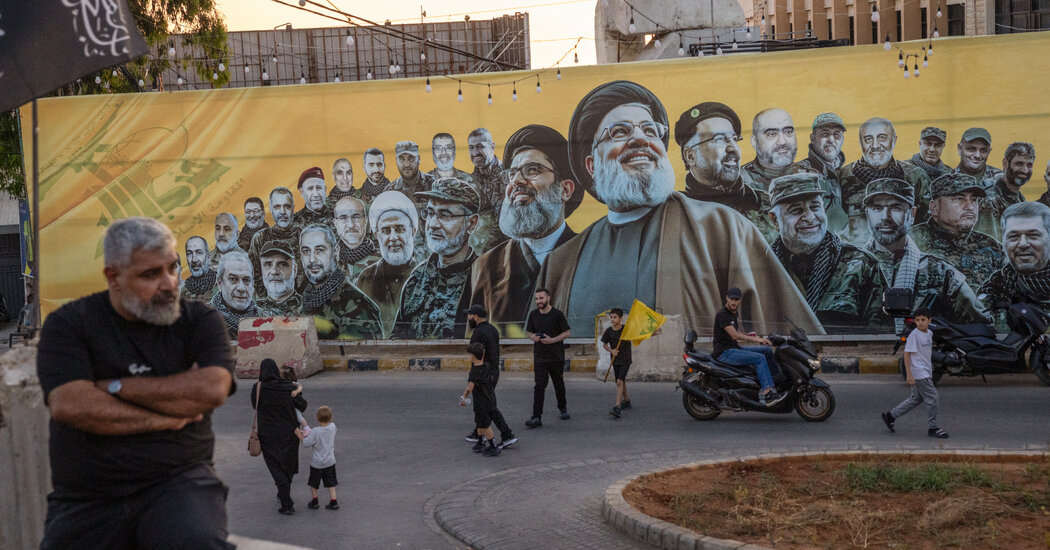
To fully understand the current diplomatic impasse, one must examine the profound structural transformation that occurred within the leadership of Hezbollah following the devastating military campaigns of 2024. The targeted assassination of Hezbollah’s long-serving Secretary-General, Hassan Nasrallah, in a series of massive Israeli airstrikes on his underground bunker in Beirut, did not merely decapitate the organization; it fundamentally altered its relationship with its state patron in Tehran. Previously, under Nasrallah’s charismatic and politically astute leadership, Hezbollah operated with a significant degree of strategic autonomy, often balancing its domestic Lebanese political obligations with its commitments to Iran’s “Axis of Resistance.” In the wake of his death, however, Iran has asserted direct control over the group’s operational command, integrating Hezbollah’s remaining military structure into its own state security apparatus. This direct control was evident when, following a brief ceasefire late last year, the group maintained an uncharacteristic discipline, refusing to retaliate against provocative Israeli strikes until the broader U.S.-Israeli confrontation with Iran began in earnest in late February. According to Lina Khatib, an associate fellow at Chatham House in London, while the preliminary U.S.-Iran agreement may establish temporary conditions for a tactical de-escalation, it remains structurally incapable of addressing the underlying systemic drivers of the conflict. Chief among these unresolved issues is the physical presence of the Israeli military, which remains dug into defensive positions across a wide swath of southern Lebanon. This deployment represents the largest and most sustained Israeli occupation of Lebanese territory in over twenty years, an operation that has devastated historic border communities, pulverized vital agricultural infrastructure, and displaced more than a million Lebanese citizens, creating a humanitarian and political crisis that no government in Beirut can afford to ignore.
The Stalemate of Sovereignty: Dismandling the Incurable Lebanese Dilemma
Ultimately, the prospects for a lasting peace in the Levant are held hostage by an intractable regional standoff where the core demands of both parties are mutually exclusive. The Israeli security establishment has repeatedly stated that it will not consider a withdrawal of its forces from southern Lebanon until Hezbollah is fully disarmed and pushed back beyond the Litani River, in accordance with long-ignored United Nations resolutions. Conversely, Hezbollah points to the ongoing Israeli military presence and daily violations of Lebanese airspace as proof that its extensive rocket and missile arsenal is the nation’s only effective deterrent against foreign aggression. While the weak and politically fractured central government in Beirut has repeatedly promised to extend its state authority and bring all weapons under the exclusive jurisdiction of the Lebanese Armed Forces, it possesses neither the military power to disarm Hezbollah nor the diplomatic leverage to force an Israeli withdrawal. This structural power vacuum ensures that while high-level diplomats from the United States, Lebanon, and Israel prepare to convene in Washington next week for another round of stabilized talks, the fundamental drivers of the conflict remain largely untouched. With Israel signaling that it does not feel bound by any agreements formulated within the U.S.-Iran bilateral channel, and with Tehran treating the fate of Lebanon as an inseparable extension of its own survival, the path toward a durable peace remains incredibly narrow. As the geopolitical maneuvering continues from the halls of Washington to the ministries of Tehran, the tragic reality remains that the sovereign state of Lebanon continues to serve as both the primary battlefield and the ultimate casualty of a broader war that its people did not choose and its government cannot stop.