



A Fractured Front: How Diplomatic Miscalculations and Regional Warfare Upended the US-Iran Peace Initiative
The Fraying Alliance Between Washington and Jerusalem
The historically resilient partnership between the United States and Israel, long considered an unbreakable cornerstone of Middle Eastern geopolitics, has entered an unprecedented era of friction, driven by deep strategic disagreements and intensifying personal animosity between its key leaders. At the center of this widening diplomatic rift is Israeli Prime Minister Benjamin Netanyahu and his most influential international ally, Donald J. Trump, whose once-unshakeable public defense of Israel’s security policies has curdled into open, pointed derision. Trump’s blunt assessments of Israel’s military campaigns have reverberated through the halls of global diplomacy, with the former American president not only accusing Netanyahu of deploying “excessive force” in prosecuting Israel’s regional war aims but also leveling the highly damaging charge that Jerusalem is actively sabotaging sensitive diplomatic initiatives. Specifically, Trump has suggested that Netanyahu’s uncompromising posture is calculated to undermine a delicate, newly proposed nuclear understanding with Tehran, a deal that Trump envisions as a legacy-defining achievement. This public falling out exposes a profound mismatch of national interests: while Netanyahu views the total, unchecked military dismantling of regional adversaries as an existential necessity for Israel’s survival, Trump approaches the perpetual instability of the Middle East through a transactional lens, seeking high-stakes diplomatic grand bargains that can pacify the region and reduce American military commitments abroad. This diverging strategic outlook has created a highly visible public spectacle, signaling to allies and adversaries alike that Washington’s support is no longer unconditional, a vulnerability that has already begun to alter the calculating behavior of hostile regional actors.
The Architecture of the Trump-Pezeshkian Memorandum
Against this backdrop of deteriorating relations between Washington and Jerusalem, the Trump administration attempted a high-stakes diplomatic gamble that stunned close observers of Middle Eastern affairs: the signing of a bilateral memorandum of understanding with the newly elected Iranian President, Masoud Pezeshkian, establishing a tight, highly ambitious sixty-day window to negotiate a long-term peace pact. This complex diplomatic framework was engineered to address some of the most combustible issues in modern goepolitics, focusing primarily on placing verifiable limits on Iran’s advancing nuclear enrichment program in exchange for massive, immediate financial incentives, including the systematic dismantling of Western banking and oil sanctions that have long crippled the Iranian domestic economy. However, the diplomatic architecture of this proposed deal was built on extremely volatile political soil in Tehran, where the ultimate executive authority does not lie with the reformist-minded President Pezeshkian, but with the conservative clerical establishment led by Supreme Leader Ayatollah Mojtaba Khamenei. While Khamenei ultimately gave his reluctant assent to the initial implementation of the memorandum to explore potential financial relief, he took immediate steps to insulate the clerical regime from the political fallout of potential failure. In a stern, televised address, the Supreme Leader publicly distanced himself from the spirit of the initiative, declaring that while he tolerated the administrative steps, he did not fundamentally agree with the deal and placed the entire burden of responsibility squarely on Pezeshkian’s shoulders. Khamenei issued a direct, cautionary warning against bowing to aggressive American demands, signaling that any concessions made during the sixty-day window would be met with fierce institutional resistance from hardliners within the Islamic Revolutionary Guard Corps (IRGC), who view any compromise with the West as a betrayal of the Islamic Republic’s founding revolutionary principles.
The Abrupt Collapse of the Lake Lucerne Summit
The inherent fragility of this diplomatic architecture became painfully apparent when the much-anticipated talks, scheduled to kick off at an exclusive resort on Lake Lucerne in Switzerland, collapsed before the first delegation could even sit down. The alpine retreat, chosen for its absolute discretion, high-level security, and long association with international conflict mediation, was supposed to host high-level delegations from both Washington and Tehran, with American Vice President JD Vance scheduled to lead the United States’ contingent in what was billed as a historic face-to-face encounter capable of de-escalating regional tensions. However, as the Friday morning start time approached, Iranian negotiators abruptly pulled out of the planned meetings, leaving the Swiss mediators holding an empty agenda and throwing the entire diplomatic transition into chaos. The diplomatic fallout from the sudden withdrawal was immediate and deeply disruptive: in Washington, late on Thursday night—which was already early Friday morning in Europe—Vice President Vance abruptly canceled his flights and dismantled his strategic travel plans, signaling a massive operational setback for the administration’s foreign policy team. In the hours following the collapse, a heavy, uneasy silence descended over the established channels of communication, with neither the American State Department, the Iranian Foreign Ministry, nor the various European and Middle Eastern intermediaries offering any public explanation or timeline for when these critical negotiations might be rescheduled. This diplomatic breakdown has left the future of the sixty-day window in complete limbo, raising fears among international observers that the window of opportunity closed before the actual bargain could even be formulated, transforming Lake Lucerne from a symbol of potential breakthroughs into a stark monument of diplomatic failure and deep-seated mutual suspicion.
Deciphering the Strategic Calculations of Tehran
For seasoned analysts of Islamic Republic behavior, the abrupt collapse of the Swiss summit was not an unexpected turn of events, but rather a predictable outcome of a persistent American diplomatic blind spot regarding the true motivations of the Iranian leadership. Dana Stroul, a senior fellow at the Washington Institute for Near East Policy who previously served as the Pentagon’s top policy official for the Middle East, noted that the sudden delay emphasizes a profound, recurring misunderstanding of Iranian decision-making priorities within Western capitals. Western diplomats frequently operate under the rational assumption that economic preservation and sanctions relief are the primary motivational drivers for the Iranian regime, believing that the prospect of saving a battered economy is an incentive powerful enough to force lasting concessions on core ideological and military programs. However, as Stroul explains, for the hardline clerical leadership in Tehran, safeguarding Iran’s ideological purity, preserving its extensive regional network of proxy forces, and maintaining its deterrent posture far outweigh short-term economic stability. Furthermore, the visible, public animosity between the United States and Israel has presented Iran with an irresistible geopolitical opportunity; detecting a deep vulnerability in the alliance, the leadership in Tehran “smells blood in the water” and is intentionally stalling the diplomatic process to exploit these divisions. By dragging out negotiations and walking away from scheduled talks, Iran hopes to stir the diplomatic pot and drive a deeper, permanent wedge between Washington and Jerusalem, secure in the calculated gamble that the international community will ultimately lay the blame for the breakdown of peace on Israel’s aggressive military posturing.
The Crucible of Lebanon and the Cycle of Asymmetric Warfare
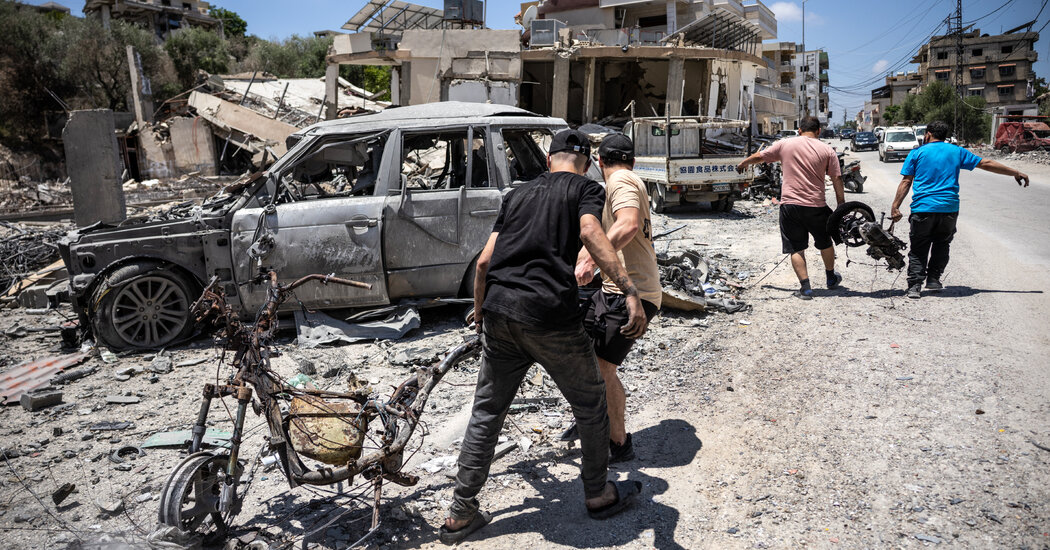
This high-level diplomatic stalemate is unfolding against a backdrop of escalating, catastrophic violence in Lebanon, a theater of war that remains intimately tied to the broader geopolitical rivalry between Israel and Iran. For decades, the conflict along the Blue Line has been characterized by a tragic cycle of asymmetric retaliation, where the Israeli Defense Forces consistently respond with overwhelmingly superior firepower compared to the guerrilla tactics of Hezbollah, leaving Lebanese infrastructure shattered, its economy crippled, and its civilian population bearing the disproportionate brunt of the casualties. The current, highly volatile chapter of this confrontation was ignited on February 28, when joint military actions saw Israel and the United States launch direct airstrikes against military assets inside Iran—the principal financial, logistical, and ideological patron of Hezbollah. In immediate response to this direct strike on its sovereign sponsor, Hezbollah unleashed a massive barrage of rocket, mortar, and suicide drone systems targeting northern Israeli towns and military bases, prompting a swift, devastating response from Jerusalem. Israel responded not merely with defensive counter-battery fire, but with a massive, sustained aerial bombardment campaign coupled with a decisive ground invasion into southern Lebanon, aimed at neutralizing Hezbollah’s launch sites and pushing their forces back beyond the Litani River. This ongoing military campaign has once again turned Lebanon into a primary battleground for regional dominance, demonstrating how efforts to achieve diplomatic settlements in far-off European resorts are constantly undermined by the grim, bloody realities of kinetic warfare on the ground, where every strike invites a more destructive response.
The Perilous Road Ahead for Middle East Diplomacy
As the dust-settling from the canceled talks in Lake Lucerne combines with the ongoing military campaigns in Lebanon, the outlook for diplomatic stability in the Middle East remains incredibly grim, with no viable paths toward de-escalation currently in sight. The collapse of the Swiss negotiations highlights a larger, structural crisis in contemporary international diplomacy, where the traditional tools of statecraft—peace memoranda, economic incentives, and high-level summits—are proving increasingly ineffective against deeply entrenched ideological dogmas and localized security dilemmas. The current crisis is a stark reminder that in the absence of a unified, coherent strategy between the United States and its regional allies, particularly Israel, adversaries like Iran will continue to exploit these strategic fissures to their own advantage, keeping the region in a state of perpetual, low-intensity conflict that threatens global energy corridors and international security. To break this destructive cycle, future diplomatic efforts must move beyond superficial, transactional frameworks that ignore the complex, underlying ideological drivers of the Iranian regime and the legitimate, deeply felt security anxieties of the Israeli state. For now, with the 60-day negotiation window rapidly closing and the sound of artillery fire echoing across the borders of Lebanon and Israel, the world is left to watch whether leaders in Washington, Jerusalem, and Tehran can find a way to step back from the precipice, or whether the region is destined to slide further into a wider, more devastating conflict that no single diplomatic memorandum can hope to contain.