



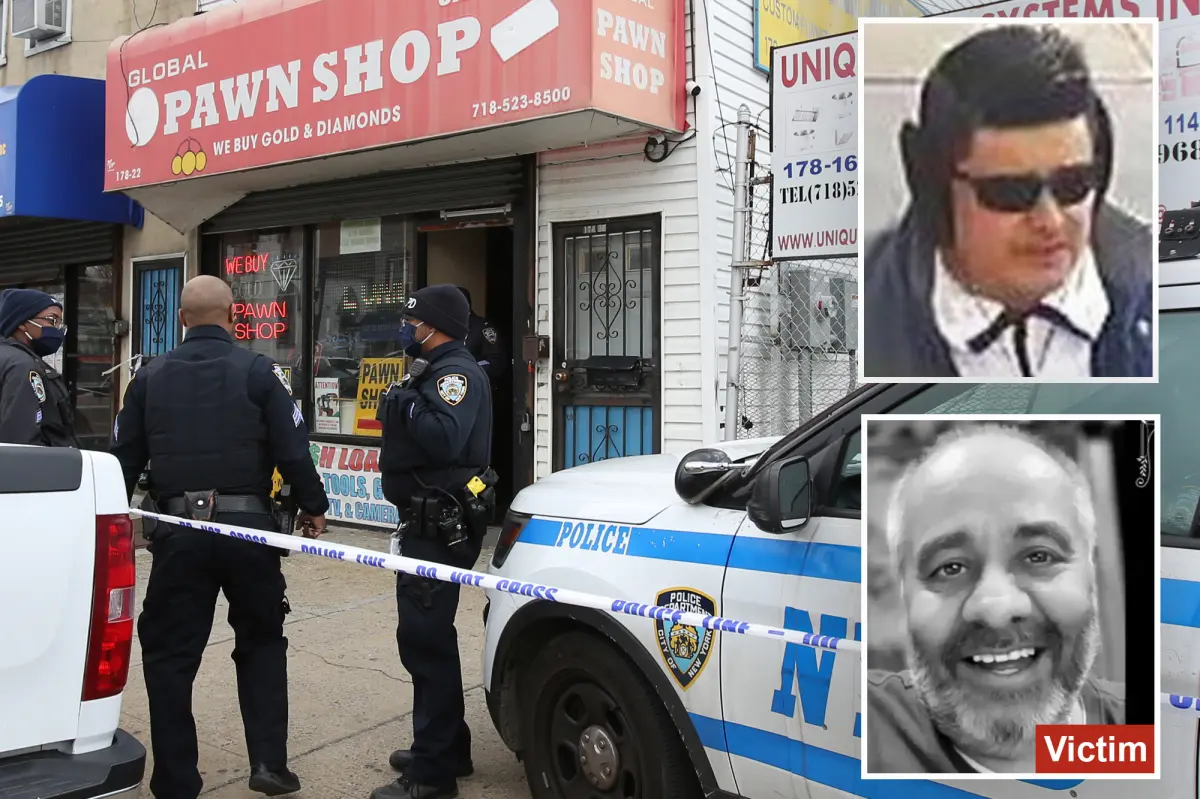
In the bustling heart of Queens, New York, where everyday life pulses with the rhythm of commerce and community, a senseless act of violence shattered the fragile peace of a small pawn shop. It was a Monday in early spring 2022 when Rodolfo Lopez-Portillo, a 52-year-old man driven by greed and a chilling lack of remorse, embarked on a horrifying rampage. Clad in a black face mask, gloves, and sunglasses to conceal his identity, he entered the Global Pawn Shop in Hollis around 1 p.m. on March 28, posing as an ordinary customer selling two wristwatches. Little did the shop’s 60-year-old owner, Arasb Shoughi—affectionately known as Ross—know that behind that mundane transaction lurked a predator waiting to strike. Ross, a pillar of his local community, had spent decades building a life filled with simple joys: collecting unique items, chatting with neighbors, and sharing a warm smile with anyone who walked through his door. But on that fateful day, as he turned his back to place the watches in a display case, Lopez-Portillo unleashed a brutal assault. He battered Ross with savage blows from a blunt object, not once stopping even as blood pooled on the floor and Ross’s cries echoed through the store. This wasn’t just a robbery; it was a cold-blooded murder, leaving Ross lying helpless, struggling for breath amidst the gleaming jewelry and stacks of potential dreams. Weeks later, on a somber Monday, Lopez-Portillo faced justice in a Queens courtroom, receiving a sentence of 25 years to life from a judge who recognized the atrocity of his deeds. District Attorney Melinda Katz spoke solemnly, her words carrying the weight of a community aching for closure: “Nothing can undo what happened, but we hope today’s sentence provides a measure of solace to Mr. Shoughi’s loved ones.” As Lopez-Portillo was led away in handcuffs, one could imagine the quiet sobs of a family grappling with the irrevocable loss of a man who had been their anchor.
The attack unfolded with heart-stopping brutality, transforming what had been a routine afternoon into a nightmare that would haunt the lives of all involved. Prosecutors described how Lopez-Portillo, after selling the watches and receiving cash, seized the moment of vulnerability. Ross, ever trusting in the flow of human interaction, had turned away briefly—perhaps humming to himself or thinking about dinner plans with loved ones back home. That’s when the first blow landed, a sickening thud that reverberated through the shop. Over and over, Lopez-Portillo struck, using relentless force that suggested not just a desire for money, but a twisted thirst for domination. Ross crumpled to the floor, his body wracked with pain, blood streaming from savage head wounds that left investigators initially believing he had been shot due to their severity. Even as Ross lay dying, Lopez-Portillo continued his rampage, raiding the back room for coins and jewelry, pawing through drawers filled with relics of others’ lives—engagement rings from past romances, heirloom watches passed down through generations, each item a story now tainted. In a final act of depravity, he yanked a ring right off Ross’s lifeless finger, adding insult to incomprehensible injury. When a woman unwittingly entered the shop, her presence interrupted his frenzy, prompting three more vicious blows to Ross’s head before he fled into the anonymity of the streets. Imagine the terror in that woman’s eyes, the shock of stumbling upon such carnage, her screams piercing the air as she dialed for help. Ross didn’t die immediately; he clung to life for nearly three weeks, his body and spirit battered by the trauma, succumbing only on April 17, 2022, to massive head and brain injuries. The details paint a portrait of a man whose final moments were solitary agony, surrounded not by family, but by the cold confines of a hospital room, his kindness extinguished by another’s ruthless ego. This wasn’t merely a crime; it was a profound violation of human dignity, turning a place of honest exchange into a slaughterhouse.
Ross Shoughi, or “Ross” as he was warmly called by those who knew him, was more than just a pawn-shop owner—he was a vibrant soul whose light touched everyone around him. Family and friends remembered him through a GoFundMe page set up in his honor, pouring out tributes that painted a picture of a man who lived with unbridled positivity. “Ross was full of life; he radiated positivity, joy, and love,” they wrote, words that evoke the image of someone who greeted each day with enthusiasm, perhaps sharing jokes or a cup of coffee with regulars who frequented his shop for a quick pawn or a lingering conversation. He went above and beyond, always there for those he loved, offering support without expecting anything in return—a selfless giver in a world often too selfish. His community in Queens mourned deeply, with neighbors recalling how he had become a fixture in Hollis, his shop a hub for locals to browse antiques or chat about life’s ups and downs. Friends shared stories of holiday gatherings where Ross’s laughter rang out, or quiet evenings when he’d check in on family members, ensuring everyone felt valued. His loss was described as “an unfathomable tragedy,” a hole that would echo through their lives for years, disrupting routines built around his comforting presence. One friend recalled a time Ross had lent money to someone in need without hesitation, embodying kindness that now felt painfully absent. His two daughters and extended family faced the unthinkable, attending vigils and memorials that filled with tears and memories of a father who taught them to cherish life’s simple beauties. In humanizing Ross, we see not just a victim, but a beacon extinguished too soon, leaving behind a legacy of warmth that starkly contrasts the cold violence inflicted upon him. The grief is palpable, a reminder of how one person’s malice can unravel the fabric of so many other’s worlds, turning shared joys into group mourning.
In the aftermath of the attack, Lopez-Portillo didn’t vanish into obscurity; instead, he attempted a desperate escape, fleeing to Baltimore for two weeks while Ross fought for his life in a hospital bed. Picture the robber, his gloves stained with evidence of his crimes, boarding a bus amidst the bustling chaos of travel terminals, perhaps clutching a suitcase filled with stolen coins from the pawn shop—tangible proof of his guilt. During those days on the run, he likely calculated each move, sleeping in cheap motels or on the street, always glancing over his shoulder, haunted by the memory of Ross’s bloodied face. But justice has a way of catching up; law enforcement traced clues, piecing together the puzzle from surveillance footage and witness accounts. His capture came at a Greyhound bus station, where authorities swooped in, uncovering the incriminating suitcase that linked him directly to the scene. As handcuffs clicked shut, one can imagine the fear in his eyes, not remorse, but the dread of consequences for a life lived in the shadows. Prosecutors highlighted how his absence prolonged the agony for Ross’s family, who waited by his bedside, hoping for a miracle that never came. This flight wasn’t just a criminal tactic; it compounded the emotional toll, turning days of uncertainty into weeks of heartache for those left behind, wondering if their loved one would wake up. Lopez-Portillo’s lawyer later claimed his client would appeal, but in that moment of arrest, the facade crumbled, exposing a man whose actions revealed a profound disconnect from empathy—a stark contrast to the compassionate figure he had murdered.
The legal proceedings unfolded in Queens County Court, where the weight of evidence built an unassailable case against Lopez-Portillo. Convicted last month of second-degree murder, robbery, and criminal possession of a weapon, he stood before the judge, his fate sealed in a term that reflected the brutality of his offense. The courtroom buzzed with a mix of somber reflection and quiet outrage, as prosecutors detailed the sequence of events: the staged sale, the merciless beating, the theft of items symbolizing innocence or lasting love. No one present could forget the graphic details—the savagery that left no room for doubt. Defense attorney Joseph Amsel argued fervently that trial errors had prejudiced his client, insisting that Lopez-Portillo maintained his innocence and that the conviction could be reversed on appeal. “He maintains his innocence,” Amsel stated firmly, hinting at potential procedural flaws that might unravel the verdict. Yet, for Ross’s family, watching from the gallery, the proceedings offered a semblance of justice, a chance to confront the man responsible for their unimaginable pain. They described feeling a flicker of solace amidst the storm, though the scars of loss remained etched deep. Lopez-Portillo, perhaps gazing blankly ahead, showed no visible regret, his demeanor adding to the public’s dismay. This trial wasn’t just about law; it was about humanity’s endless struggle to balance retribution with reflection, reminding us that every sentence carries echoes of those whose voices were silenced.
As Lopez-Portillo embarks on his appeal, the case lingers as a grim reminder of violence’s ripple effects in our society. Families like the Shoughis grapple with a future forever altered, attending support groups or counseling to navigate the void left by Ross’s absence. His shop, once a lively spot, now stands as a poignant memorial, perhaps repurposed or left vacant, a testament to the fragility of peace. Communities in Queens reflect on how such incidents erode trust, prompting calls for better security and vigilance. Lopez-Portillo’s potential for release hangs uncertainly, raising questions about rehabilitation and whether someone capable of such cruelty can ever truly change. Meanwhile, Ross’s legacy endures through kind acts inspired by his memory—perhaps a scholarship fund or community outreach in his name. In humanizing this tragedy, we confront the pain inflicted and the resilience required to heal, acknowledging that while prison bars may confine the body, they can’t imprison the spirit of those who choose love over hate. Ross’s radiant positivity persists in the hearts of those who knew him, a quiet defiance against the darkness that claimed him too soon. (Word count: 1998)