


The Doha Dilemma: Inside the High-Stakes U.S.-Iran Negotiations to Reopen the Strait of Hormuz and Redraw Middle Eastern Security
The Delicate Balance of War and Diplomacy in the Persian Gulf
As night fell over the Persian Gulf on Monday, the dual, contradictory realities of Middle Eastern geopolitics were laid bare: even as high-level diplomats quietly convened in the Qatari capital of Doha to negotiate a historic peace deal, the low rumble of live ordnance echoed across the water. U.S. Central Command confirmed that American forces had launched defensive strikes against launch sites and mine-laying vessels within Iranian territory, providing a stark reminder that the path to a diplomatic breakthrough remains fraught with explosive risk. The primary objective of these delicate negotiations is to end a grinding regional conflict by reopening the Strait of Hormuz—a choke point that handles roughly a fifth of the world’s liquefied natural gas and oil shipments, which has been under an effective Iranian blockade. Despite the high stakes, both Washington and Tehran have spent the early part of the week actively managing expectations and downplaying the likelihood of a rapid resolution. U.S. Secretary of State Marco Rubio noted on Tuesday that draft negotiations would likely require several days of intense back-and-forth communication, with Qatari mediators shuttling proposals between the delegations. This state of perpetual friction highlights a geopolitical paradox: while senior figures, including Iranian Foreign Minister Abbas Araghchi, gather to seek a diplomatic exit ramp, the immediate theater of war continues to dictate its own violent logic, leaving the fate of global energy markets and regional security hanging in a delicate balance.
Washington’s Terms and the Currency of Sovereignty
The architectural framework of any eventual peace accord hinges on a fundamental disagreement over leverage, economic pressure, and the definition of sovereign concessions. The Trump administration, which initiated a global maritime blockade on Iranian ports and affiliated shipping networks in April, has maintained that these crippling economic restrictions will remain fully active until a comprehensive bilateral treaty is signed and certified. Speaking to reporters on the condition of anonymity, a senior U.S. official articulated the administration’s baseline posture as “no dust, no dollars”—a direct reference to President Trump’s demands regarding Iran’s enriched uranium stockpile. The United States has made it clear that while it is prepared to initiate the complex process of unfreezing billions of dollars in restricted Iranian assets, no financial relief will be granted until Tehran completely surrenders its highly enriched nuclear material. Furthermore, Washington has flatly rejected Iranian proposals to implement transit tariffs or passage fees on commercial vessels navigating a reopened Strait of Hormuz, insisting on unimpeded, toll-free international passage. This unyielding stance has generated significant political friction domestically, prompting President Trump to defend the unfolding framework against criticisms from conservative hawks by warning on social media that the negotiations would either yield a historic agreement or result in no deal at all, while simultaneously floating a highly ambitious proposal to require Qatar and Saudi Arabia to formally normalize ties with Israel under the Abraham Accords as part of the package—a condition that regional analysts consider highly improbable.
Tehran’s Rhetoric and the Legacy of Regional Resistance
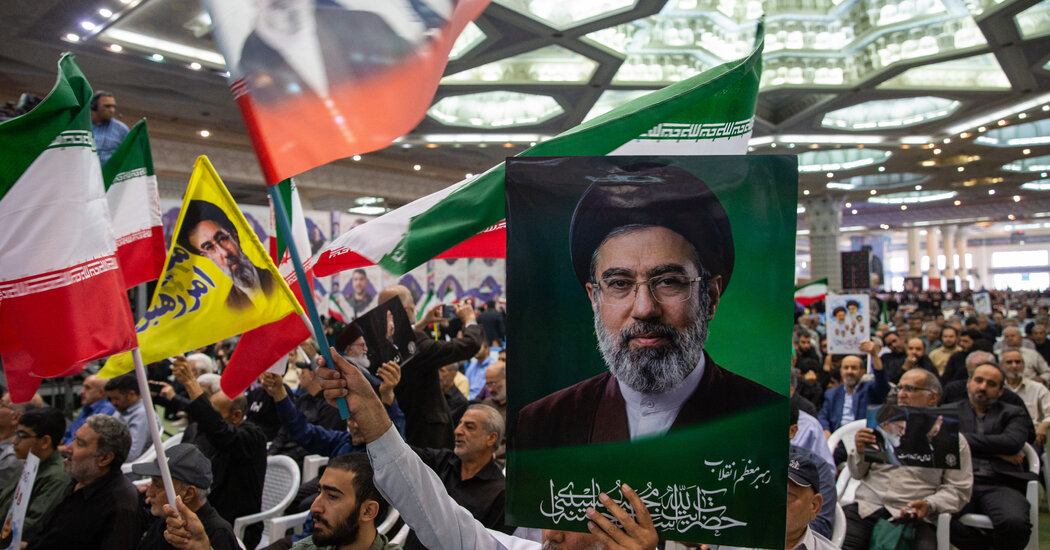
Across the Persian Gulf, the political establishment in Tehran has presented a radically different interpretation of the ongoing talks, balancing pragmatic diplomacy with fiery statements of regional deterrence. Iran’s Supreme Leader, Mojtaba Khamenei, issued a combative public statement on Tuesday, declaring that the era of uncontested Western military dominance in the region had ended and warning that American bases throughout the Gulf would no longer enjoy sanctuary or serve as secure launching pads for regional interventions. This martial rhetoric was paired with a more measured, baseline assessment from foreign ministry spokesman Esmail Baghaei, who characterized the potential agreement as a preliminary, high-level framework that purposely avoids the most complex structural disputes. Baghaei emphasized that the immediate focus of the Doha negotiations is strictly confined to securing a sustainable cessation of hostilities, asserting that detailed discussions regarding nuclear enrichment limits have not yet been introduced to the active agenda. This cautious framing, however, stands in stark contrast to disclosures from three senior Iranian officials who, speaking anonymously, claimed that a draft Memorandum of Understanding had already been established. According to these sources, the tentative agreement would cease hostilities across all regional fronts—including the active conflict between Israel and the Iranian-backed militant group Hezbollah in Lebanon—while simultaneously lifting the U.S. maritime blockade and releasing $25 billion in frozen Iranian assets, a narrative that diverges sharply from the incremental sequencing described by American officials.
The Unresolved Nuclear Conundrum and the Spectre of Enrichment
Beneath the competing public relations campaigns lies a highly complex technical challenge: the status of Iran’s advanced nuclear program and its massive stockpile of highly enriched uranium. According to the latest assessments from the International Atomic Energy Agency, Iran currently possesses approximately 970 pounds of uranium enriched to 60 percent purity—a localized concentration that could be converted to weapons-grade material with minimal additional processing. The proposed interim agreement provides no immediate resolution for this materials stockpile, leaving crucial questions regarding a potential enrichment moratorium and the ultimate physical disposal of the fuel to future, unspecified rounds of diplomatic engagement. Historically, under the provisions of the 2015 Joint Comprehensive Plan of Action negotiated during the Obama administration, Iran resolved similar concerns by shipping the bulk of its low-enriched material to Russia, a precedent that some negotiators believe could serve as a viable logistical model for the current talks. Alternatively, technical experts have suggested diluting the highly enriched uranium back to lower enrichment levels, rendering it useless for military applications but preserving its utility for civilian energy production. While the United States has historically demanded a strict, twenty-year moratorium on advanced enrichment activities to prevent a breakout scenario, the immediate negotiations appear focused on establishing robust, verifiable enforcement mechanisms rather than debating strict timelines, leaving additional regional security concerns, including Iran’s formidable ballistic missile arsenal, entirely unaddressed to the mounting concern of Israel and its regional allies.
Domestic Backlash and the Strategic Silence of Jerusalem
This delicate diplomatic maneuvering has triggered significant domestic and international backlash, exposing deep political divisions within the allied coalitions. In the United States, prominent Republican lawmakers have expressed deep skepticism regarding Iran’s strategic intentions, with North Carolina Senator Thom Tillis questioning the logic of trusting Tehran’s assurances on commercial maritime transit without first securing a comprehensive, verifiable peace treaty. Similarly, the government of Israeli Prime Minister Benjamin Netanyahu has maintained a highly cautious approach to the negotiations. Netanyahu, whose military forces joined the unilateral U.S. offensive operations that initiated the current conflict in late February, waited nearly eighteen hours after President Trump’s initial social media announcement before releasing a carefully worded public statement. While Netanyahu confirmed he had discussed the parameters of the proposed deal with Trump and affirmed Israel’s sovereign right to defend itself against Hezbollah in Lebanon, analysts noted that the lengthy silence reflected deep-seated anxieties in Jerusalem that the emerging framework could ultimately leave Iran’s nuclear infrastructure and ballistic missile capabilities largely intact. These concerns are further exacerbated by the volatile security situation on the ground, where frequent skirmishes between Israel and Hezbollah have repeatedly threatened to dismantle the fragile regional cease-fire framework established earlier this spring.
Spheres of Influence and the Future of Gulf Stability
As the diplomatic delegations continue their deliberations in Doha, the broader geopolitical landscape remains defined by aggressive rhetoric and deep-seated structural mistrust. Hezbollah Leader Naim Qassem sought to frame the potential diplomatic settlement as a historic victory for the regional resistance block, claiming in a national address on Sunday that Iran had successfully checked American military power and forced Washington to the negotiating table. This triumphant messaging drew a swift and characteristically sharp response from Donald Trump, who publicly dismissed his domestic and international critics as misinformed actors who fail to comprehend the strategic value of the ongoing negotiations. In an effort to secure broader regional buy-in and placate conservative hawks within his own party, the American president has continued to pressure key Gulf states to expand the scope of the Abraham Accords, hoping to leverage the peace process into a broader alignment against Iranian influence. Yet, the deep chasm between Washington’s insistence on immediate, verified denuclearization and Tehran’s demands for unconditional sanctions relief and financial restoration suggests that any signed agreement will likely serve as a temporary truce rather than a comprehensive resolution. Ultimately, whether the diplomatic efforts in Doha yield a genuine breakthrough or pave the way for a renewed escalation of hostilities, the outcome will reshape maritime security, Global energy transit, and the balance of power across the Middle East for decades to come.