

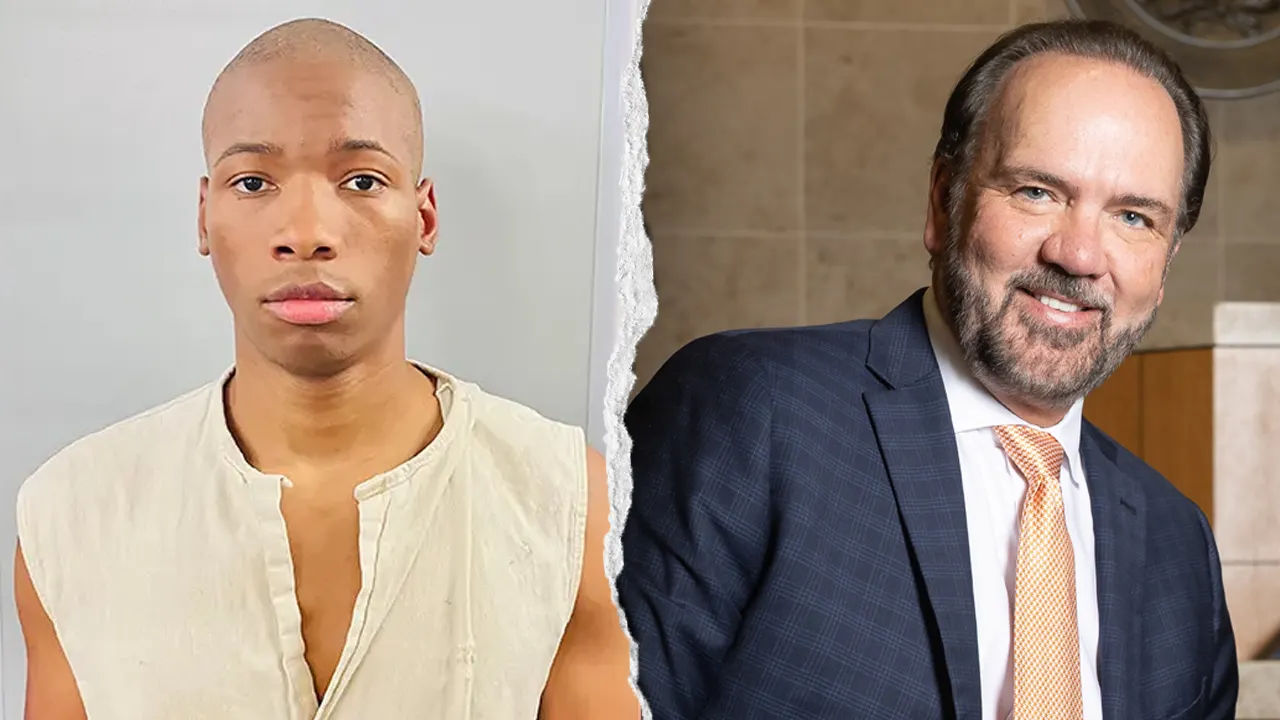
The battle over Karmelo Anthony’s future has entered a high-stakes legal arena, as the 19-year-old’s newly appointed defense team launches a fierce campaign to dismantle his murder conviction. Anthony was sentenced to 35 years in prison for the fatal stabbing of 17-year-old Austin Metcalf during a chaotic altercation at a Frisco track meet. Now, led by prominent attorney Russell Wilson—who has taken on the appeals process pro bono—the defense is shifting the spotlight away from the tragic events of that day and onto the justice system itself. In a pair of newly filed post-conviction motions, Anthony’s attorneys are demanding a brand-new trial, painting a picture of a courtroom plagued by systemic errors, constitutional overreach, and a judge who they argue has compromised his own impartiality.
At the heart of this legal firestorm is Collin County Judge John Roach, the man who presided over the original trial and whom the defense is now trying to force off the case. The defense team has filed a verified motion demanding Roach’s recusal from all upcoming post-trial proceedings, arguing that his public behavior has made a fair assessment impossible. Their grievance stems from comments Roach made to reporters after the verdict, where he openly declared that the jury “got it right.” Defending his own trial management—including his controversial decision to dismiss three Black prospective jurors and his tight restrictions on public access—the judge essentially locked in his perspective. The defense argues that by publicly taking a victory lap, Roach has shown he cannot objectively rule on whether his own courtroom was the site of legal and constitutional errors. Under Texas law, Roach must now refer this recusal motion to a regional administrative judge, who will determine if a formal hearing is required to address his alleged bias.
Simultaneously, the defense has unleashed a massive, 63-page motion for a new trial that prioritizes constitutional integrity over the dispute of physical evidence. Rather than re-litigating the physical confrontation between Anthony and Metcalf, this document focuses on the trial’s atmosphere, arguing that Anthony’s Sixth Amendment right to a public trial was systematically violated. The motion details how cameras were completely barred from the courtroom and public seating was severely restricted to just 27 spots. This degree of shielding, the defense argues, turned what should have been an open, transparent civic process into a closed-door proceeding. Though Judge Roach previously defended these limitations as necessary measures to protect the integrity of the judicial process, witnesses, and jurors, the defense maintains that the extreme lack of access crossed a constitutional line, robbing a young defendant of the public oversight guaranteed to every American citizen.
Beyond the physical limitations of the courtroom, the motion alleges that backroom prosecution tactics put Anthony at an unfair disadvantage during his defense. The attorneys claim that prosecutors broke an off-the-record evidentiary agreement concerning character and past acts. According to the defense, this broken promise forced Anthony into an agonizing dilemma: testify in his own defense and risk exposure to highly prejudicial and unrelated information, or remain silent and lose the chance to tell his side of the story. Additionally, the defense takes aim at the instructions given to the jury, arguing they were written in a way that made it unnecessarily difficult for jurors to understand and fully consider Anthony’s claims of self-defense. By compounding emotional pressure, faulty instructions, and broken agreements, the defense argues the court effectively stripped Anthony of his ability to mount a robust defense.
This escalating legal warfare is playing out against a backdrop of deep human suffering and intense media scrutiny. The case has polarized onlookers and drawn commentary from national figures like Stephen A. Smith, whose provocative remarks sparked intense public debate. Amid this noise, Austin Metcalf’s family has had to endure the unimaginable pain of losing a child while navigating a media circus. Metcalf’s father has publicly condemned pundits and commentators for attempting to monetize his son’s tragic death “for clicks,” pointing to the immense financial strain and security threats his family has faced as fundraising efforts surrounding the case draw intense scrutiny. For the Metcalf family, the legal maneuvers represent a painful reopening of wounds that have barely begun to heal, while for Anthony’s supporters, the motions represent a vital fight against what they see as a compromised rush to judgment.
As the state of Texas prepares to respond to these filings, the case stands as a sobering reminder of the complex, human toll of the American justice system. What began as a tragic, fleeting confrontation between two teenage boys at a track meet has ballooned into a multi-layered legal battle over judicial ethics, constitutional rights, and systemic transparency. With Russell Wilson’s office currently keeping quiet and Judge Roach’s future involvement in limbo, the legal community and the public alike are waiting to see if a higher administrative court will intervene. Ultimately, these motions represent more than just standard legal posturing; they are a profound challenge to the fairness of the trial that sealed Karmelo Anthony’s fate, ensuring that the search for justice in the death of Austin Metcalf remains as contentious and painful as ever.