


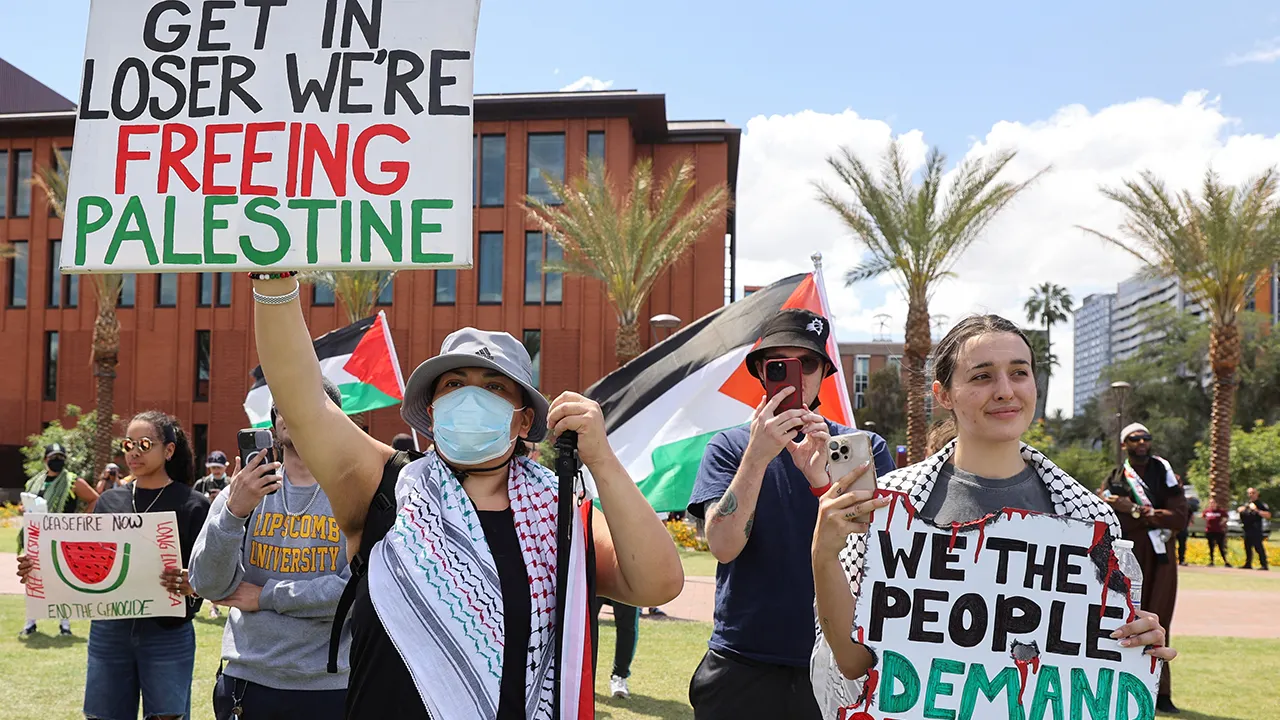
In the contemporary landscape of American higher education, the college campus has transformed from a quiet, idyllic sanctuary of scholarly pursuit into an intense, highly charged battleground of cultural, social, and political debate. At the absolute heart of this unfolding national narrative is Arizona State University (ASU), one of the largest and most prominent public universities in the United States, which now finds itself at the epicenter of a high-profile federal civil rights storm. On Wednesday, the U.S. Department of Justice’s Civil Rights Division made the dramatic announcement that it has officially launched a formal, comprehensive investigation into the university’s diversity, equity, and inclusion (DEI) practices. Interestingly, this aggressive federal intervention was not catalyzed by traditional academic reports, faculty grievances, or routine administrative audits, but rather by the modern-day currency of public awareness: raw, candid viral videos filmed on campus that rapidly spread across social media. These recordings, which quickly captured the attention of millions of viewers online, depicted interactions suggesting that some students were being systematically denied equal treatment and critical educational resources based on their race, color, or national origin. By bypassing traditional administrative channels and speaking directly to the digital public square, these snippets of recorded reality forced federal authorities to step in, shifting the academic debate over systemic equity into a sharp, deeply human inquiry into whether a massive public institution has failed to protect its vulnerable students from unlawful discrimination.
The profound gravity of this Department of Justice investigation is underscored by the uncompromising, protective legal framework that governs public education in America, particularly for institutions that rely heavily on federal financial assistance. Assistant Attorney General Harmeet K. Dhillon, representing the Justice Department’s Civil Rights Division, made the federal government’s position abundantly clear, stating with moral clarity that no student should ever be denied access to life-changing opportunities or essential resources due to immutable characteristics like race, color, or national origin. The core of the federal government’s argument rests upon a fundamental, sacred civic covenant: public universities that welcome massive amounts of federal taxpayer funding are legally, ethically, and constitutionally obligated to open their doors to all students on an absolutely equal basis. What elevates this specific investigation from a typical administrative policy dispute into a matter of profound institutional integrity is the DOJ’s blunt and troubling accusation that ASU’s administration actively attempted to conceal its discriminatory practices from federal oversight in order to evade legal accountability. This allegation of systemic evasion cuts deeply at the heart of public trust, suggesting that the university was operating a dual system—maintaining a polished, compliant facade of legal adherence for federal regulators while implementing exclusionary and restricted practices behind closed doors, a maneuver that Assistant Attorney General Dhillon warned the federal government would not tolerate under any circumstances.
For the thousands of diverse students traversing the sun-drenched plazas of ASU’s sprawling campuses, this federal investigation is far more than an abstract, technical dispute over federal statutes or political talking points; it strikes at the very core of their daily academic survival, personal aspirations, and sense of belonging. The Civil Rights Division’s probe is set to meticulously dissect how ASU’s DEI policies impact the basic, everyday pillars of the student experience, including admissions, recruitment, competitive scholarship allocations, access to critical tutoring services, and general educational support. In the real world, these university programs are the vital lifelines that determine whether an aspiring student can afford their tuition, pass a daunting gateway course, or successfully transition into a competitive professional career. When access to these programs is perceived to be managed or gatekept by racial or demographic criteria, the human cost is incredibly high, breeding deep-seated feelings of exclusion, cognitive dissonance, and anxiety among students who feel they are being judged by their background rather than their character, intellect, and hard work. The investigation attempts to address this tragic irony of modern campus life, where initiatives originally championed under the well-meaning banner of inclusivity and warmth may have inadvertently created new, rigid classifications of division, leaving young students feeling profoundly isolated by the very institutional mechanisms designed to support them.
On the other side of this federal spotlight stands Arizona State University, a colossal educational institution tasked with managing over a hundred thousand active students while navigating an increasingly complex and hostile state and federal legal landscape. In immediate response to the DOJ’s public announcement, an ASU spokesperson firmly and defensively asserted that the university complies fully with all applicable federal laws and does not practice or tolerate discrimination of any kind in its admissions processes or auxiliary educational programs. To fully understand the university’s institutional perspective, one must look at the unique legal tightrope that ASU has been forced to walk for over a decade; since 2010, the university has operated under a strict Arizona state constitutional amendment, Proposition 107, which explicitly prohibits public educational institutions from granting preferential treatment or discriminating against any individual on the basis of race, sex, color, ethnicity, or national origin in public education. ASU administrators argue that they have spent years carefully balancing the state’s stringent colorblind mandate with the need to foster a supportive, accommodating environment for their vast and incredibly diverse student body. From their perspective, the university has acted in good faith to serve all Arizonans, making the sudden, high-profile federal accusation of bad actor status and deceptive evasion of accountability a deeply frustrating, unexpected, and highly disruptive challenge to their hard-earned scholastic reputation as a global leader in educational innovation.
Perhaps the most contentious, volatile, and culturally revealing component of this entire unfolding drama is the intense clash over the “recent viral videos” that originally triggered the federal investigation. The university’s leadership has adopted a highly defensive, dismissive posture regarding these clips, with the spokesperson noting that ASU has absolutely no comment on what they characterize as “secret video recordings” of employees who were never authorized to speak on behalf of the university in an official capacity. This defense highlights a profound modern tension in the digital age, where grassroots whistleblowers, student activists, and investigative organizations use pocket-sized technology to bypass corporate communications departments and expose the unvarnished reality of institutional operations. While ASU attempts to minimize the weight of the videos as unauthorized, rogue statements by low-level staff, the Department of Justice and the broader public view them as critical, unfiltered representations of how university policies are actually executed in classrooms, offices, and study halls. This conflict illustrates a growing divide in modern society: public institutions demand control over their official messaging through highly managed, polished public relations campaigns, while the communities they serve increasingly demand raw transparency and authentic accountability, relying on unedited citizen journalism to hold massive, tax-funded bureaucratic systems accountable to the public interest.
As the Justice Department’s Civil Rights Division moves forward with its comprehensive investigation, federal officials have carefully clarified that they have not yet reached any final, definitive conclusions regarding the allegations against Arizona State University, preserving the essential legal principle of innocence until proven guilty. Regardless of the final outcome, the ripple effects of this investigation are already being felt far beyond the sunny borders of Arizona, serving as a powerful, defining bellwether for the future of higher education across the entire United States. In a postsecondary landscape where the Supreme Court has dramatically reshaped the legal boundaries of collegiate admissions, universities nationwide are watching the developments at ASU with nervous, intense scrutiny, recognizing that the outcome of this federal probe will likely redefine the legal limits of diversity, equity, and inclusion programs in public spaces. The ultimate challenge facing ASU, and indeed all modern academic institutions, is to find a path forward that honors the profound, beautiful ideals of human diversity and equal opportunity without succumbing to divisive, exclusionary, or secretive practices that violate the civil rights of the very students they exist to serve. Only through a transparent, rigorously fair, and genuinely inclusive approach can America’s public universities restore public confidence, ensuring that every student, regardless of their background, has an equal and unobstructed path toward achieving their dreams.