

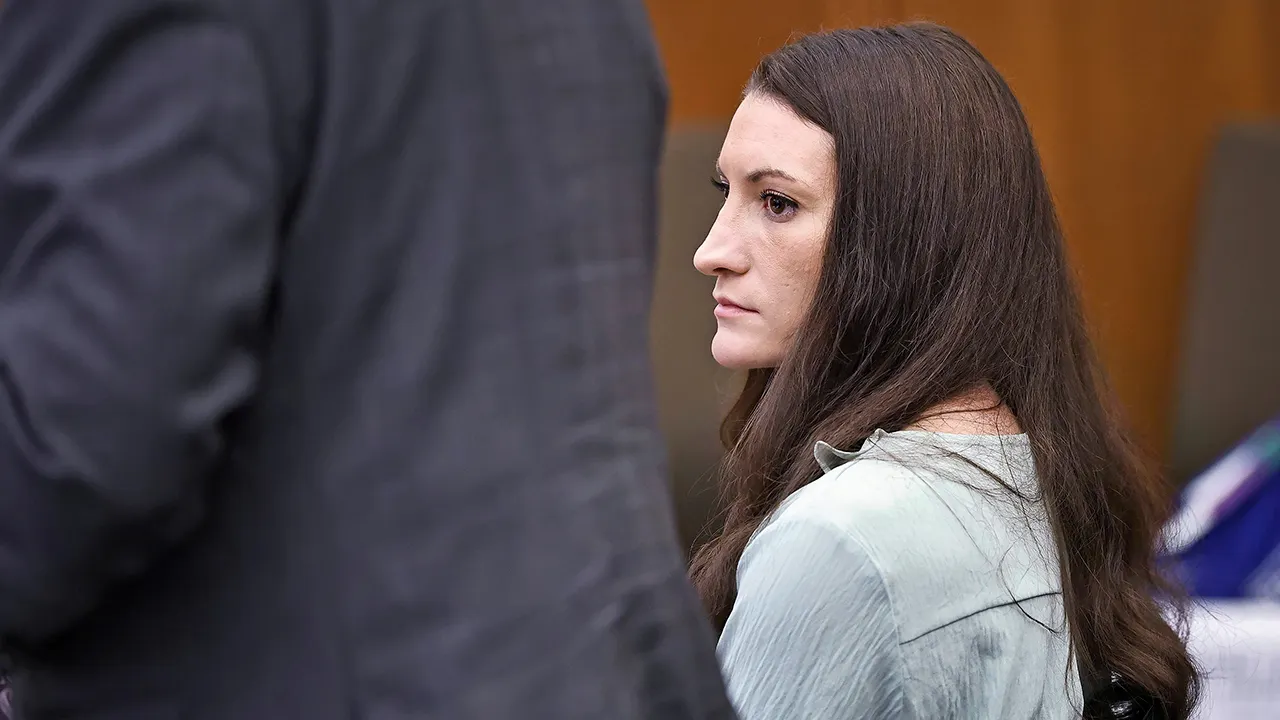
In a case that has haunted Massachusetts and the nation, the trial of Lindsay Clancy ended not with a verdict but with a shattered jury, and now one juror is speaking out with raw honesty about the emotional weight of the decision. Paula, a 65-year-old juror, told WCVB that she and the majority of jurors felt they “let down Lindsay” despite exhausting every effort to reach a unanimous conclusion. The trial centered on whether Clancy, a mother accused of strangling her three young children in January 2023, should be held criminally responsible for their deaths or whether she was so deeply lost in postpartum psychosis that she could not be held accountable under the law. Eleven jurors believed the prosecution had not proven her criminally responsible under Massachusetts’ standard of lacking criminal responsibility, while one holdout juror remained convinced of her guilt. The result was a mistrial, leaving a grieving father, a broken mother, and a public desperate for answers with no resolution at all.
The facts of the case are almost too painful to absorb. On January 24, 2023, Lindsay Clancy sent her husband Patrick out to run errands — to pick up medication and takeout — and in that brief window of time, she killed their children: 5-year-old Cora, 3-year-old Dawson, and 8-month-old Callan. When Patrick returned home, he found Lindsay injured outside in what appeared to be a suicide attempt, and the children unconscious in the basement. Two children died that night, and the youngest, Callan, was airlifted to a Boston hospital where he died days later. From the beginning, Clancy’s legal team did not deny that she took the lives of her children. Instead, they argued that she was suffering from severe postpartum psychosis, a devastating mental health crisis that left her incapable of understanding or controlling her actions. In court filings, Clancy admitted to the killings but insisted that mental illness had robbed her of criminal responsibility. The case became a flashpoint in conversations about maternal mental health, the failures of the healthcare system, and the impossible boundary between tragedy and criminality.
For the jurors, the task was never about whether the children died at Lindsay’s hands — that was undisputed. The task was determining her state of mind, and that distinction proved emotionally unbearable. Paula described how the jurors entered deliberations with 297 pieces of evidence, including Patrick’s frantic 911 call, which some jurors found almost impossible to listen to again. “It was hard to separate the children from what our task was, and it was very emotional,” she said. The majority of jurors believed that Lindsay was not just a woman who committed an unthinkable act, but a person who needed help and was failed by the very systems meant to protect her. Paula emphasized that the medical community must do more to recognize and treat postpartum mental illness, saying that education and support could help not just mothers, but entire families. The jurors, she said, tried to support each other through the horror of the evidence, but the weight of deciding a woman’s fate while holding the images of three dead children in their minds was a burden no civilian should have to carry.
The deliberation process was not simply a matter of one side slowly winning over the other. Paula revealed that when the jurors first polled themselves, eight believed Clancy was not guilty by reason of lack of criminal responsibility. That number eventually grew to eleven, but one juror refused to budge. The majority struggled to understand the holdout’s reasoning, particularly because, according to Paula, he admitted at various points that he had doubt about the case presented. Under the judge’s instructions, if there was reasonable doubt, they could not convict her of first-degree murder, second-degree murder, or manslaughter. “We did not feel that he was following the law,” Paula said. The foreperson sent a note to the judge stating that the jury could not reach a verdict and accusing the holdout of refusing to apply the law regarding reasonable doubt. Judge William Sullivan then called each juror individually to ask whether they were telling the truth about their positions. Paula recalled that eleven people told the truth, and one “maybe didn’t,” though she said she would never know why. She felt that if the holdout had provided evidence or a coherent legal basis for his position, the rest of the jury might have felt differently about reporting their deadlock.
In the aftermath of the mistrial, several jurors have come forward to voice their frustration with the lone holdout. Another juror, Kellie Farina, told NBC10 Boston that the holdout “had the hardest time getting off the fact that Lindsay viciously killed her children,” suggesting that he allowed the emotional horror of the act to override the legal standard of criminal responsibility. The public outcry around the case has only intensified since the mistrial, with passionate debates erupting over whether Clancy is a victim of a broken mental health system or a perpetrator who must face justice. On Thursday, Clancy’s defense filed a motion arguing that the prosecution had failed to meet its burden of proof and asked the judge to enter a required finding of not guilty. If granted, that motion would prevent a retrial and effectively end the case with a judgment in Clancy’s favor, despite the jury’s failure to agree. The judge has not yet ruled, and the prosecution has not indicated whether it intends to retry her. The legal maneuvering, however, only adds another layer of uncertainty to an already agonizing saga that has left a family destroyed and a community searching for meaning.
What emerges from the jurors’ words is not a simple story of guilt or innocence, but a deeply human tragedy with no clear heroes. Paula’s comment that the jury “let down Lindsay” reflects the profound sense of responsibility that weighs on ordinary people called to make extraordinary judgments. The jurors were asked to apply cold legal standards to an act of unimaginable horror committed by a mother who, by all accounts, loved her children but lost her mind to a disease that is still dangerously misunderstood. The holdout juror, whatever his reasoning, was also carrying the weight of those children’s faces, struggling to see beyond the violence to the mental illness that consumed their mother. In the end, the mistrial leaves everyone in a state of suspended grief. Patrick Clancy has lost his entire family in the span of a year; Lindsay Clancy remains institutionalized, her future uncertain; and three children are gone forever. The case has sparked calls for better maternal mental health screening, more accessible treatment, and a legal system that can truly account for the ravages of postpartum psychosis. But for those closest to the case, and for the jurors who couldn’t reach a verdict, there is only the haunting awareness that justice, whatever it might have looked like, slipped through everyone’s hands. No verdict can bring back Cora, Dawson, and Callan, and no legal outcome can undo the suffering that began on that cold January night. The only hope, as Paula suggested, is that this devastating case might finally teach society to see the signs before another family is broken forever.