

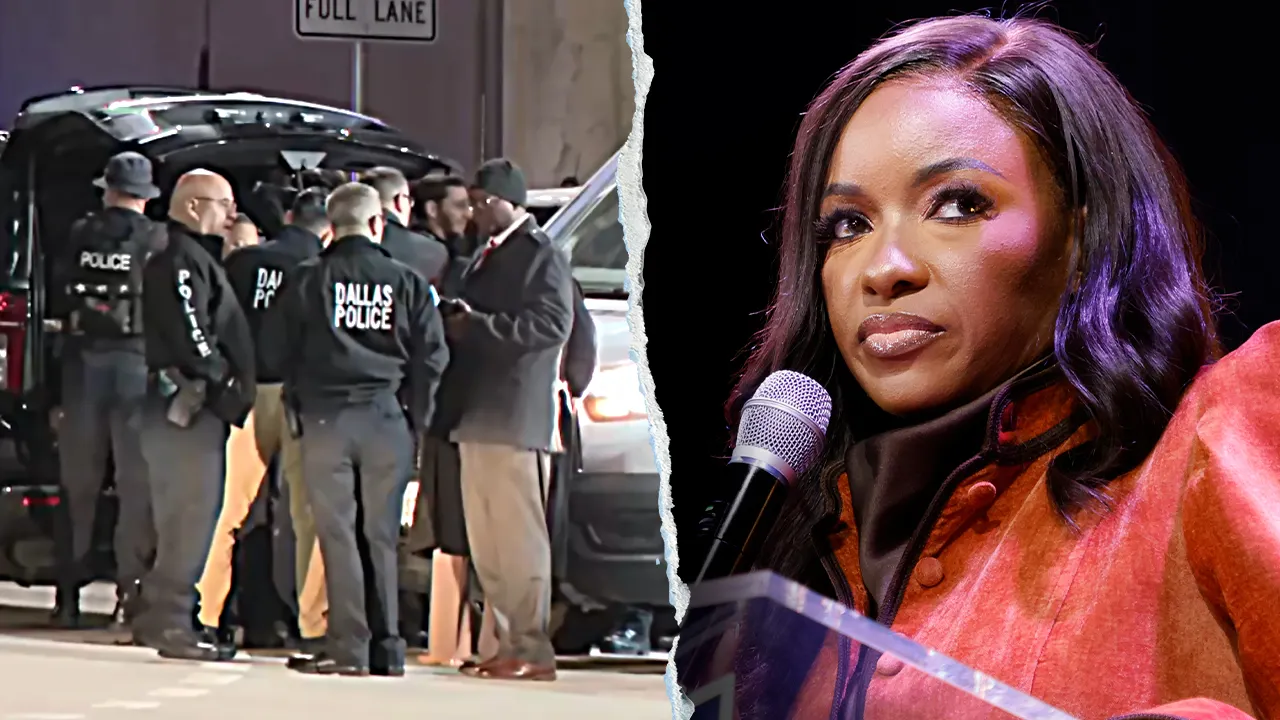
In the bustling city of Dallas, under the cover of a Wednesday evening, a dramatic and tragic standoff unfolded that would shake the community and draw national attention. Picture this: it’s just past 11 p.m., and the air is thick with tension outside Children’s Medical Center Dallas, a place usually filled with hope for families fighting illness among the young patients inside. Officers from the Dallas Police Department’s fugitive unit had been hot on the trail of a man wanted for impersonating a law enforcement officer—a serious crime that undermines the trust we all place in those sworn to protect us. This wasn’t some random individual; it was someone who had woven himself into the fabric of security details for prominent figures, including the outspoken progressive Congresswoman Jasmine Crockett. As police closed in, the suspect barricaded himself in his vehicle in the hospital’s garage, transforming a spot dedicated to healing into a scene of high-stakes confrontation. Eyewitnesses later described the quiet chaos: no immediate sounds of gunfire, just the faint hum of sirens setting the stage for what was about to erupt. Chief Daniel Comeaux would later recount how his teams tracked the man through an active warrant, piecing together clues from his pattern of deception. It makes you wonder about the lives these impersonators lead—how does someone end up blurring the lines between reality and role-play, especially when they’ve guarded elected officials and campaigned alongside them? This story hits close to home, reminding us that even in moments of vulnerability, like a parent visiting a sick child, the world can turn perilous. The suspect, whose name police withheld to protect the investigation, reportedly used this act of impersonation in his business, recruiting off-duty officers for security gigs in hotels and churches. It’s a gritty tale of ambition gone wrong, where one man’s quest for authority led to a deadly impasse. As the standoff escalated, officers attempted to de-escalate by deploying tear gas, hoping to coax him out peacefully, but human instincts overrode caution when he stepped out wielding a firearm. In that heartbeat, shots rang out, officers responding to the perceived threat, and the night ended with his life pronounced extinguished at the scene. No other lives were claimed, but the ripple effects—of loss, scrutiny, and unanswered questions—extend far beyond that garage, touching on themes of trust and consequence in our society.
Digging deeper into the suspect’s background paints a picture of a man who’s lived many lives under one roof, using aliases like “Mike King” to navigate a shadowy world that intersects with power and politics. Sources close to the case reveal that he wasn’t just a hired hand; he oversaw security teams for several swanky downtown Dallas hotels and even his own church, where he likely inspired loyalty among those who saw him as a leader. Imagine the churchgoers who trusted this man to safeguard their sanctuary, perhaps sharing stories of faith and community over Sunday brunches, unaware that beneath the surface lay a web of falsity. His business savvy in recruiting actual off-duty officers for private security gigs added a layer of intrigue—how did he manage to command respect in both sacred spaces and luxury enclaves without raising eyebrows? Yet, it’s his connection to Representative Jasmine Crockett that adds the most profound twist, tying this personal tragedy to the broader arena of national politics. While serving on her security detail, he accompanied her to high-profile events in both Washington, D.C., and back in Texas, including crucial campaign stops during her bid for the Democratic Senate primary. She ultimately bowed out to James Talarico, but those rallies and meet-and-greets must have been high-energy affairs—crowds chanting, media thronging, and behind the scenes, this man ensuring the spotlight stayed on the progressive firebrand known for her unfiltered takes on issues like racial justice and electoral fairness. Crockett’s office didn’t respond to inquiries, leaving us to ponder the optics: a guard she trusted, now embroiled in scandal, potentially tarnishing her image during a time when she’s already been in the crosshairs for controversies like reportedly removing a reporter from a rally or claiming foul play in her primary election. It’s humanizing to think about the shock waves this sends through political circles—friends questioning alliances, colleagues reassessing hires, and the public grappling with how deception can infiltrate even the most guarded realms.
As the dust settles on that fateful garage, the aftermath reveals layers of deception that challenge our understanding of identity and power. The suspect’s choice of vehicle alone speaks volumes—a replica undercover law enforcement car, complete with license plates allegedly snatched from outside a military recruiting office. Picture him cruising through Dallas streets, perhaps feeling untouchable as long as the lights and badges fooled passersby. This wasn’t amateur theatrics; it was a calculated risk that played into his recruitment ploy, making him more appealing to those hiring security. For the families at the children’s hospital that night, the incident must have been terrifying—a reminder that places of healing can become battlegrounds when danger enters through the back door. Parents waiting anxiously or staff clocking out early might have glimpsed the chaos, their hearts pounding as they hurried loved ones to safety. On the officers’ side, it’s a harrowing reminder of the split-second decisions they face: deploy tear gas, monitor the exit, and when a gun appears, respond with lethal force. Chief Comeaux’s statements provide insight into the protocol—unfortunate targets, necessary measures—but they also humanize the pain: “They came across a target that ended up being a barricaded suspect.” No one wanted this outcome; it’s a sobering reflection on how one person’s choices can force another’s hand, echoing broader societal debates on police encounters and the rights of the accused. Communities like Dallas, vibrant and diverse, often see these stories unfold with a mix of outrage and empathy, questioning how someone so involved in protecting others could end up in such peril.
Transitioning from the scene of the crime to its political entanglements, Representative Jasmine Crockett finds herself at the center of yet another storm, her spotlight intensified by external dramas. Known for her bold rhetoric and advocacy for underrepresented voices, Crockett has been no stranger to controversy—from sounding off on GOP tactics in elections to incidents like having armed guards escort a reporter out for calling her a “white girl” during a rally. This new revelation about her former security guard adds fuel to the fire, prompting whispers of irony: how could a progressive champion of accountability overlook red flags in her own circle? It’s easy to empathize with her—campaigning is exhausting, relying on teams for support amidst grueling schedules and public scrutiny. But in the harsh light of hindsight, it raises questions about vetting processes and the human element of trust. Crockett’s camp remains silent for now, but observers might speculate on the fallout: will this derail her ambitions in Congress, or strengthen her resolve to push for reforms in security and policing? For voters and constituents, it’s a human story of disillusionment, where allies can betray without warning, mirroring the fatigue many feel toward politics overall. This incident ties into larger narratives about progressives versus conservatives, but at its core, it’s about personal accountability and the unforeseen consequences of the people we let into our inner circles.
In the wake of such an event, the community rallies with a blend of sadness and solidarity, turning grief into calls for reflection. The children’s hospital staff, heroes in their own right, return to their vital work amid heightened security measures, ensuring the focus remains on healing rather than harm. Families share stories online, not just of fear but of resilience—how that night’s disruption highlighted the fragility of normalcy in places meant for hope. Law enforcement faces scrutiny too; while no officers were injured, such shootings spark discussions on training, de-escalation, and the mental toll on those in uniform. It’s challenging to imagine the officers’ perspectives—rushing into the unknown, trained to neutralize threats swiftly, yet haunted by the knowledge that a life has ended. For the suspect’s associates, whether at his church or the hotels he guarded, there’s mourning mixed with disbelief: who was this man really, and how did his facade go unchallenged for so long? This tale reminds us of the loneliness that can accompany secrecy, where aliases hide real struggles, urging us to seek connection and authenticity in our interactions.
Wrapping up this heartbreaking saga, we see echoes of broader societal lessons on vigilance, empathy, and reform. Impersonation crimes like this undermine the bedrock of law and order, but they also reveal human flaws—ambition twisted into deception, trust breached by hidden motives. As investigations continue, hopefully shedding more light on the suspect’s full story, communities like Dallas push forward with dialogue: how can we better screen those in sensitive roles, protect our most vulnerable spaces like hospitals, and bridge divides in politics? For Jasmine Crockett, this chapter might spur personal growth, reinforcing her fights for justice in the face of personal loss. Ultimately, it’s a story of caution and compassion, reminding us that behind every headline is a tapestry of lives intersected by fate, urging introspection on where trust leads us astray and how we mend those fractures in our shared humanity.