



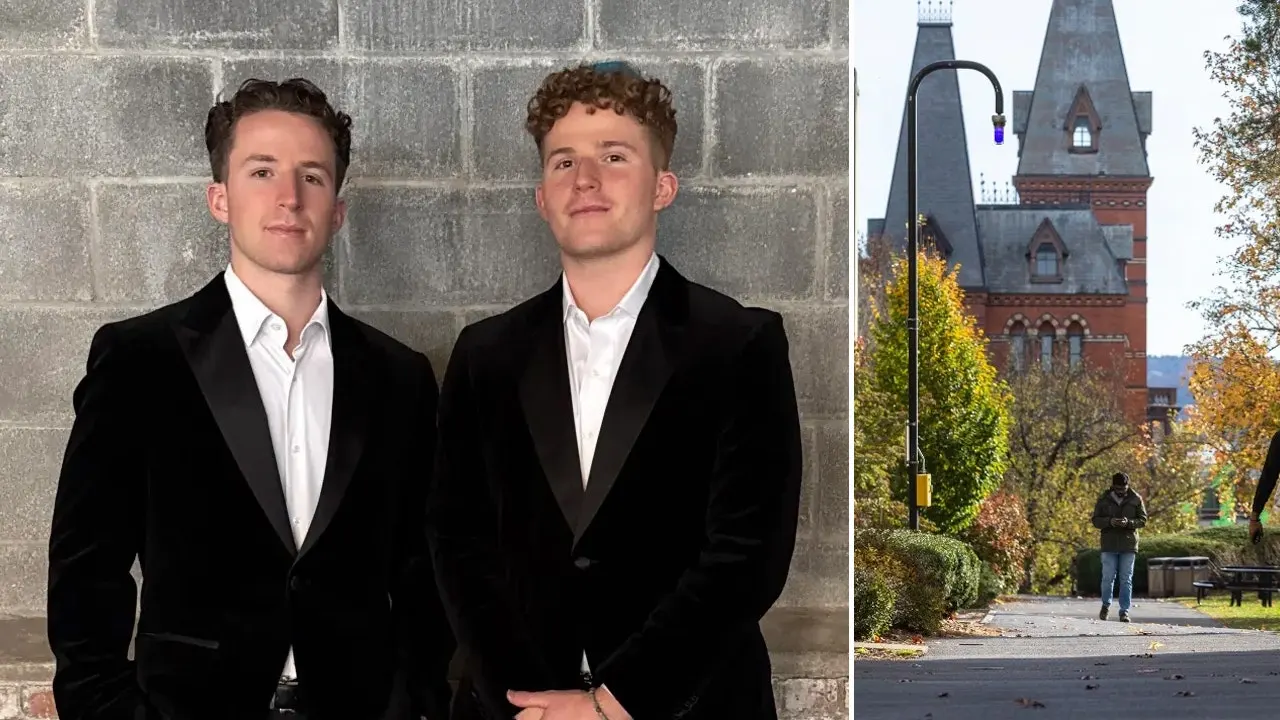
The modern landscape of college internships is usually defined by eager networking, hopeful resumes, and the anxiety of young scholars looking to secure a foothold in their chosen profession. For Gabe and Aiden Einhorn, the co-founders of NYU-born startup VryfID—a digital platform thoughtfully designed to build trust within communities by securely connecting renters with landlords while verifying identities—recruiting passionate college students was not just a business necessity but a core value of their developmental philosophy. When Austin Franco, a student at the prestigious Cornell University, applied for a summer internship through the popular university career network Handshake, it seemed like a routine, mutually beneficial opportunity. Seeking to accommodate the busy and complex schedules of college life, Aiden reached out to Franco to reschedule a missed Sunday meeting, warmly emphasizing in a message that students like him were crucial to the growth and long-term success of what VryfID was building. However, the hopeful trajectory of this professional bridge was abruptly shattered not by a typical polite decline, but by a blunt, hostile, and deeply personal rejection. In a response that sent shockwaves through the university community and social media alike, Franco responded directly to the invitation by stating that he was simply “not interested in working for a Jew.” This cold, blunt assertion instantly transformed a standard hiring process into a painful confrontation with deep-seated prejudice, illustrating how easily the promises of modern digital connection can be fractured by age-old biases. The shock experienced by the Einhorn brothers highlights the vulnerability of young entrepreneurs who, while striving to create collaborative spaces, suddenly find themselves targeted not for the quality of their work or the viability of their business, but for their heritage and faith. This initial exchange serves as a sobering reminder of the hidden currents of discrimination that persist in professional and academic pipelines, threatening the very foundations of mutual respect.
In the wake of public exposure, the dialogical aftermath revealed a complex display of defensiveness and self-justification that often characterizes modern encounters with prejudice. Rather than offering a sincere apology or expressing regret for the discriminatory nature of his remarks, Austin Franco chose to double down on his position when the screenshot of the exchange was shared publicly across social channels. He defended his blunt refusal by claiming that his prejudice was rooted in what he described as unpleasant experiences with Jewish individuals both online and in person throughout his life, implying that his response was a logical outcome of these past encounters. Franco argued that his decision was merely an honest statement of preference based on his personal, “on the aggregate” experiences, while simultaneously attempting to frame himself as the victim of an unfair, aggressive, and disproportionate public backlash. By asserting that the overwhelming negative reaction from the community only served to validate his original bias, he demonstrated a psychological defense mechanism common in instances of exposed discrimination: turning the focus away from the harm caused and onto the perceived hostility of those who demand accountability. He went so far as to suggest a double standard, claiming that if he had declined to work for a white or Christian individual, the response would not have blown up to the same capacity, which fails to recognize the deep historical weight and systemic nature of antisemitic sentiment. This defensive posturing highlights a tragic reluctance to engage in deep self-reflection or to acknowledge how individual generalizations dehumanize entire communities. Instead of fostering a space for constructive dialogue or personal growth, this stance reinforced a divisive narrative, showing how easily personal discomfort can harden into systemic hostility, illustrating a profound disconnect from the empathetic values that higher education holds dear.
For Gabe Einhorn, the decision to share the painful exchange on social media was not born out of a desire for personal vengeance, but rather from a pressing need to expose the undeniable reality of antisemitism in contemporary society. In a world where many attempt to minimize or outright deny the persistence of anti-Jewish sentiment, Gabe felt a moral obligation to provide concrete empirical evidence that prejudice is not a relic of the past, but an active force operating within elite educational and professional networks. In his subsequent reflections, Gabe spoke with a profound sense of weariness but also with an enduring hope for human connection, emphasizing the destructive nature of overgeneralization. He pointed out that reducing any individual to a caricature of their religion, race, or ethnicity prevents the formation of meaningful relationships, business partnerships, and families that can transcend historical divides. He noted that people from completely different walks of life can build beautiful connections when they treat each other as unique human beings rather than as representatives of a collective stereotype. His words carry the weight of a business owner who values diversity of thought and background, recognizing that progress is built on collaborative efforts across diverse communities. The pain of being judged solely on one’s identity rather than on one’s character is a universal human struggle, and the Einhorn brothers’ experience highlights the resilience required to meet hostility with dignity and clarity. Instead of responding with reciprocal anger, Gabe sought to elevate the conversation, advocating for a world where people are evaluated on their unique merits and contributions rather than being pigeonholed by systemic biases that only serve to isolate, divide, and fragment humanity.
The repercussions of the incident quickly reached the halls of Cornell University, an institution that prides itself on fostering an inclusive, safe, and academically rigorous environment for all its students. Confronted with the clear evidence of a student’s discriminatory behavior on a platform officially sponsored and utilized by the university for career placement, Cornell immediately launched a formal investigation through its Office of Civil Rights. In an official statement provided to the public, the university condemned antisemitism and all forms of discrimination in the strongest possible terms, reiterating its steadfast commitment to protecting every member of its community from hatred and prejudice. The institutional response highlights the delicate, ongoing balance universities must strike between upholding free expression and ensuring that their official career platforms are not weaponized to promote segregation, discrimination, or severe violations of professional codes of conduct. For higher education institutions, such incidents are not merely passing public relations crises but deep structural challenges that force a severe and necessary reevaluation of how values of tolerance, diversity, empathy, and mutual respect are actually cultivated within the student body. The swift referral of the incident to the Office of Civil Rights signals to the broader student body, prospective employers, and the public that discriminatory conduct in professional and academic pathways will not be brushed aside or normalized. This comprehensive administrative action reflects a broader societal demand for ethical accountability, emphasizing that the immense privileges of attending an elite educational institution come with the fundamental human responsibility to treat others with dignity, equality, and respect, regardless of their background, religious beliefs, or heritage.
The digital landscape played a pivotal role in how this controversy unfolded, demonstrating the immense speed and reach of modern social media in amplifying individual exchanges into highly polarized national debates. The platform Handshake, originally designed to be a secure and professional gateway for student career development, unexpectedly became the staging ground for an overt act of exclusion, while X (formerly Twitter) became the public square where the ethical dimensions of the situation were passionately contested. Franco had originally agreed to participate in an online social media audio forum, or X Space, to openly discuss his actions, but he ultimately backed out of the broadcast at the last minute. He cited a pressing need to pause and observe how his situation would develop with Cornell, especially concerning whether he would still have the opportunity to attend classes in the upcoming semester. Even in his temporary retreat from the public eye, Franco maintained a defiant posture, declaring that he would continue to fight for what he believed was right, framing his discriminatory stance as a matter of principle rather than a manifestation of harmful prejudice. This troubling rhetoric of fighting for a “cause” divorced from wealth or material gain underscores the deep ideological entrenchment that can occur when young individuals isolate themselves within echo chambers of selective grievance. The tragedy of a promising young student potentially derailing his academic future and career opportunities over a refusal to work with a Jewish-owned business illustrates the devastating real-world consequences of unchecked biases. It vividly demonstrates how digital spaces can simultaneously facilitate discriminatory behavior and serve as rapid engines of public accountability, leaving behind a complex trail of damaged personal lives and polarized communities.
Ultimately, this painful and highly publicized episode serves as a powerful mirror reflecting the ongoing challenges of bias, empathy, and genuine human connection in an increasingly polarized global society. It forces us to confront the uncomfortable reality that advanced education and intellectual pedigree are not automatic safeguards against prejudice; even within the walls of elite academic institutions, the oldest forms of hatred can still find fertile ground if left unaddressed. The path forward out of this cycle of hostility requires far more than just administrative investigations, university press releases, and public condemnations, although these measures are undoubtedly vital for establishing clear boundaries of acceptable behavior. It demands a collective, everyday commitment to humanizing our interactions, encouraging young people to look past reductive labels and perceive the rich, shared humanity in one another. When we allow stereotypes to dictate our professional and personal choices, we rob ourselves of the profound perspectives, creative innovations, and deep friendships that naturally arise from diverse, open-minded collaborations. The Einhorn brothers’ remarkable resilience in the face of blatant exclusion, combined with their earnest call for understanding rather than sweeping overgeneralizations, provides a thoughtful blueprint for how society can respond to hostility with constructive, forward-looking purpose. By choosing to expose discrimination to the light of day rather than succumbing to mutual bitterness, they have invited a broader, much-needed dialogue on how we can build a world anchored in mutual respect. This is a world where every individual is judged by the content of their character and the quality of their contributions rather than the heritage they carry, ensuring that dialogue ultimately triumphs over divisive exclusion.