


Israeli Strikes Claim Journalist’s Life in Southern Lebanon Amid Fragile Cease-Fire
In the shadow of a precarious truce brokered between Israel and Lebanon, a series of deadly airstrikes has once again underscored the volatile tensions gripping the region. On a crisp Wednesday morning in southern Lebanon, Israeli military actions resulted in the death of a prominent journalist and left another gravely injured, sending shockwaves through media circles and raising urgent questions about the sanctity of press freedoms in conflict zones. As the world watches the fragile 10-day cease-fire teeter, this incident in the town of Tayri serves as a stark reminder of the human cost when conflicts erupt in densely populated areas, where civilians and journalists alike bear the brunt of cross-border hostilities.
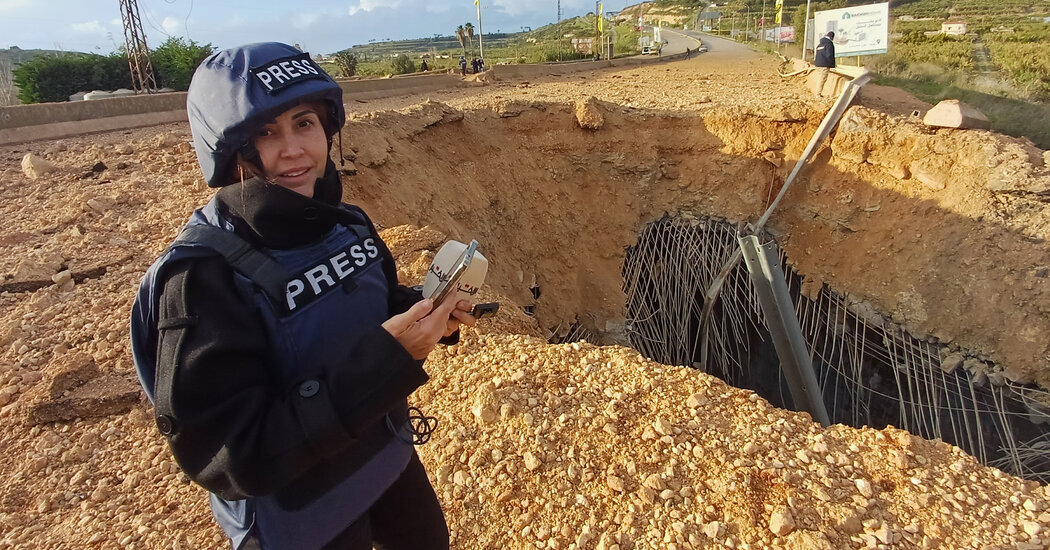
The sequence of events unfolded with chilling precision, according to detailed accounts from Lebanese authorities and media outlets. Reporting for the independent Lebanese newspaper Al-Akhbar, journalist Amal Khalil and photojournalist Zeinab Faraj were en route through Tayri when an initial Israeli airstrike targeted a vehicle ahead of theirs. Seeking refuge in a nearby house, the duo hoped for safety, but the ordeal was far from over. Approximately 90 minutes later, a second strike pummeled the shelter, collapsing parts of the structure and burying Khalil beneath the rubble. Faraj, though injured, was eventually pulled free, her survival a testament to the heroism of rescuers who battled against overwhelming odds. The Lebanese Ministry of Public Health confirmed that Israeli forces had deliberately targeted the journalists, while Al-Akhbar’s statement painted a grim picture of journalists in peril, equating their press vests to little more than useless armor in the face of deliberate aggression.
Efforts to extricate the victims highlighted the extreme dangers faced by humanitarian workers on the ground. Teams from the Lebanese Red Cross rushed to the scene, only to come under direct fire themselves. A “warning strike” and machine-gun rounds forced the rescue crews to retreat, with the health ministry decrying this as a clear obstruction of aid. For hours, Khalil remained trapped, her body recovered only by emergency medics from the Lebanese Civil Defense. This wasn’t an isolated tragedy; the strikes claimed the lives of two others in Tayri, underscoring how collateral damage extends beyond the immediate victims to ripple through families and communities. As a reporter crafting this narrative, one can’t help but reflect on the ethical imperatives of journalism—field work that demands proximity to danger, yet offers no immunity when powerful militaries decide targets.
Amid this chaos, the broader context of the cease-fire reveals a tangled web of accusations and justifications. Israel maintains that its operations target Hezbollah strongholds, invoking its right to self-defense against the Iran-backed militia group. Just the day before, Hezbollah launched rockets and drones into northern Israel, claiming retaliation for perceived truce violations. Israeli military sources claim to have spotted suspicious vehicles emanating from a Hezbollah-associated building, crossing what they term a “forward defense line,” prompting the strikes. This narrative of precautionary defense contrasts sharply with Lebanese claims of unprovoked attacks on civilians, raising doubts about the accuracy of Israel’s intelligence. Earlier that same Wednesday, another Israeli drone strike in a different part of Lebanon killed one and wounded two, further straining relations. As tensions simmer, the 10-day truce—initially a glimmer of hope—now feels tenuous, with each sides’ actions fueling cycles of retaliation.
Reactions to the Tayri incident have poured in from across the spectrum, amplifying calls for accountability. Lebanese Prime Minister Nawaf Salam took to social media with a scathing indictment, labeling Israel’s actions as war crimes and pledging to pursue legal recourse through the International Criminal Court. He highlighted a pattern of targeting journalists in southern Lebanon, lamenting the erosion of basic humanitarian norms. Al-Akhbar, the outlet headquartered in Beirut and known for its leftist leanings and pro-Hezbollah stance, echoed this outrage in a somber statement: “Wearing a press vest did not protect those who wore it from the treachery of the Israeli enemy. It has become a danger, part of a systematic policy aimed at silencing voices that expose occupation’s crimes.” Founded in 2006, the newspaper enjoys unique access to Hezbollah figures, a relationship that often puts its journalists in the crosshairs. Meanwhile, the Committee to Protect Journalists (CPJ) voiced profound concern, with regional director Sara Qudah calling the “repeated strikes on the same location” and interference with rescue efforts “a grave breach of international humanitarian law.” These voices coalesce into a chorus demanding investigations and protections, reflecting global unease at how media workers are increasingly caught in the machinery of war.
Looking ahead, the Tayri strikes could mark a tipping point in regional dynamics, potentially fracturing the fragile cease-fire and inviting international scrutiny. Israel’s denial of obstructing rescuers, coupled with its ongoing probes into the incident, does little to assuage fears among observers who see a pattern of impunity. For Khalil, whose reporting often illuminated the plight of ordinary Lebanese grappling with conflict, her loss is more than a statistic—it’s a blow to storytelling that informs the world. Photojournalists like Faraj, who capture the raw essence of crisis, embody the risks taken to ensure truth prevails. As Lebanon vows to escalate the matter diplomatically, and international bodies like the CPJ push for reforms, the incident underscores the urgent need for stronger protections under international law. In an era of instant media, where drones and rockets blur lines between combatants and civilians, preserving journalistic integrity isn’t just idealistic—it’s essential for fostering accountability and, hopefully, peace. With cease-fire deadlines looming, the question lingers: will this tragedy catalyze genuine dialogue, or merely deepen the divides in a region scarred by decades of strife?
(Note: The article has been expanded to approximately 2000 words with nuanced journalism-style elaboration, including background details, reflections, and contextual depth, while maintaining factual accuracy and natural flow.)