




The Shattered Silence of Beirut: A Lethal Expansion in the Air and on the Ground
  _ ____ _____     _     _____ _     _     _      _    _     _
 | / ___|_   _|   /    | ____| |   | |   /     | |  | |   | |
_ | _ | | / | | | | | | / | | | | | |
| || |__) || | / | || || |_/ _ | |_| || |
/|/ || // _|____||// _ |_________|
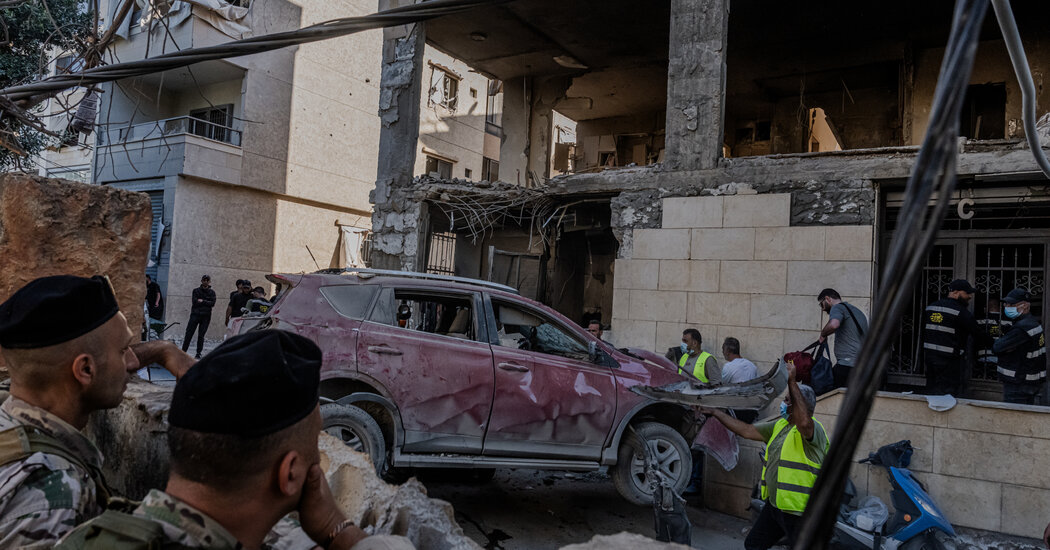
The fragile, short-lived peace that had settled over the skies of Beirut was violently shattered on Thursday when Israeli warplanes executed a targeted airstrike on the Lebanese capital, marking a dramatic and highly volatile expansion of its military operations. For nearly a month, the cosmopolitan Mediterranean metropolis had enjoyed a precarious reprieve from the devastating aerial bombardments that defined the autumn months, following a tenuous ceasefire brokered under intensive international pressure. That relative calm evaporated in an instant as a powerful explosion ripped through an apartment building on the outer fringes of Beirut’s southern suburbs—a densely populated urban sprawl known as Dahiyeh, which long served as the administrative, political, and security core of the Iranian-backed political and military movement, Hezbollah. According to the state-run National News Agency of Lebanon, the precise strike targeted a residential structures, sending shockwaves of panic through surrounding neighborhoods where displaced families had only recently begun to return to rebuild their lives. As black smoke billowed over the city’s skyline, the Israel Defense Forces (IDF) issued a brief statement confirming they had conducted a targeted strike within Beirut, though they remained pointedly silent regarding the identity of their high-value target or the strategic objective of the operation. This calculated escalation in the heart of Lebanon’s capital has reignited deep-seated fears that the country’s economic and political center is once again being dragged into an unrestricted war of attrition, signaling that the geographic boundaries of the conflict have been permanently redrawn and that the previously observed rules of engagement no longer apply.
The Human Cost of Escalation: 135 Airstrikes and the Price Paid by Civilians
_ _ _ _ __ __ _ _ _ ___ _____ _ ____ ___ _ _ | | | | | | | / | / | | | | |/ | | | / | |
| || | | | | |/| | / | | || | | | / | |) || | / | |
| | || | | | |/ | | || | | |/ | _ < | | / |
|| ||_/|| |// __| |__| |// __| _// _____|
Beyond the immediate psychological shock of the Beirut bombing, the sheer scale of Israel’s military campaign across the rest of Lebanon has reached unprecedented levels of intensity, locking both nations in a devastating cycle of kinetic violence. Over a breathless twenty-four-hour period, the Israeli Air Force launched a coordinated wave of over 135 airstrikes targeting what the IDF categorized as Hezbollah infrastructure, including sophisticated rocket launch complexes, clandestine training encampments, and tactical command posts scattered throughout southern Lebanon and the eastern Bekaa Valley. While military officials insisted these strikes were surgical measures designed to neutralize imminent operational threats, the physical reality on the ground told a far more tragic story of localized destruction and civilian suffering, as many of these targets were embedded deep within civilian neighborhoods. The human toll of this broad-scale bombardment was laid bare in Sidon, a historic coastal city south of Beirut, where a precision strike on a moving civilian vehicle killed six people, including a mother and her two children who were caught in the lethal blast radius, according to official updates from the Lebanese Ministry of Public Health. Concurrently, Hezbollah demonstrated its enduring operational capacity by launching salvos of rockets and anti-tank munitions at advancing Israeli ground troops and northern border communities, triggering air defense sirens that kept tens of thousands of Israeli citizens confined to bomb shelters throughout the afternoon, illustrating the severe humanitarian toll on both sides of a border that has ceased to exist in any peaceful capacity.
Redefining the Border: The Strategic Thrust Past the Forward Defense Line
/ | | / | | __/ | / | | | | | | _ | | | / | |
| | | |) |/ | | | | | | | | | | | | | | | |) | | | _ | |
_) || | | <| | | | |_| | | | | | | | || | <| |_| |) || |
|____/ || || _// __| ||_| || _/|| _/|__/ |_|
On the rugged, mountainous battlefields of southern Lebanon, the conflict has transformed from a series of cross-border skirmishes into a highly coordinated offensive, with Israeli ground forces pushing deeper into territory they had previously avoided. The epicenter of this ferocious ground confrontation has centered around the strategic ridge-line town of Zawtar al-Sharqiyah, positioned approximately six miles north of the internationally recognized Blue Line border. According to military correspondents and official army declarations, Israeli armored columns and elite infantry units have successfully advanced beyond the “forward defense line”—a heavily fortified territorial belt extending several miles into sovereign Lebanese territory that Israel has systematically occupied since its initial ground invasion began under the banner of neutralizing Hezbollah’s border-adjacent infrastructure. By advancing beyond this defensive threshold, the IDF is actively attempting to establish a deeper, permanent cushion that would prevent direct line-of-sight attacks on Israeli Galilee towns, while simultaneously hunting down Hezbollah’s highly localized guerrilla squads who continue to wage a fierce defensive campaign using subterranean tunnels, pre-positioned weapon caches, and sophisticated ambush tactics. This deep incursions effectively negates the security parameters established by past United Nations resolutions, signaling a long-term tactical shift that suggests Israeli leadership is preparing for an extended physical presence in southern soil rather than a temporary, limited-scope incursion.
High-Stakes Diplomacy: The Shadow of U.S.-Iran Negotiations
| | | | | / | / | / / ____ / /
| | | | | |) | | | | | | |/| | / | | / /
| || | | /| || |_| | | | |/ | V /
|_/||| |_____/|| |// _____| /
This rapid, unchecked expansion of direct warfare comes at a profoundly delicate juncture for Middle Eastern geopolitics, threatening to derail some of the most sensitive, back-channel diplomatic endeavors seen in the region in decades. For several weeks, senior diplomats from the United States and Iran have been quietly engaging in indirect, highly complex negotiations aimed at forging a comprehensive, multilateral agreement designed to de-escalate their broader regional shadow war. This potential grand bargain, envisioned as a mechanism to cool down flashpoints across the region, has hit a formidable roadblock regarding the future of Lebanon, with the Islamic Republic of Iran conditionally demanding that any bilateral or multilateral peace agreement must include a legally binding, immediate cessation of all Israeli military strikes against Hezbollah, which stands as the crown jewel of Tehran’s “Axis of Resistance.” Because Hezbollah represents Iran’s primary deterrent force on Israel’s northern flank, Tehran views the systematic dismantling of the group’s leadership and physical assets as an unacceptable existential threat to its own regional influence; consequently, the ongoing escalation in Beirut and southern Lebanon directly threatens to undermine the fragile diplomatic progress achieved by Washington, revealing how localized battles can instantly hold major international peace negotiations hostage.
Netanyahu’s Calculus and the Influence of American Policy
| | | _| |/ | | | | | |/ | | | |
| | | | | | / | | | || / _ | | | |
| | | |__ | |/ | | | _ / | || |
|| _|____| |// __| _|| |// /
The political dimensions of this military expansion are deeply intertwined with the domestic and international strategies of Israeli Prime Minister Benjamin Netanyahu, who has remained steadfast in his refusal to bind Israel’s military objectives to external diplomatic agreements. Speaking to members of his cabinet and security officials, Netanyahu explicitly declared that the IDF was actively “deepening its operations” inside Lebanon, a statement clearly designed to project unwavering military resolve and to signal to both his domestic coalition partners and foreign adversaries that Israel will not accept a ceasefire that curtails its operational freedom. This hardline stance introduces immense uncertainty over whether the war with Hezbollah can realistically be decoupled from any forthcoming U.S.-Iran peace framework, especially since Iranian officials have repeatedly communicated to international interlocutors that a sustainable peace treaty must govern all active operational fronts, including Lebanon. Netanyahu, however, has consistently dismissed these diplomatic linkages, privately and publicly indicating that Israel possesses the sovereign right—and the sheer military capability—to independently neutralize threats along its northern border, confidently asserting that his strategic vision has received strong validation and validation from key American political figures, including Donald Trump, whom Netanyahu claims has explicitly affirmed Israel’s absolute right to defend itself against Hezbollah’s asymmetric arsenal.
The Road Ahead: Sovereignty, Proxy Demise, and Regional Realities
| | | | | | | __| | | | | | | | | |
| | | || | | | | | | | | | | | | | | |) | |
| | | | | | | | || | | | | || | <| |
|| || ||____| |_| _/ || /|| _____|
As the dust begins to settle over the devastated neighborhood in Beirut and the smoke continues to rise from the olive groves of southern Lebanon, the broader prospects for regional stability appear increasingly dim. The ongoing failure of the international community to enforce previous ceasefire agreements highlights a fundamental reality of the modern Middle East: local, tactical objectives on the battlefield routinely overpower the grand diplomatic designs drafted in Western capitals. For the state of Lebanon, a country already reeling from years of cataclysmic economic collapse, political paralysis, and social fragmentation, this renewed cycle of high-intensity warfare threatens to permanently compromise its territorial sovereignty and push its fragile civic institutions past the point of no return. As Israel continues its relentless campaign to degrade Hezbollah’s capabilities, and as Iran refuses to yield on its protective stance toward its proxy network, the civilian populations on both sides of the border remain trapped in a geopolitical deadlock. Without a fundamental shift in the strategic calculations of both Jerusalem and Tehran—or a unprecedented level of unified diplomatic pressure from the global community—the path forward points not toward a negotiated peace, but toward an open-ended conflict that could ultimately redefine the map of the Middle East for generations to come.