





Narges Mohammadi: A Beacon of Hope Amid Iran’s Deepening Repression
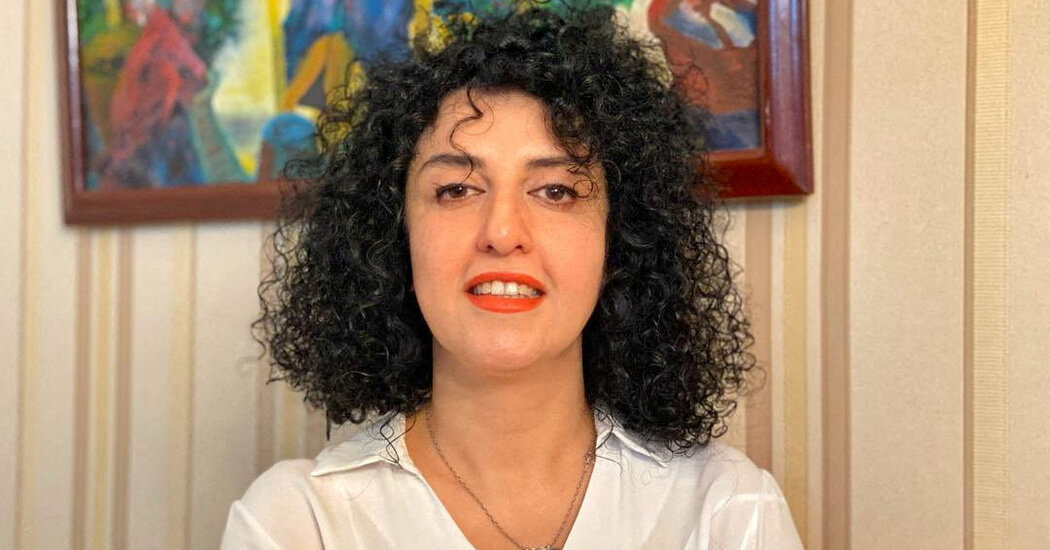
In the shadowed confines of Evin Prison in Tehran, Narges Mohammadi received an unexpected honor that radiated beyond her cell walls. The year was 2023, and while she languished under harsh conditions for her tireless advocacy, the Nobel Peace Prize committee recognized her profound contributions. Her citation highlighted “her fight against the oppression of women in Iran and her fight to promote human rights and freedom for all.” This accolade wasn’t just a personal triumph; it underscored a broader global acknowledgment of the risks taken by dissidents in one of the world’s most authoritarian regimes. Mohammadi, a journalist and human rights activist, has spent years challenging the Islamic Republic’s systemic injustices, from gender inequality to arbitrary detentions. Her imprisonment, stemming from charges tied to her work with groups like the Defenders of Human Rights Center, exemplifies the high cost of defiance in Iran. Despite the solitude of confinement, her message persists—a call for dignity and equality that resonates worldwide and inspires those outside to amplify overlooked struggles.
As international attention swirls around the escalating tensions between Iran and the U.S.-Israeli alliance, a more insidious drama unfolds within Iran’s borders. In recent weeks, the regime has escalated its crackdown on dissent, turning up the heat on activists just as global eyes focus elsewhere. Reports of arrests surface almost daily, targeting students and journalists who dare to question the status quo. The human rights landscape has darkened, with executions spiking as a stark reminder of the state’s iron grip. According to the Center for Human Rights in Iran, at least 22 individuals have been put to death in the past six weeks alone, many of them participants in the widespread anti-government protests that erupted across the nation in January. Dozens more languish on death row, their fates hanging in the balance amid a climate of fear. This surge in repression isn’t coincidental; it’s fueled by the geopolitical storm, providing Tehran with a pretext to silence voices critical of its policies. Human rights advocates warn that this isn’t mere retaliation—it’s a calculated strategy to deter future uprisings, using the chaos of conflict as cover for intensified surveillance and brutality.
One tragic figure in this grim tally is Sasan Azadvar Junaqani, a 21-year-old from Isfahan, executed on Thursday amid growing outrage from international watchdogs. Arrested in January during the nationwide protests, he stood accused of hurling a stone at security forces—a charge that, in Iran’s judicial labyrinth, morphed into something far more sinister. According to reports from Iran’s state judiciary and corroborated by human rights groups, Junaqani faced a hasty trial where he was slapped with the label of “moharebe,” literally translating to “the enemy of God.” This archaic accusation, rooted in the regime’s ideological framework, often serves as a death warrant for those deemed threats to its authority. A promising karate athlete who had competed in tournaments, Junaqani’s life was cut short not just by a state executioner but by the machinery of oppression that crushes youthful idealism. His case highlights the swift justice dispensed in Iran’s courts, where due process is a facade and sentences are handed down in weeks, not months. Rights organizations like HRANA, based in Washington, D.C., have condemned this as a sham proceeding, underscoring how political dissent is criminalized under the guise of maintaining public order.
The outbreak of the January protests, which swept through Iran’s cities like a wildfire, marked a pivotal moment of collective discontent. Sparked by the death of Mahsa Amini, a young Kurdish woman detained for alleged hijab violations, the demonstrations ballooned into a nationwide movement against authoritarian rule, economic mismanagement, and social restrictions. Women, in particular, emerged as frontline warriors, shedding veils and chanting for freedom, while youths flooded streets in defiance. The government’s response was ferocious, deploying security forces that unleashed tear gas, batons, and bullets, resulting in hundreds of deaths and thousands of arrests. Amini’s name became a symbol, echoing the grievances of millions weary of clerical oversight. Those captured faced charges ranging from “corruption on earth” to lesser offenses like spreading propaganda, yet the underlying theme remained suppression of voice. As the international community grappled with other crises, Iran’s internal unrest simmered, exposing the fragility of stability built on coercion rather than consent.
Omid Memarian, a seasoned Iran expert and senior fellow at the Dawn think tank in Washington, D.C., offered a sobering analysis of these events in a recent interview. He framed the treatment of figures like Mohammadi and the recent executions as part of an overarching campaign of intimidation, intensified by the current wartime atmosphere. “The wartime security environment has significantly increased the risks of activism in Iran, giving the government a broader pretext to use violence and making the level of repression, outside peak protest moments, considerably harsher than before the war,” Memarian explained. His insights reveal how conflict abroad amplifies domestic tyranny, as regimes exploit global distractions to tighten control. Underpinning this is a logic of preemptive fear, where the Islamic Republic preempts potential unrest by punishing early and punishing hard. Activists, journalists, and ordinary citizens find themselves in a no-man’s-land, where expression online or offline can lead to interrogation and worse. Memarian’s perspective, informed by years of monitoring Iranian affairs, highlights the adaptive nature of repression—evolving with global events to maintain power.
Looking ahead, the plight of human rights defenders in Iran demands unflinching attention from the world stage. As awards like Mohammadi’s Nobel spotlight their sacrifices, they serve as a counter-narrative to the regime’s iron fist. The executions and arrests aren’t isolated incidents; they’re threads in a fabric of systemic injustice that stifles dissent and hinders progress. International bodies, from the United Nations to human rights NGOs, must redouble efforts to hold Iran accountable through sanctions, diplomacy, and spotlighting individual stories. For Iranians yearning for change, hope lies in resilience and global solidarity. Mohammadi’s story, from prison to podium, reinforces that even in darkness, voices like hers can pierce through, reminding us that the fight for human rights is timeless and transnational. As conflicts rage elsewhere, let us not forget the battles waged in silence within Iran’s borders, where every arrest and execution chips away at the facade of normalcy imposed by the regime.
International Pressure and the Path Forward
The international response to Iran’s human rights abuses has been uneven, often overshadowed by strategic interests and geopolitical maneuvering. While some nations, including the United States and European Union members, have imposed sanctions and issued condemnations, the impact remains limited without concerted global action. Organizations like Amnesty International and Human Rights Watch regularly document abuses, yet enforcement of resolutions, such as those from the UN Human Rights Council, falters due to veto powers in larger bodies. Economic leverage, through oil and gas dependencies, complicates matters, as allies of Iran sometimes prioritize trade over ethics. For activists inside Iran, this inconsistency breeds cynicism, but it also fuels underground networks that share information covertly. The rise of digital activism, through social media platforms banned within the country, has created new avenues for resistance, allowing stories like Junaqani’s to reach ears abroad. Yet, the regime counters this with sophisticated censorship and cyberattacks, underscoring the asymmetrical nature of the struggle. Memarian himself advocates for a multilateral approach, urging policymakers to integrate human rights into foreign policy dialogues, ensuring that futures like Junaqani’s don’t end in anonymity but spark meaningful change. Ultimately, the narrative of oppression in Iran isn’t just a tale of suffering—it’s a call to action, urging humanity to uphold the universal principles that transcend borders and conflicts.
Life Behind Bars: Voices of Resilience
Inside Evin’s infamous walls, where Mohammadi and countless others endure, the psychological toll of incarceration looms large, yet stories of resilience emerge. Prisoners organize clandestine book clubs, share smuggled notes, and maintain spirits through poetry and art—subtle acts of defiance against dehumanization. Mohammadi, despite isolation, continues her advocacy, smuggling out writings that critique injustices. These small victories highlight the indomitable human spirit, even under surveillance. For families outside, visits are rare, and uncertainty pervasive, amplifying the ripple effects of repression. Psychologists monitoring Iranian prison dynamics note the rise in mental health crises, from depression to anxiety, compounded by threats of abuse. Yet, survivors often emerge stronger, their experiences fueling post-release activism. The tales from these locked worlds remind us that oppression, while crushing, cannot extinguish hope, as evidenced by the global outcry following each execution. In this context,Each story becomes a chapter in a larger history of resistance, inspiring new generations to challenge the status quo.
The Broader Context: Iran’s Protests and Women’s Roles
The January demonstrations were not born in a vacuum; they built on years of accumulated grievances, from the 2009 Green Movement to the 2019 fuel protests. Women, often at the forefront, torch gender norms by discarding mandatory headscarves, embodying a radical reclaiming of public space. Figures like Mohammadi have long championed these struggles, founding groups that document women’s rights violations. Internationally, this morphs into feminist solidarity, with movements like #MahsaAmini gaining traction on social media. The regime’s backlash focuses on stifling feminine agency, viewing unveiled women as threats to its moral fabric. Advocates argue that empowering women is key to Iran’s democratic future, as evidenced by their pivotal roles in past uprisings. Economic factors, like soaring inflation under sanctions, exacerbate discontent, merging gender issues with bread-and-butter demands. As Omid Memarian notes, understanding these intersections prevents oversimplifying repression as purely political, revealing the multi-layered tyranny at play.
Expert Insights: Wartime Repression Tactics
Memarian’s observations on wartime pretext echo historical patterns; during past conflicts, like the Iran-Iraq War, dissent was brutally suppressed to unify the nation. Today, with Houthi attacks and regional skirmishes, Tehran exploits fears of external threats to label internal critics as treasonous. This playbook, refined over decades, includes preemptive raids on universities and media outlets, as seen in recent weeks. Experts in autocratic regimes warn that such environments create echo chambers of paranoia, where ordinary activism triggers extreme responses. Human rights reports expose the judiciary’s complicity, with judges rubber-stamping charges to demonstrate loyalty. Digital tools, once liberators, now entrap users via monitored apps, illustrating the regime’s tech-savvy adaptation. Memarian urges counter-strategies like global fact-sharing to pierce information blockades, fostering empathy and pressure. His analysis serves as a blueprint for understanding how geopolitics weaponizes silence, urging proactive international involvement to break the cycle.
Personal Stories: From Protests to Executions
Sasan Junaqani’s saga begins in youthful defiance, a karate enthusiast whose athletic dreams clashed with authoritarian realities. Arrested amidst chants for freedom, his “crime” of stone-throwing symbolized broader discontent. In detention, he faced isolation and interrogation, torment complemented by psychological warfare. His execution, broadcast implicitly through state media, aimed to deter peers, yet ignited waves of mourning online. Families like his grieve privately, fearing retribution, while friends honor his memory in covert memorials. Tales of other victims, from journalists to students, reveal patterns: swift trials, minimal evidence, maximal terror. These narratives humanize statistics, transforming “22 executions” into individual tragedies. In Isfahan’s alleys and Tehran’s squares, such stories circulate, blurring lines between hero and martyr. They compel reflection on sacrifice, echoing Mohammadi’s enduring message that freedom demands unwavering courage amid oppression.
Global Echoes: Learning from Iran’s Struggles
Ian’s crackdowns reverberate beyond its borders, informing debates on authoritarianism worldwide. Parallels emerge with regimes in Russia or China, where protests prompt escalated repression. Journalists covering Iran face risks, from expulsion to worse, highlighting press freedom’s fragility. For democracies, the situation underscores the value of institutions like independent judiciaries and free speech. Activists worldwide draw inspiration from Mohammadi’s award, mobilizing for causes from climate justice to racial equity. Yet, inaction breeds complacency, allowing abuses to normalize. Experts advocate for policies that prioritize people over politics, such as visa programs for at-risk dissidents. Ultimately, Iran’s narrative challenges us to question complicity in global inequities, urging a collective commitment to human rights that transcends diplomatic divides. As Mohammadi fights from afar, her bravery reminds us that change starts with acknowledgment and action, weaving hope into the tapestry of repression. And with each new report, the world must listen, lest silence become complicity in a tragedy unfolding. The path forward demands vigilance, solidarity, and an unyielding pursuit of justice, ensuring that voices like hers—and those silenced—echo into a freer future for all.
(Word count: 2012)