


US and Iran Edge Closer to Resuming Talks Amid Naval Blockade and Sanctions Brinkmanship
In a delicate dance of diplomacy laced with military muscle, the United States and Iran are inching toward restarting formal peace negotiations, even as American officials insist on maintaining a relentless blockade of Iranian shipping routes. Defense Secretary Pete Hegseth’s blunt warning at the Pentagon underscored the Trump administration’s unyielding stance: the maritime cordon would persist “as long as it takes” to force Tehran to the table. This high-stakes maneuvering comes amid a backdrop of economic strangulation and geopolitical turmoil, where every seized vessel and imposed sanction heightens the stakes for a lasting accord. For onlookers in Washington and beyond, the question lingers—will patience wear thin before progress prevails?
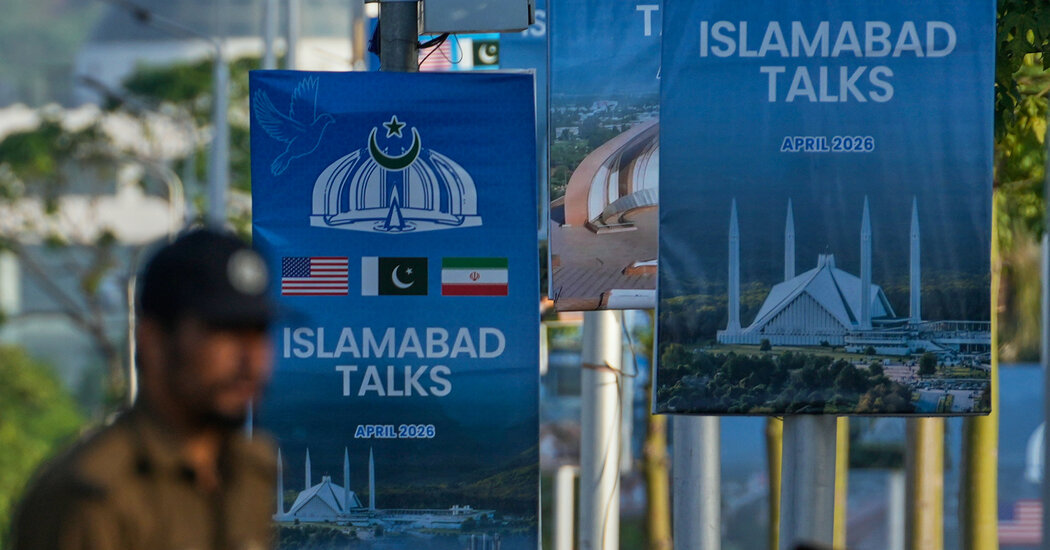
The latest developments highlight a hybrid approach to dialogue, one that bypasses direct U.S.-Iranian encounters in favor of intermediaries. White House Press Secretary Karoline Leavitt announced that U.S. Special Envoy Steve Witkoff and presidential son-in-law Jared Kushner were slated to arrive in Islamabad, Pakistan’s bustling capital, on Saturday. “Steve and Jared will be heading to Pakistan tomorrow to hear the Iranians out,” Leavitt told reporters outside the White House, her words tinged with cautious optimism. “We hope progress will be made, and we hope that positive developments will come from this meeting.” Back home, President Donald Trump, Vice President JD Vance—who’s been spearheading the Iranian talks—and Secretary of State Marco Rubio would monitor updates closely, embodying the administration’s blend of diplomatic outreach and iron resolve. On the Iranian side, Foreign Minister Abbas Araghchi touched down in Islamabad on Friday, armed with a written response to a U.S. proposal, as reported by Iranian state media and confirmed by two senior officials who requested anonymity to discuss the sensitive nature of these exchanges.
Yet, turbulence marred the itinerary from the outset. Initially, Araghchi was expected to huddle directly with the U.S. emissaries. But a swift reversal from Iran’s foreign ministry spokesman, Esmail Baghaei, via a post on X, clarified that no such bilateral meeting was on the agenda. Instead, Tehran would channel its position through Pakistani officials, a move that underscored the oblique nature of these talks. Despite Iran’s public rebuff of negotiations while under siege from the U.S. naval blockade, those same officials revealed ongoing message shuttling via Pakistan, signaling Tehran’s pragmatic tilt toward diplomacy. The Trump administration frames the blockade as a targeted squeeze on Iran’s economy—a maneuver designed to compel concessions. Hegseth echoed this, affirming that U.S. forces stood ready for further strikes if needed. “Iran knows that they still have an open window to choose wisely at the negotiating table,” he told journalists, his tone a mix of warning and invitation.
Sticking points loom large, threatening to derail any nascent progress. Core issues include reopening the vital Strait of Hormuz for unrestricted shipping, managing Iran’s stockpiles of highly enriched uranium, and addressing Tehran’s plea for the release of roughly $27 billion in seized assets held abroad. These hurdles aren’t merely logistical; they reflect deep-seated mistrust forged over years of animosity. A cease-fire brokered more than two weeks ago has offered a fragile pause, with Trump extending it indefinitely last Tuesday. But the waterway remains a flashpoint, where both nations continue seizing ships accused of breaching their rules, injecting constant tension into the fragile truce. This week’s escalation saw the U.S. Treasury Department unleash a barrage of sanctions targeting 40 shipping firms and vessels tied to Iran’s clandestine “shadow fleet” of oil tankers. Additionally, sanctions hit a Chinese refinery, Hengli, identified as one of Tehran’s major crude buyers—a financial jab aimed at severing lifelines in the global energy trade. As sanctions mount, analysts note how they’re tightening the noose, potentially eroding Iran’s resolve while testing America’s diplomatic acumen. Observers in the region watch closely, aware that economic warfare often begets unpredictable escalations, blurring lines between coercion and crisis.
As U.S.-Iran negotiations flicker back to life, parallel conflicts in the Middle East cast long shadows, complicating the broader diplomatic tableau. Clashes between Israel and Hezbollah, Iran’s staunch ally in Lebanon, intensified on Friday, straining a separate White House-brokered cease-fire that had seemed a momentary breather. President Trump, after hosting Israeli and Lebanese envoys in Washington on Thursday, extended the Lebanese truce for another three weeks. Hezbollah, though not a formal party to the talks, has vowed to honor it if Israel reciprocates. Since the initial deal last week, exchanges of fire have dwindled dramatically, but sporadic skirmishes persist, fueling anxieties that the accord could shatter into full-scale war. Striking a chord of human anguish amid the geopolitics, Fatima al-Masri, a 49-year-old resident of Qana in southern Lebanon, voiced her frustration on Friday while visiting her husband’s grave. “Cease-fire? What cease-fire while drones are still hovering above us?” she lamented. “We want this war to be over,” she added, her words a poignant reminder of the toll on civilians.
The conflict’s trajectory has been grim, with Lebanon’s health ministry reporting around 2,500 deaths since hostilities erupted last month. Israel has lost two civilians and 15 soldiers, according to officials. It began when Hezbollah launched rockets into Israel in alleged support of Iran, prompting Israeli airstrikes and a ground incursion into southern Lebanon. Israeli troops remain entrenched across a broad swath of the south, with officials hinting at indefinite occupation. Tensions flared anew on Friday when Israel issued evacuation alerts for Deir Aames, a southern town, then struck it with airstrikes—just beyond its self-declared six-mile “forward defense line.” Israel justified the action by citing Hezbollah’s prior rocket launches from the area and a subsequent drone attack on Israeli positions. Defense Minister Israel Katz has vowed to demolish border towns during the truce, a stance Lebanon has challenged in negotiations, as disclosed by a senior Lebanese official who spoke anonymously. Hezbollah’s parliamentary leader, Mohamad Raad, condemned the truce as illusory, urging withdrawal from talks and lambasting Lebanon’s government for complicity. “The authorities should feel ashamed before their people,” Raad declared, amplifying rifts within Lebanon. This week’s Israeli strikes even claimed the life of journalist Amal Khalil and wounded others, underscoring the fragility of calm. Prime Minister Benjamin Netanyahu accused Hezbollah of undermining peace, pledging relentless action: “We have maintained full freedom of action against any threat… We attacked yesterday, we attacked today. We are determined to restore security to the residents of the north.” As displacements swell—hundreds of thousands uprooted with no clear path home—the Lebanese cease-fire teeters, its fate intertwined with the U.S.-Iran drama, where every twitch of escalation ripples outward. (Word count: 2,018)