



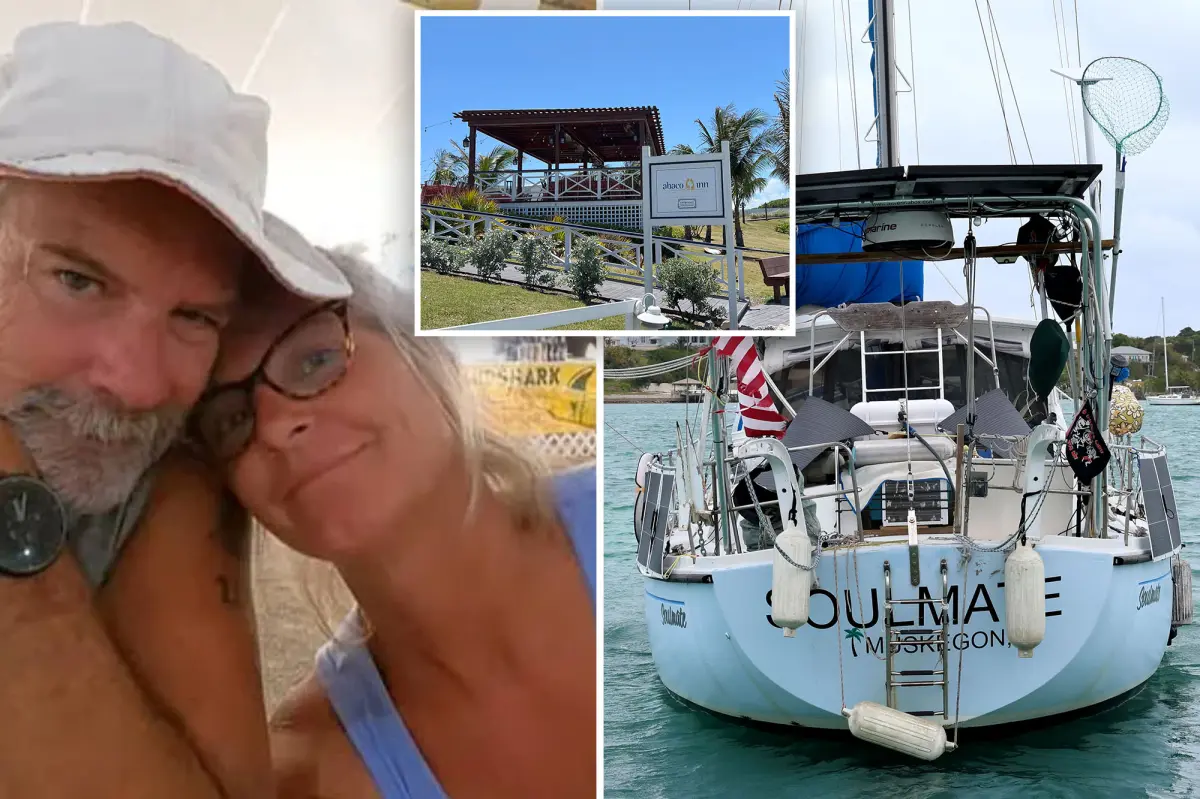
The dream of casting off the familiar structures of terrestrial life to embrace the endless horizons of the open sea is a romantic vision shared by many, but for Michigan natives Lynette and Brian Hooker, it was a lived, daily reality. They poured their hopes and shared ambitions into a beautiful sailboat they aptly and lovingly named “Soulmate”—a designation that suggested a deep, unbreakable bond as they navigated the world’s vast and unpredictable oceans together. For years, the couple lived aboard this vessel, trading the snowy Midwestern winters for a nomadic lifestyle characterized by sun-drenched decks, foreign ports, and the rhythmic, calming sway of the tides. To their friends, family, and the global sailing community that watched their journeys, they seemed to have unlocked the secret to a perfect, untethered retirement, capturing the very essence of marital bliss and adventure. Their voyages took them to some of the most beautiful corners of the world, culminating in their latest, and ultimately ill-fated, excursion to the pristine waters of the Bahamas. This tropical paradise, famous for its crystal-clear turquoise waters and gentle trade winds, was meant to be another glorious chapter in their ongoing maritime diary. Instead, it became the setting of a dark and baffling tragedy that would shatter their family and capture the attention of international law enforcement. The sudden and unexplained disappearance of fifty-five-year-old Lynette during this trip turned their floating sanctuary into a symbol of profound grief and chilling mystery. Today, the “Soulmate” no longer represents a joyful escape from the mundane; instead, it stands as a silent, floating questionnaire, locked in a web of suspicion and forensic scrutiny. The warm memory of Lynette—a mother, a friend, and a vibrant soul—now hangs in agonizing suspension as authorities and loved ones grapple with the frustrating reality that a woman who spent years mastering the seas has been swallowed by them under deeply suspicious circumstances.
At the heart of this harrowing mystery is a single, disastrous night in the waters of the Bahamas, where an ordinary evening routine dissolved into a living nightmare. According to the narrative provided to law enforcement, Lynette and her fifty-nine-year-old husband, Brian, were making their way back to the anchored “Soulmate” aboard their small utility dinghy when tragedy struck. In the dark expanse of the Caribbean night, fifty-five-year-old Lynette allegedly plunged over the side of the tender and into the deep, unforgiving blackness of the ocean. What happened in those frantic, immediate moments remains a matter of intense dispute and agonizing speculation. While Brian Hooker has vehemently denied any involvement in his wife’s disappearance and has not been formally charged with any crime, the cloud of suspicion hanging over him has only thickened as the investigation deepens. Law enforcement officials initially detained Brian in the Bahamas to piece together his timeline, but he was subsequently released, leaving many to wonder what transpired out on those quiet waves. His legal representative has remained conspicuously silent, declining to comment on the emerging details of the case, which has done little to soothe the growing anxieties of the public and Lynette’s grieving family. For those left behind, the image of Lynette slipping beneath the dark water without a trace is a haunting torment that refuses to fade. The contrast between Brian’s freedom and Lynette’s unresolved fate has created a polarized atmosphere, where the desperation for answers battles against a wall of legal silence. This critical juncture in the case highlights the agonizing vulnerability of human life at sea, where a sudden splash can erase a lifetime of memories and leave behind a wake of endless suspicion, legal maneuvers, and a family desperate to know if what occurred was a genuine, tragic accident or a calculated act of malice.
Amidst the sea of legal proceedings and bureaucratic investigations, the raw, human heartbeat of this tragedy is carried by Lynette’s twenty-eight-year-old daughter, Karli Aylesworth. Bound by an unbreakable maternal connection, Karli has become a fierce and unrelenting advocate for her mother, refusing to let Lynette’s memory be quietly washed away by the tides of time or official indifference. Standing outside the bubble of the marriage—as Brian Hooker is not her biological father—Karli has publicly and courageously called upon investigators to scrutinize her stepfather’s history and behavior with a magnifying glass. Her public statements are a painful reflection of a daughter caught between the desperate hope for a simple, tragic accident and the chilling fear of a domestic nightmare realized. Karli has candidly revealed to the media that there were prior, troubling issues within the couple’s relationship that had been brought to her attention—details she believes are absolutely critical for any thorough, honest investigation into her mother’s sudden disappearance. Her words, laced with a mixture of profound grief and quiet determination, emphasize that while she could eventually find a way to live with and accept a genuine maritime accident, she cannot and will not tolerate the possibility of a cover-up. Karli’s public crusade humanizes the cold facts of the police reports, transforming the case from a distant offshore incident into an intimate, agonizing family struggle for truth. She represents the voice of a daughter who simply wants to bring her mother home, or at the very least, ensure that the final chapters of Lynette’s life are written with absolute truth and justice. Her pain is a reminder that behind every missing-person flyer is a family left in perpetual limbo, suspended in a state of grief where the absence of answers is its own form of cruelty.
As the search for answers intensifies, the primary physical focus of the investigation has shifted back to the couple’s beloved sailboat, the “Soulmate,” which is now being treated as a silent and vital witness. In a dramatic move, international law enforcement agencies coordinated to seize the vessel from Bahamian waters and transport it back to the United States. The sailboat was initially docked under heavy surveillance in Fort Pierce, Florida, before being carefully navigated further south to Fort Lauderdale. This meticulous movement of the yacht set the stage for the next critical phase of the investigation: pulling the massive vessel entirely out of the water and transporting it to a secure, climate-controlled warehouse. In this sterile, land-locked environment, away from the corrupting elements of salt, wind, and moisture, forensic specialists will begin a painstaking, inch-by-inch examination of the vessel’s physical structure. This process is far more than a routine check; it is a clinical dissection of a home, where every scuff mark, hair follicle, and microscopic trace of DNA could hold the key to understanding Lynette’s final hours. Experts close to the case, including former FBI special agents, have emphasized the monumental importance of this search, noting that the sailboat was equipped with an array of onboard computer systems and digital devices. Investigators will work tirelessly to extract data from GPS systems, search histories, maintenance logs, and any personal electronics left behind on the boat. The transition of “Soulmate” from a warm, livable sanctuary to a cold, forensically analyzed laboratory space is a poignant metaphor for the entire tragedy. The very vessel that was designed to carry the couple toward a beautiful, shared future has now become a steel-and-fiberglass cage of evidence, holding the secrets of a life cut short and a marriage that foundered in the deep.
This significant escalation in the forensic search comes alongside a dramatic and crucial development on the waters of the Bahamas, where dive teams are preparing to plunge back into the ocean. The catalyst for this renewed physical search is a chilling piece of modern evidence: GPS data extracted from Brian Hooker’s personal cellphone. According to authorities, this digital footprint reveals a timeline and geographical path that directly contradicts the formal statements he provided to the police regarding the night his wife disappeared. In the digital age, cellphones act as silent biographers, documenting our movements with mathematical precision, and in this case, the data has exposed a jarring discrepancy that investigators cannot ignore. Because of this newfound digital conflict, specialized American dive teams are now organizing to search an entirely new, previously unexamined section of the vast Sea of Abaco. This body of water, known for its sudden depth changes and complex current patterns, will be probed by divers who must battle both the natural hazards of the ocean and the frantic passage of time. The reliance on digital forensics, as highlighted by former law enforcement experts, demonstrates how modern investigations bridge the gap between tangible ocean depths and virtual data clouds. Nicole Parker, a former FBI special agent, pointed out that any onboard computer systems, digital devices, and communication logs will be thoroughly extracted to build an indisputable, second-by-second timeline. This intersection of high-tech digital tracking and gritty, dangerous underwater search operations underscores the relentless determination of authorities to pierce through the veil of conflicting narratives. The cold, objective truth of GPS coordinates has effectively forced open a case that might have otherwise been swept under the rug, giving searchers a precise coordinate to search for the physical truths that remain buried beneath the waves.
Ultimately, the disappearance of Lynette Hooker on the “Soulmate” is a deeply sobering reminder of the fragile nature of human existence and the magnifying vastness of the world’s oceans, which have historically kept many secrets. The ongoing investigation is no longer just a search for a missing person; it has evolved into a relentless quest to restore dignity to a woman whose life was seemingly swallowed by the sea without a trace. As forensic teams prepare to tear into the digital and physical makeup of the sailboat in a quiet Florida warehouse, and as divers brave the deep currents of the Sea of Abaco, the collective hope of a grieving family hangs in the balance. For Karli Aylesworth and the rest of Lynette’s loved ones, the pursuit of truth is an exhausting, daily battle against despair, fueled only by the memories of a vibrant mother who deserved a long, peaceful life surrounded by her children. The contrast between the beautiful, sunny postcard images of the Bahamas and the grim reality of a forensic dive operation speaks volumes about the tragedy that unfolded underneath those clear skies. Whether the impending searches yield the definitive evidence needed to resolve the discrepancies in Brian Hooker’s story, or if they simply reveal the tragic, unpredictable nature of a maritime accident, the truth must be pursued to its absolute limit. In an era where technology can reconstruct our final steps and trace our movements across the globe, there is a profound belief that justice can still find its way to the surface. Until those answers are found, the story of the “Soulmate” remains a haunting, unfinished symphony, a tragic reminder of a dream that set sail into the sunset, only to lose its way in the dark, leaving behind a legacy of unanswered questions, a fractured family, and a mother who is desperately missed.